
A Uganda safari is priced in three layers: conservation fees set by the Uganda Wildlife Authority, ground costs that move with your lodges and vehicle, and charges most quotes leave out. Every operator pays the same permit rate, so comparing safaris means comparing everything else, and the figures all sit in the questions at the end. Uganda is the one country where gorilla trekking, chimpanzee tracking and savannah game drives fit a single overland circuit.
What Actually Sets the Price of a Uganda Safari
Most pages answering this question give you a range and stop. The range is not wrong, and it is also close to useless, because the same seven day route through Murchison Falls, Kibale, Queen Elizabeth and Bwindi can be sold at three very different prices without either seller doing anything dishonest. What changed was the lodges, the vehicle and how many people are sitting in it.
So the useful question is not what a Uganda safari costs. It is which parts of the bill you control.
Roughly a third of a typical mid tier quote is money the operator never touches: it goes straight to the Uganda Wildlife Authority as permits, park entrance and vehicle entry. That portion is published, non negotiable and the same for a backpacker and a honeymooner standing in the same briefing shed. The rest is the operator’s own build, and that is the part worth interrogating.
The Fixed Floor on Every Uganda Safari: Permits and Park Fees

Uganda’s conservation tariff is a public document. It sets a price for every park, every activity and every category of visitor, and it splits visitors four ways: foreign non resident, foreign resident, rest of Africa, and East African citizen. Almost everyone reading this falls into the first bracket, which is the highest.
Park entrance is banded. Murchison Falls sits alone in the top band. A second band covers the parks most safaris actually visit: Kidepo Valley, Queen Elizabeth, Bwindi, Mgahinga, Kibale and Lake Mburo. A third band holds the mountains and the quieter forests, including Rwenzori, Semuliki, Mount Elgon and Toro Semliki. A fourth band covers the wildlife reserves such as Kyambura, Ajai and Kabwoya, and it is a fraction of the others. One sector of Mount Elgon is free.
Two details in that document change how a family should plan, and neither appears on any of the pages currently ranking for this question. Children pay a reduced rate, and children under five pay nothing at all. And an entrance ticket runs for twenty four hours from the moment you enter, not until sunset, which is why a late afternoon arrival followed by a dawn game drive is one ticket rather than two. A good operator already builds the route that way. A weak one does not, and you pay for the difference without ever seeing the line.
Vehicles are charged separately from people. The band a vehicle falls into depends on what it is and, more sharply, on where it is registered. A Ugandan registered tour vehicle enters a park for a token sum. The same vehicle on foreign plates pays many times that, per park, per twenty four hours. Anyone planning to drive their own vehicle down through the region should price that before anything else, because it quietly rewrites the arithmetic of self driving.
Gorilla Trekking Permits and Why They Barely Move a Safari Quote
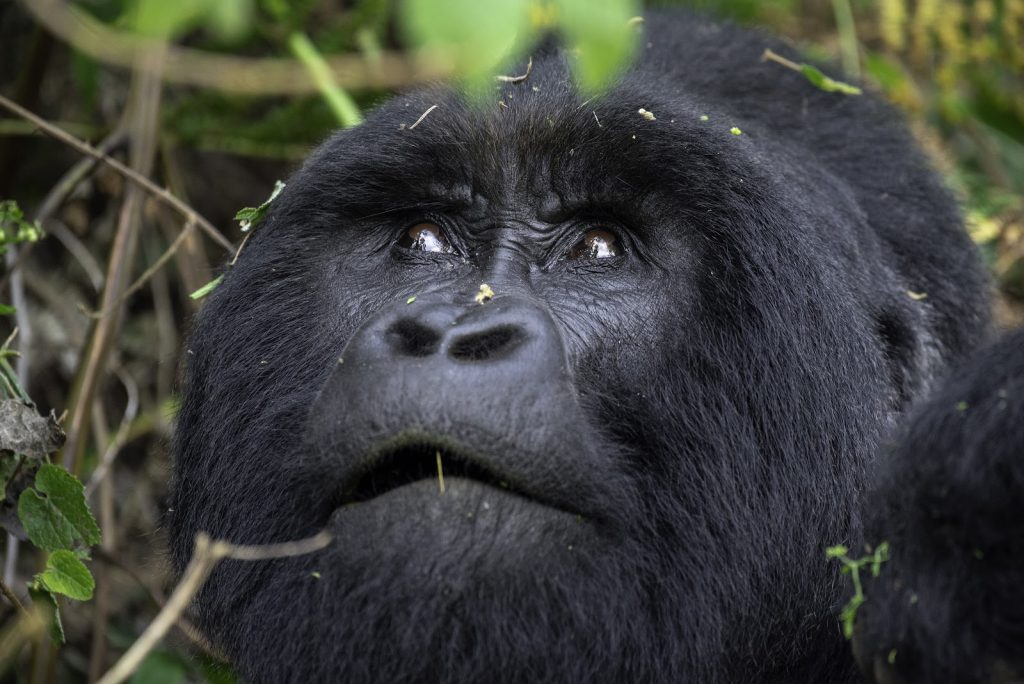
Gorilla trekking is the single largest line on most Uganda safari quotes, and it is also the line you can do least about. The permit is a fixed tariff price. No operator can discount it, and any operator claiming to has either misread their own costs or is planning to take it out of your lodge.
What the permit buys is worth knowing, because it quietly absorbs costs you might otherwise expect to see itemised. It covers the guide, park entrance for that day, and a contribution that goes to the communities living against the forest edge. What it buys is tightly specified: eight people per gorilla group per day, one hour with them, and a ten metre distance rule that the gorillas themselves routinely ignore. It also carries a small bonus almost nobody mentions: a gorilla permit holder gets a free day’s entrance into Mount Elgon and Toro Semliki, usable within a month either side of the trek. Activity fees in those places are still yours to pay, but the entrance is not.
The gorilla habituation experience in the Rushaga sector is a separate, dearer permit that buys four hours with a family still being accustomed to people, rather than one. It is the biggest single discretionary decision on a Uganda budget.
Two things about permits have changed recently and are worth planning around. A discounted permit now exists for April, May and November, at a meaningful saving on the standard rate, and the same discount applies to chimpanzee tracking. Those permits cannot be rescheduled, which is the trade. Separately, the seven day window that once let an operator hold a permit unpaid has been suspended. Permits are now secured only on full payment at the time of booking. Any page telling you a permit can be reserved while you think about it is out of date, and if an operator offers to hold one for you, ask exactly what they mean.
Chimpanzee Tracking and the Other Primate Permits on a Uganda Tour

Chimpanzee tracking is the usual second permit on a Uganda safari, and the price depends entirely on where you do it. Kibale National Park is the flagship, with the most reliable sightings and the highest fee, and its tracking permit uniquely includes park entrance. Kyambura Gorge inside Queen Elizabeth costs a good deal less, and entrance is charged on top. The gorge population is small and the terrain is steep, so sightings are less reliable than Kibale’s. That difference is real and it is priced in. Budongo Forest near Murchison offers a third option again.
Kibale also runs a habituation experience, longer and dearer than standard tracking, which includes park entrance and puts four hours rather than one in front of the chimps.
Golden monkey tracking at Mgahinga is the cheapest primate permit in the country by a wide margin, and it is the one most itineraries skip. Entrance is charged separately. If you are already in the Kisoro corner for gorillas, adding it costs very little.
Then there are the fees that sit just outside the headline activity price. Lion tracking in Queen Elizabeth is the clearest example: the published tariff excludes both a community fee and the vehicle fee, which are charged on the day. That is not a hidden cost so much as an unread one, and it is the sort of thing worth checking against your itinerary rather than your invoice.
Accommodation Tiers and How Far They Swing a Safari Budget
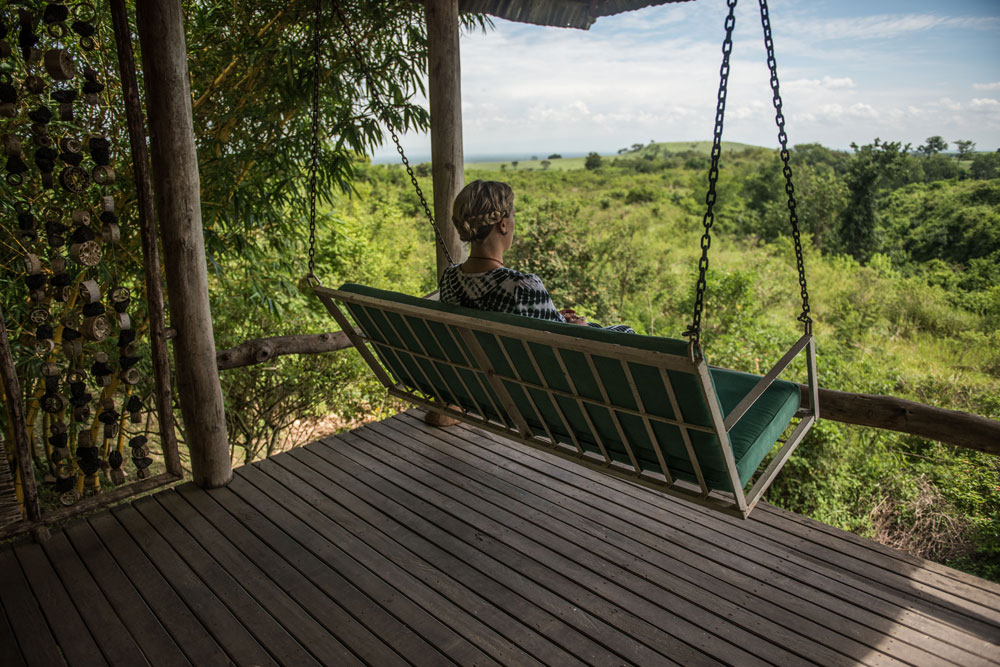
Lodging is the largest genuinely variable cost on a Uganda safari, and the spread is wider here than in most safari countries because Uganda has a functioning budget end that Botswana and Rwanda largely do not.
At the bottom sit community run bandas and the wildlife authority’s own guesthouses and dormitories inside the parks, which are basic, clean and sometimes startlingly well placed. In the middle sit the owner run lodges that make up most of Uganda’s beds, where the room is comfortable, the food is decent and the generator goes off at eleven. At the top sit a handful of properties around Bwindi and Kibale that would not look out of place in Kenya’s private conservancies, with prices to match.
Two practical points. Lodge location changes your day as much as your bill: a lodge forty minutes from a Bwindi trailhead means a five in the morning start, and the cheaper bed can cost you an hour of sleep and a hurried breakfast before the hardest walk of your trip. And the gap between mid tier and top tier in Uganda buys you a better room and better food, not better wildlife. The gorillas are the same gorillas.
Vehicles, Drivers and Domestic Flights on the Safari Circuit
Uganda’s parks are far apart and the roads between them vary from good tarmac to an hour of red murram that will rattle your teeth. The western circuit joining Murchison, Kibale, Queen Elizabeth and Bwindi is a long loop of driving, and the Murchison to Bwindi leg alone runs eight to ten hours on a good day. Trip reports from people who have done it are consistent on this: the driving is the part travellers underestimate, and a day lost to a transfer is a day not spent in a park.
That is why the vehicle line matters. A safari quote normally covers a four wheel drive with a driver guide, fuel and the driver’s own accommodation and meals. A cheaper quote often means a smaller vehicle, an older one, a guide with less experience, or a driver sleeping in the vehicle. None of those is automatically wrong, and all of them are worth knowing about before you compare two numbers.
Domestic flights are the standard fix for the long legs, running from Entebbe to airstrips at Pakuba for Murchison and Kihihi or Kisoro for Bwindi. They add cost and they buy back a day, sometimes two. On a seven day trip that trade usually pays. On a fourteen day trip it usually does not, because you have the time and the road is genuinely part of seeing the country.
Self driving is possible and a small number of visitors do it. The economics turn on the vehicle entry band and on whether you are renting locally or bringing your own. Forum trip reports are blunt about the rest: main roads are paved and fine, the access roads to Bwindi are steep, unpaved and unforgiving in the wet, and general driving standards make the long transfers tiring in a way the map does not show.
How the Season Changes What You Pay for a Uganda Safari
Season moves a Uganda safari price in two places, and only one of them is the tariff.
The tariff itself moves for April, May and November, when the wildlife authority sells discounted gorilla and chimpanzee permits. That is a direct, published saving on the largest line of the trip, available to anyone travelling in those months, with the non reschedulable condition attached.
The larger effect is on lodges. Uganda’s high season follows the drier months, which means June through September and December through February, and lodge rates and availability follow it closely. Travel in the wetter months and the same lodge is often cheaper, sometimes markedly, and more likely to have space. Permits in those months are also easier to get late, which is not a small thing when peak season permits go a year ahead.
What you give up is not rain all day. It is mud on the trails, slower transfers and a greener, thicker forest that makes primates harder to photograph. Our guide to the best time to visit Uganda works through what each month actually does to each activity, because the answer differs sharply between the gorilla highlands and the north.
Group Size and Trip Length on a Uganda Safari Itinerary
Two travellers on a private safari carry a whole vehicle and driver between them. Four carry the same vehicle between four. That is the single largest lever most people have, and it is why the same itinerary quoted for a couple and for a family of six produces two per person numbers that look like different trips.
Permits do not share. Park entrance does not share. Everything else largely does, which means the marginal cost of a third or fourth traveller is much lower than the first two. Solo travellers feel this hardest, and a single supplement on a Uganda safari is usually a vehicle problem rather than a room problem.
Trip length works the other way from what people expect. Longer trips cost more in total and less per day, because the fixed costs of getting you and a vehicle into position are spread further. Three days is enough for gorillas and nothing else. Seven days is the most common shape and covers a primate park, a savannah park and a gorilla trek without a punishing schedule. Ten to twelve days opens up Kidepo Valley in the far northeast, which is the park most worth the extra time and the one most often cut.
What a Uganda Safari Quote Usually Leaves Out
The exclusions list is the part of a quote worth reading first.
International flights and visas are almost always out. Uganda issues a single entry tourist visa online, and a regional visa covering Uganda, Kenya and Rwanda exists for anyone crossing borders, with the rule that whichever country issues it must be your first entry point. Travel insurance is out, and for gorilla trekking at altitude on steep ground it is not optional in any practical sense.
Tips are out, and Uganda’s tipping norms are real rather than decorative: a driver guide who has kept you safe over a thousand kilometres, the ranger who found the gorillas, the trackers who were in the forest at dawn, and the lodge staff. Porters are out too. On a gorilla trek a porter is a community job, arranged at the trailhead rather than through the tariff, and the near universal verdict from people who tried to save the fee is that they regretted it. One trip report describes refusing a porter, then being grateful for someone steadying and hauling them up a slope when their mud clogged boots had stopped gripping.
Drinks are usually out, sometimes including bottled water, which is worth checking because you will get through a lot of it. Laundry is out. And the small things add up faster than expected in a country where craft markets sit outside every park gate.
Reading Two Uganda Safari Quotes Side by Side
Because the permit layer is fixed, the difference between two quotes for the same route is almost entirely the operator’s build. That makes comparison unusually tractable, if you strip the quotes back to the same units.
Work out the fixed floor first. Count the permits, count the park days, count the activities. That number should be near identical across both quotes, and if one is materially lower, something has been left out rather than bargained down.
Then look at what is left. That remainder is lodges, vehicle, meals and margin, and it is where a difference is legitimate. A quote with a higher remainder should be buying something visible: a better placed lodge, a newer vehicle, a guide with a specialism, fewer driving hours. If you cannot see what the extra buys, ask, because a good operator will tell you plainly.
A quote well below the others is the one to question hardest. In practice it usually means one of four things: a lodge much further from the park gate, a shared vehicle, a driver doubling as guide with limited experience, or permits that are not yet paid for. None of those makes an operator dishonest. All of them change the trip.
| Cost item | Set by | Varies by | Your control |
|---|---|---|---|
| Gorilla permit | UWA tariff | Month, status | Low season |
| Park entrance | UWA tariff | Park band, age | Route, days |
| Vehicle entry | UWA tariff | Type, plates | Vehicle |
| Lodging | The lodge | Tier, season | Full |
| Vehicle, guide | Operator | Group, days | Full |
| Local flights | Airline | Route, season | Full |
| Tips, porters | Custom | Trip length | Full |
Where a Uganda Safari Sits Against Rwanda and Kenya
The comparison every reader is silently making is with Rwanda, and it turns almost entirely on one permit. Rwanda’s gorilla permit is far dearer than Uganda’s, which is a deliberate positioning choice rather than a difference in the animals. What Rwanda buys with it is proximity: Volcanoes National Park is a short drive from Kigali airport, so a Rwandan gorilla trip can be done in three days with no long transfers. Uganda’s Bwindi is eight to ten hours from anywhere you can land a large aircraft, or a light flight plus a drive.
Against Kenya and Tanzania the comparison is different again. Those countries sell open savannah and big herd numbers. Uganda’s parks are smaller and greener, its wildlife is less concentrated, and travellers arriving expecting Mara or Serengeti density are reliably the ones who come away disappointed. What Uganda has instead is the primates, the birds, and the fact that a single circuit can put gorillas, chimpanzees, tree climbing lions and a boat below a waterfall into one week. Price that against the alternative honestly, and Uganda usually wins on breadth rather than on cost.
Frequently Asked Questions About Uganda Safari Costs
What do Uganda’s permits actually cost? Gorilla tracking in Bwindi and Mgahinga is USD 800 for foreign non residents, USD 700 for foreign residents, USD 500 for rest of Africa and UGX 300,000 for East African citizens. Gorilla habituation is USD 1,500 for foreign non residents, USD 1,000 for foreign residents and rest of Africa, and UGX 750,000 for East Africans. Chimpanzee tracking in Kibale is USD 250, USD 200 and UGX 180,000; at Kyambura Gorge it is USD 100, USD 80 and UGX 50,000. Chimpanzee habituation at Kibale is USD 300, USD 250 and UGX 250,000. Golden monkey tracking at Mgahinga is USD 60, USD 50 and UGX 40,000, with habituation at USD 100, USD 80 and UGX 100,000. Lion tracking in Queen Elizabeth is USD 200, USD 150 and UGX 200,000, and that figure excludes a USD 10 community fee and the vehicle fee. The Batwa trail is USD 80 at Mgahinga with entrance included, USD 40 at Bwindi and USD 10 at Semuliki, the last two excluding entrance. In April, May and November, discounted permits apply: gorilla tracking at USD 600 for foreign non residents and USD 500 for foreign residents, chimpanzee tracking at USD 200 and USD 150. Low season permits cannot be rescheduled.
What are the park entrance and vehicle fees? Entrance is per person per twenty four hours. Murchison Falls is USD 45 for foreign non resident adults, USD 35 for foreign residents, USD 30 for rest of Africa and UGX 25,000 for East Africans, with children at USD 25, USD 15, USD 10 and UGX 10,000. Kidepo Valley, Queen Elizabeth, Bwindi, Mgahinga, Kibale and Lake Mburo are USD 40, USD 30, USD 25 and UGX 20,000 for adults, and USD 20, USD 10, USD 5 and UGX 5,000 for children. Rwenzori, Semuliki, Mount Elgon, Toro Semliki, Katonga and Pian Upe are USD 35, USD 25, USD 20 and UGX 15,000, children USD 5 and UGX 2,500. The wildlife reserves, including Ajai, Kabwoya, Karuma, Kyambura, Bokora and Matheniko, are USD 10, USD 5, USD 5 and UGX 2,500 for everyone. The Kapkwai sector of Mount Elgon is free. Children means ages five to fifteen, and under fives are exempt. On vehicles, a foreign registered saloon car pays USD 40 against UGX 20,000 for a Ugandan registered one, while a foreign registered tour vehicle or four wheel drive pays USD 150 against UGX 30,000 on Ugandan plates. Murchison Falls adds USD 10 for foreign registered vehicles and UGX 10,000 for Ugandan ones. An annual entrance pass exists at USD 350 for individuals, but only for foreign residents and East Africans.
What do the day activities cost on top of permits? A guided day game drive in your own vehicle is USD 25 per guide, USD 20 for foreign residents and UGX 25,000, with night drives at USD 30, USD 20 and UGX 30,000 per person. Self driving without a guide is USD 10 per vehicle per day. A wildlife authority vehicle, where one is available, is USD 30 per person by day and USD 40 at night, with a minimum charge equal to three people. Launch cruises on the Nile at Murchison, the Kazinga Channel in Queen Elizabeth and at Lake Mburo are USD 30, USD 25, USD 20 and UGX 30,000, with a minimum boat charge of USD 120 for eight people on the smaller boats and a trip lasting about two hours. Viewing shoebills by boat at Toro Semliki is USD 100 for three people, with USD 20 for each extra person. Birding and day nature walks are USD 40, USD 30 and UGX 30,000 in Bwindi, Mgahinga, Kibale, Mount Elgon, Semuliki and the Rwenzori, and USD 25, USD 20 and UGX 20,000 in Murchison, Queen Elizabeth, Lake Mburo, Kidepo and the reserves. A night nature walk is USD 50. The long guided walks from Rushaga to Nyabaremura and Buhoma to Nkuringo are USD 60 each. Hiking on the Rwenzori and Mount Elgon is USD 50 per day, with rock climbing at USD 65 and mountain biking at USD 100 on Elgon, and porters at UGX 40,000 and cooks at UGX 30,000. Climbing the Mgahinga volcanoes is USD 100. Sport fishing at Murchison is USD 50 for a day or USD 150 for four, and rafting there is USD 50 and restricted to professionals.
Which costs sit outside the safari quote, and what is changing? A single entry Uganda tourist visa is USD 50, granted for up to three months and applied for online. The East African Tourist Visa is USD 100, valid ninety days, covering Uganda, Kenya and Rwanda, with the issuing country as your first entry point. Gorilla trek porters are commonly quoted at USD 15 to USD 30 plus a tip, arranged at the trailhead rather than through the tariff. Wildlife authority beds inside the parks are the cheapest in the country: a double room at the Rwonyo guesthouse in Lake Mburo is UGX 130,000, a dormitory bed is UGX 25,000, and bandas at Mount Muhabura in Mgahinga are USD 20 or UGX 25,000. On changes: a revised tariff takes effect on 1 January 2027, and the most quoted figure in Uganda is not part of it. Gorilla tracking stays at USD 800. What rises is gorilla habituation to USD 1,800, chimpanzee tracking at Kibale to USD 300, chimpanzee habituation to USD 400, Kyambura tracking to USD 200, and lion tracking to USD 500. Rhino tracking at Ajai becomes a priced product at USD 20 for adults and USD 5 for children.
Does the gorilla permit include park entrance? Yes. It covers the ranger guide, entrance for that day and the community contribution. It also entitles you to one free day’s entrance at Mount Elgon and Toro Semliki, usable within a month before or after the trek, though activity fees at those places are still payable. Chimpanzee tracking at Kibale includes entrance; at Kyambura it does not. Golden monkey tracking excludes it.
Can an operator hold a permit while I decide? No longer. The seven day reservation window was suspended, and the booking system now releases a permit only against full payment. That has a practical consequence for anyone comparing quotes: the operator who has actually paid for your permit has locked a date, and the one who has not is offering an intention. Ask which it is.
How fit do I need to be for gorilla trekking? Fitter than the brochures imply and less fit than you fear. The walk may take twenty minutes or most of a day, because it depends entirely on where the family moved overnight, and you will not know until you are in the forest. The ground is steep, the mud is slick and the vegetation includes stinging nettles that punish anyone grabbing a plant for balance. Most reasonably mobile people in their sixties and seventies manage it, and the wildlife authority sets a minimum age of fifteen. Trekkers with mobility problems can ask about a sedan chair, arranged locally with a team of porters.
Is hiring a porter worth it? Almost everyone who skipped one says they should not have. A porter carries your daypack, and more usefully braces and pulls you on the sections where boots stop gripping. It is also the most direct way money reaches the households living against the park boundary. Take one even if you feel strong.
What should I actually pack for the trek? Waterproof trousers rather than leggings, which soak through and stay soaked. Boots with real tread and ankle support. Gaiters if you are going in a wet month, when the mud can reach mid calf. Thick gardening gloves for the nettles and for hauling on branches. A dry bag for the camera, because a downpour arrives in minutes and a lens cloth is useless once everything is wet. Long sleeves. And more water than you think, plus a packed lunch, since a short trek is never guaranteed.
Is self driving a realistic option in Uganda? For some trips, and less often than the daily rental rate suggests. The vehicle entry band, fuel across the whole circuit, and the risk of a breakdown on the steep roads in to Bwindi all eat the saving. Main roads are paved and straightforward. The park access roads are not, a four wheel drive is genuinely needed, and drivers used to orderly traffic find the long transfers tiring. If your trip is short, a driver guide is usually better value and certainly better company at a game drive.
How many days do I need? Three days covers a gorilla trek and nothing else. Seven is the common shape and fits a primate park, a savannah park and the trek without a forced march. Ten to twelve opens Kidepo Valley, which is the park travellers most often cut and most often regret cutting. The leg from Murchison Falls to Bwindi is eight to ten hours by road, so an itinerary joining all four western parks in a week is either flying part of it or spending half the trip in a vehicle.
Is the trek in Uganda harder than the one in Rwanda? Usually, yes. Bwindi is steeper, denser and muddier underfoot than Volcanoes National Park, and the walk to a family can run anywhere from twenty minutes to most of a day. Rwanda’s treks tend to start higher, on open bamboo and cultivated slopes, so the ground is more predictable at a greater altitude. Uganda’s compensation is choice: four trekking sectors around Bwindi, more habituated families, and a habituation permit that buys four hours with a group rather than one.
Will I see the big five? Not in one park, and not reliably. Rhinos are not free ranging in any Ugandan national park, so seeing one means a tracking walk at Ziwa on the road north. Leopards are present and seldom seen. Lions are commonly seen in Queen Elizabeth and Murchison Falls in the drier months, and the tree climbing habit in the Ishasha sector is real but not guaranteed on any given afternoon. Visitors arriving from Kenya or Tanzania expecting the same animal density are the ones who come away flat. Uganda’s case rests on primates, birds and variety rather than on numbers.
Deeper Guides to Uganda Safari Costs
This page covers the whole bill. Each of the questions below deserves its own page, and each is a search people run on its own, so they will be built beneath this one as the cluster grows.
Planning a Uganda Safari and Sending an Enquiry
Uganda Safaris does not sell trips. It lists safaris run by Uganda’s own tour operators, so that the comparison this page describes can be made in one place rather than across a dozen inboxes. Nothing on the site is booked or paid for here, and there is no fee to a traveller for using it. An enquiry goes directly to the operator who runs the trip, and they quote you and answer for it.
If you want to see what the layers in this page look like in a real itinerary, browse the safaris listed by Uganda based operators, or read about the companies behind them first. Our destination guides cover the parks themselves in detail, and Plan Your Safari holds the rest of the practical material. Send an enquiry to whichever operator looks right, ask them the questions above, and compare what comes back.