
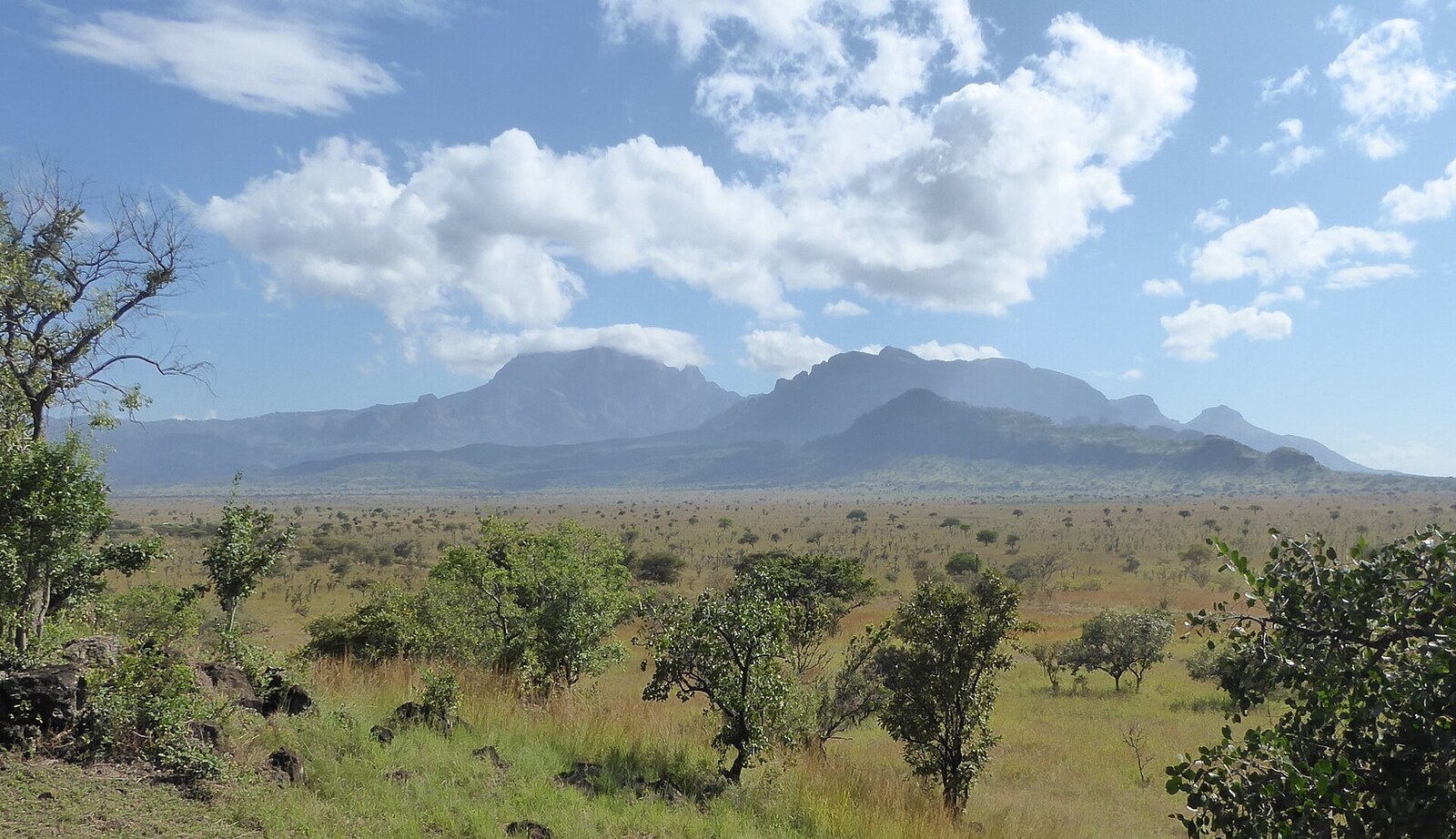
A Pian Upe Wildlife Reserve safari is open savanna game driving for cheetah, roan antelope and greater kudu, species you will not find in Uganda’s headline parks. Most visitors arrive on a Karamoja overland route and stay one or two nights at the reserve headquarters. Pian Upe covers about 2,275 square kilometres of semi arid grassland in north eastern Uganda, the country’s second largest protected area.
What a Pian Upe Wildlife Reserve Safari Actually Delivers
Start with the honest version, because almost every page written about this reserve leads with a species list and lets you assume the animals are standing about waiting.
They are not. Pian Upe is big, dry, thinly stocked country where wildlife has been hunted, displaced by cattle and burned out of its grazing for fifty years, and it is only now coming back. Game viewing here is patient work. You drive for long stretches across grassland and wooded grassland, past granite kopjes and stands of red acacia and desert date, and the sightings come in ones and twos rather than in herds filling a plain.
What makes the reserve worth the effort is what those ones and twos are. This is the only place in Uganda holding roan antelope. Cheetah live here and almost nowhere else in the country. Greater kudu, mountain reedbuck and Bright’s gazelle are on the list, and none of them appear on a standard Murchison and Queen Elizabeth itinerary. For anyone who has already done the main circuit, that is the whole argument.
The other thing that has changed is management. The wildlife authority signed a co management partnership for the reserve in Soroti, bringing in a conservation organisation and a Karamojong owned safari operator alongside nine district governments, and it was the first arrangement of its kind in the country. Ranger patrols, aerial counting and a proper bird survey programme have followed. Recent counting put wildlife numbers above seven thousand animals and rising, from a base that was close to nothing.
Game Drive Safaris Across the Pian Upe Plains
The game drive safari is the reserve’s main product and it works differently from a drive in a mature park. There is no dense network of loops. You take long transects across open grassland, work the tracks near seasonal watercourses and swing past the kopjes where the smaller antelope shelter, with a ranger from the headquarters aboard.
Take that ranger. It is a wildlife authority requirement in the reserve and it is also the difference between a productive morning and four hours of grass. The staff at the headquarters know where animals have been moving that week, which matters far more here than in a park where the game is predictable.
Morning drives start early and are much the better bet. By mid morning the heat is up, the animals have gone into shade and the light is flat. Late afternoon works too. What does not work is the middle of the day, so plan the cave walk or a community visit into that gap rather than sitting in a vehicle.
Oribi are the commonest animal you will see, in small parties, and after them come Uganda kob, common eland, topi, warthog, bushbuck, waterbuck and olive baboon. Zebra and hartebeest are present. Cape buffalo move through. Trip accounts are consistent that animals here run rather than stand, because the ones that stood got shot within living memory, so a long lens and some patience earn their place.
One practical warning that nobody publishes. Grassland burning by Karamojong herders through the dry months is normal land management and it pushes game away from whatever ground has just been fired. Visitors have gone out for two days and found the animals had shifted well away from the headquarters because the surrounding grass was alight. Ask at the gate where the burning has been, and be willing to drive further than you planned.
Cheetah, Roan Antelope and Greater Kudu on a Pian Upe Safari
These three are the reason to come, and each needs its expectations set properly.
Cheetah are real here. Monitoring work has identified individual animals and the known population sits in the low teens, including a female cub confirmed in recent counting. Thirteen cheetah across more than two thousand square kilometres of grassland is a very small number spread very thin. Any page promising you an eighty percent chance of seeing one is selling something. Treat a cheetah sighting as the best possible outcome of several days here, not as the plan.
Roan antelope are the more reliable prize and the more meaningful one. Pian Upe holds Uganda’s last population, a big horse like antelope with a black and white face mask that most safari travellers have never seen in the flesh. Rangers know the areas they favour. Ask for them by name at the gate, before you set off.
Greater kudu occur in the broken ground and thicket rather than out on the open grass, which is why drives that stay on the plains miss them. The kopje edges and the wooded strips along watercourses are the places to work.
Then there is the giraffe story, which is genuinely good news and worth knowing. Giraffe went locally extinct in Pian Upe in the late nineties. In late 2019 a translocation operation moved fifteen subadult Nubian giraffe, eleven females and four males, some 480 kilometres from northern Murchison Falls into the reserve, and further animals followed over the next two years to bring the total moved to twenty nine. The population has since grown past fifty, calves included. Seeing one is not guaranteed, though the odds improve every year and they are large animals in open country, which helps.
Birding Safaris and the Karamoja Apalis
A birding safari in Pian Upe is a dry country list, and that is exactly the point. Almost everything a birder does in Uganda happens in forest or wetland. This is the acacia and grassland habitat that the rest of the country does not offer, and it holds species that are hard or impossible elsewhere.
The one everybody wants is the Karamoja apalis, a small warbler tied to whistling thorn acacia and restricted to a narrow band of eastern Africa. Pian Upe is among the more accessible places on earth to look for it, which is a strange thing to say about a reserve this remote. The bird sits in the whistling thorn stands, so you work those patches on foot with a guide rather than from a moving vehicle.
Around it comes the rest of the dry country cast: common ostrich, secretary bird, Abyssinian ground hornbill, Jackson’s hornbill, superb starling, white headed buffalo weaver, Hartlaub’s bustard, black bellied bustard, and raptors along the hill edges. Fox’s weaver, the only bird species found nowhere but Uganda, has turned up in survey work in this part of Karamoja and its swamps.
Counts vary and it is worth knowing why. Older sources give around 242 species for the reserve. Dedicated survey work across two recent seasons confirmed 286. The co management partner quotes a much higher figure of 525 for the wider protected area rather than the reserve alone. Whichever number you prefer, the birding is better than the reserve’s reputation and it holds up even in the months when the game viewing does not.
Napedet Cave Hiking and Guided Walking Safaris
Napedet is the reserve’s cultural set piece and it is a short hike rather than an expedition. The cave sits in a rocky outcrop within the reserve, reached with a ranger, and the walk up takes a modest amount of effort for a view that opens out across the whole grassland plain.
Inside are rock paintings of animals, eland, giraffe, roan antelope and warthog among them, in red and white pigment. Dating claims run from a thousand years to three thousand and nobody quotes a controlled excavation, so treat the age as genuinely uncertain and the art as certainly old. The ground around the outcrop was a hunting and butchery site used by Pokot and Karamojong hunters, and cooking stones are still lying about.
Bats roost in the cave and rock hyrax live in the boulder field outside, which children tend to enjoy more than the paintings. Bush camping can be arranged near the caves through the reserve office if you want to be up there at first light.
Guided walking safaris on the plains are the other option, always with an armed ranger, and they change the trip considerably. Walking is how you find the apalis, the smaller antelope tracks and the whistling thorn ant colonies that make a noise when the wind blows through the galls. Do not expect big game on foot. Expect to learn the country.
Mount Kadam Trekking and the Kopje Country of Pian Upe
Mount Kadam trekking is the reserve’s serious walk. Kadam rises to 3,063 metres on the southern boundary, an extinct volcanic massif standing well above the plain, and the climb runs two to three days with camping on the mountain. Vegetation changes as you climb, from dry thorn at the base into moist forest and then open ground near the summit, and the view from the top takes in Mount Elgon to the south and the Kenyan border country to the east.
This is not a serviced trek. There are no huts, no fixed porter system and no scheduled departures. Arrangements are made through the reserve office or a Moroto based operator, and you carry or hire everything. Anyone used to the Rwenzori or Elgon central circuits should adjust their expectations downward on infrastructure and upward on solitude.
Mount Napak sits north west of the reserve at 2,538 metres and Mount Moroto rises to 3,083 metres further north east, both climbable and both usually organised out of Moroto rather than from Pian Upe itself. The granite kopjes inside the reserve are the small scale version, easy scrambles that make good sundowner spots and hold klipspringer.
Karamojong Cultural Tours Around Pian Upe
The people around the reserve are Pian, one of the Karamojong groups, with Pokot communities towards Amudat in the east and Tepeth up on the mountains. Cultural visits are arranged through the reserve office or through Karamojong owned operators based in Moroto, and the good ones are run by the communities themselves rather than staged for a coach party.
A visit usually takes in a manyatta, the thorn fenced homestead compound, the cattle at the heart of the household economy, beadwork and stool carving, and conversation about what living beside a wildlife reserve is like when your herd needs the grazing inside it. That tension is the real subject and a decent guide will let people speak about it plainly.
Two courtesies matter. Agree a photography arrangement before cameras come out, since this is a region where visitors have behaved badly and the resentment is earned. And book ahead through the reserve or an operator instead of driving into a homestead unannounced.
Security in Karamoja and What It Means for a Pian Upe Safari
Not one of the pages currently ranking for this reserve mentions security. That silence is commercial, and it leaves readers to fill the gap with whatever they last read about Karamoja, which is usually alarming and usually old.
Here is the position, plainly. Karamoja has a long history of armed cattle raiding, which a national disarmament campaign largely ended in the late two thousands. Raiding returned from 2019 as guns came back across the porous borders with Kenya and South Sudan, and the districts worst affected were Kotido, Moroto and Nakapiripirit. Military and police operations from 2021, followed by a voluntary disarmament and amnesty programme, have brought gun violence and raiding down substantially. Military assessments now describe the region as calm with isolated cattle theft rather than organised raiding.
The British foreign office does not advise against travel to Karamoja. It notes an increased security presence across the Karamoja districts because of cattle theft, reports that armed raids and robberies tied to cattle trading have caused deaths, and advises visitors to stay alert, be cautious and avoid travelling at night. That is a meaningfully different instruction from advising against travel, and it is the same category of advice given for plenty of places people visit without incident.
What this means in practice for a visit. The violence is about cattle and it is between communities, not directed at travellers. The sensible precautions are the ordinary ones: travel by day and finish driving before dark, use a driver or operator who works the region regularly, check the current position with your operator or the reserve office in the week before you go rather than relying on an advisory page written months ago, and take the reserve ranger with you as you would anyway. Uganda’s tourism police and the wildlife authority both maintain a presence in the region.
If you want a single test of whether a route is sensible right now, ask a Moroto based operator rather than a Kampala one. The people who drive these roads every week know which stretches are quiet and which are not, and they have no reason to send you somewhere that will go wrong.
Best Time to Visit Pian Upe Wildlife Reserve for a Safari
Karamoja does not follow the rest of Uganda. Most of the country has two wet seasons; this corner has one, which changes the planning entirely. Rain arrives around April, peaks in April and May, often breaks in June, returns through the second half of the year and tails off in November. December through March is properly dry, and December is the driest month of all. Annual rainfall across the region runs anywhere from about 500 mm to 1,200 mm depending where you stand, and Pian Upe sits at the wetter end of that range on its western side.
| Months | Rain | Tracks | Verdict |
|---|---|---|---|
| Dec to Feb | Very low | Firm | Best |
| Mar | Building | Firm | Good |
| Apr to May | Peak | Soft | Hard |
| Jun to Jul | Broken | Mixed | Fair |
| Aug to Sep | Steady | Soft | Birding |
| Oct to Nov | Easing | Drying | Good |
The dry window from December to February is the one to aim for. Grass is short and burnt back, so animals are visible at distances that are hopeless in June. Water is scarce, which concentrates game. Tracks are hard and the long access roads hold up. The trade off is heat, with daytime temperatures around 30C on the plains, and dust, and the smoke haze from grassland burning that flattens photographs.
March is a good compromise before the rain arrives properly. October and November work as the rain eases and the country greens up without the tracks having dried out yet, which suits birders and photographers more than it suits big game viewing.
April and May are the months to avoid for a driving trip. Black cotton soil in this region turns from firm to bottomless without warning, and a stretch that looks like a shallow puddle can swallow a vehicle to the axles. It happens to visitors and it happens to ranger vehicles, sometimes in the same spot on the same afternoon. If the reserve is your main objective, do not book it into the peak of the rains.
Whatever the month, bring warm clothing for the evenings. The plains sit around a thousand metres and nights cool off sharply, and anyone camping at the headquarters or up at Napedet will want a layer.
Where to Stay on a Pian Upe Safari
Accommodation is the reserve’s real constraint, and knowing the whole list takes about a minute because there is very little of it.
Karamoja Overland Camp is the one proper tourist property in the reserve, a small tented camp of self contained tents with decks looking out over the plain, sitting just below the wildlife authority facilities at the headquarters. It is mid range in price and standard, it has electricity and hot water, and it is run in connection with the Karamojong owned operator involved in the reserve’s co management. Book it well ahead, because a camp this small fills for a single group.
The wildlife authority runs bandas at the headquarters, four of them, named after animals found in the reserve, with most self contained. These are simple, cheap and entirely adequate, and they are what independent travellers and birding groups use. Camping with your own tent is possible at the headquarters and, by arrangement, out near the Napedet caves.
Outside the reserve, Moroto has the widest choice within reach and it is the usual base for anyone doing Karamoja properly rather than passing through. Mbale, four to five hours south, has the best hotels in the wider region but is too far to day trip from. Nakapiripirit and Namalu have basic guesthouses.
Bring your own food and water if you are camping or in the bandas. The trading centres nearby stock the basics and not much more, and there is no restaurant at the headquarters beyond what the camp serves its own guests.
Getting to Pian Upe Wildlife Reserve for Your Safari Trip
The reserve entrance sits on the Mbale to Moroto road, which makes access simpler than the remoteness suggests. You do not need to leave a main road to reach the gate.
From Kampala the usual run is east through Jinja and Mbale, then north on the Muyembe and Namalu road to the reserve, and honest drive times are seven to nine hours rather than the five or six some pages claim. From Mbale it is around three to four hours. Breaking the trip at Mbale or Sipi Falls is what most people do and it turns a punishing day into a pleasant one, since Sipi sits directly on the route.
In the heavy rains the Muyembe to Namalu stretch has historically been the weak link and could stop traffic entirely. The alternative is to run north through Soroti and Iriiri, which is longer and more reliable. Road surfacing in Karamoja has improved a great deal in recent years and drive times have come down, so check the current state rather than trusting an older account.
Take a 4×4 with proper clearance. This is not negotiable for the tracks inside the reserve at any time of year, and the access roads in the wet demand it too. Fuel up in Mbale or Moroto rather than counting on the trading centres. Offline mapping is worth setting up before you leave signal, and drivers who work the region rate Maps.me over the alternatives out here, used alongside advice from your operator or camp rather than instead of it.
Where the reserve fits in a route is the question worth answering. Pian Upe rewards a dedicated two night stay if the roan, the kudu and the apalis are what you are after. It also works as the natural first or last stop on a Karamoja overland loop taking in Sipi Falls, Pian Upe, Moroto and Mount Moroto, the Bokora and Matheniko reserves and then Kidepo Valley in the far north, which is a ten day to two week trip and one of the best routes in the country. Flying is possible into airstrips in the region for anyone short of time.
Pian Upe Safari Questions Travellers Ask Most
What does it cost to enter Pian Upe Wildlife Reserve?
Reserve entry has been running at around USD 35 for foreign non residents, roughly USD 25 for foreign residents and a much lower shilling rate for East African citizens, with children aged five to fifteen paying a small fraction of the adult rate. Vehicles are charged separately and a ranger guide is an additional daily fee. A day ticket runs 24 hours from the time you enter. Rates move between tariff cycles and the wildlife authority does not publish reserve fees in a form that is easy to check, so confirm the figure with the authority or your operator before you budget.
What does it cost to stay at Pian Upe?
Two options and a wide gap between them. The tented camp at the headquarters has been quoted from around USD 150 per tent per night, which is mid range by Ugandan standards and the only serviced accommodation inside the reserve. The wildlife authority bandas and the campsite cost a small fraction of that, and camping with your own tent is cheaper again. Add fuel for a long drive and a 4×4 hire if you are not on an operator’s vehicle, since those two usually cost more than the beds do on a Karamoja trip.
Is Pian Upe safe to visit?
Yes, with ordinary precautions. Karamoja’s cattle raiding is between communities rather than aimed at visitors, and it has fallen a long way since the peak of the recent flare up, following military operations and a voluntary disarmament and amnesty programme. Major foreign travel advisories do not advise against travel to the region. They do advise staying alert, being cautious and not driving at night, which is sound advice for the whole of rural Uganda. Use an operator who works Karamoja regularly and check the current position in the week before you travel.
How likely are you to see cheetah at Pian Upe?
Unlikely on a short visit, and anyone telling you otherwise is guessing. Monitoring has identified around thirteen cheetah across more than two thousand square kilometres, which is a very thin density in country where the grass can stand higher than the animals for half the year. Come in the dry months, spend two or three days, take a ranger who knows recent movements, and treat a sighting as a rare piece of luck. Roan antelope and greater kudu are the more realistic targets and are just as hard to see anywhere else in Uganda.
How many days do you need at Pian Upe?
Two nights is the working answer. That gives two early game drives, the Napedet cave walk and either a community visit or a morning on foot looking for the apalis, without spending your only drive learning where the animals are. One night is enough to say you have been and not much more. Anyone adding Mount Kadam needs three or four days on top, since the climb runs two to three days with camping and you will want a recovery day.
Can you self drive to Pian Upe?
Yes, and plenty of people do. The gate sits on the main Mbale to Moroto road, so you are not finding your own way across country, and a ranger joins you at the headquarters for drives inside the reserve. You need a 4×4 with real clearance, a spare and the tools to use it, offline maps loaded before you leave signal, and enough fuel to get to Moroto. Avoid the peak of the rains in April and May, when black cotton mud has stopped vehicles that had every right to get through, ranger vehicles included.
What should you pack for a Pian Upe safari?
Light long sleeves and long trousers in muted colours for the heat and the thorn, a proper sun hat and high factor sun protection, and walking boots for the cave and the kopjes. Add binoculars, which matter more here than anywhere else in Uganda because the animals keep their distance, plus a long lens if you photograph. A warm layer for the evenings, insect repellent, far more water than you expect to drink, a dust cover for camera gear, and cash for reserve fees since card payment at the headquarters is not something to rely on.
Is Pian Upe worth visiting or is it just a stop on the way to Kidepo?
Both answers are defensible and the right one depends on you. If this is your first Uganda safari, go to Murchison, Queen Elizabeth or Kidepo, where the game viewing is far richer, and treat Pian Upe as a scenic overnight if your route passes it. If you have already done those, or you are a birder, or the idea of Uganda’s only roan antelope and a serious cheetah population appeals more than a guaranteed lion, Pian Upe deserves a dedicated two nights. Visitors who arrive expecting a park and leave disappointed almost always booked it as the wrong thing.
Why do sources give such different sizes for the reserve?
Because different boundaries are being counted. Around 2,275 square kilometres is the most commonly cited area for the reserve proper. The wildlife authority’s own listing gives 231,400 hectares, a little over 2,300 square kilometres. The co management partner describes it as more than 2,000. The 2,788 figure repeated across many tour pages appears to fold in adjoining ground or simply to have been copied without checking. All of them agree on the part that matters, which is that only Murchison Falls is bigger.
Uganda Safaris works with Ugandan operators who actually run Karamoja, including Karamojong owned companies with a stake in the reserve itself, which is a very different thing from a Kampala desk selling a route it has never driven.
No listing on the site is built around Pian Upe on its own. The nearest is a fifteen day best of Uganda circuit, which runs north through Moroto to Kidepo on the same road the reserve gate sits on.
Ask whoever quotes you how recently they were at the Pian Upe gate, and ask an operator directly to build the reserve into a Karamoja loop that works with the season you are travelling in.