

A Queen Elizabeth National Park safari works best across three or four days, split between the northern savanna, the Kazinga Channel and the Ishasha sector in the far south. Most operators build it as a two or three night stop inside a longer Uganda circuit. One such listing is a wildlife and gorilla safari taking in Murchison Falls, Kibale and Bwindi. The park spreads over 1,978 square kilometres of rift valley floor in western Uganda, sitting between Lake Edward and Lake George.
Why Queen Elizabeth National Park Anchors Most Uganda Safaris
Almost every Uganda itinerary that includes savanna game viewing runs through here. The reason is position rather than marketing. Queen Elizabeth sits on the road between Kibale Forest and Bwindi, so a traveller who has come for chimpanzees and gorillas passes the gate anyway, and the park gives them the plains, the water and the big herds that neither forest can.
The Uganda Wildlife Authority counts more than 95 mammal species and over 600 birds inside the boundary, which is the highest bird list of any protected area in the country and one of the highest in Africa. Four of the Big Five live here. Rhino do not, and have not since the civil unrest of the seventies, so anyone hoping to tick all five needs to add the rhino sanctuary at Ziwa on the road north. Giraffe and zebra are also absent, which surprises visitors arriving from Kenya.
What you get instead is variety packed into a small area. Open grassland at Kasenyi. A 32 kilometre channel of water thick with hippo. Craters blown out of the ground by old volcanic activity, some holding flamingos, one being mined for salt by hand. A gorge cut a hundred metres deep through the savanna with a chimpanzee community living in the strip of forest at the bottom. Rain forest at Maramagambo. Two lakes big enough to have their own fishing industry, with eleven enclave villages living inside the park under a UNESCO biosphere arrangement that dates back to the seventies.
The park went up as Kazinga National Park in 1952 and took its present name two years later after a royal visit. It has a quiet sister relationship with Queen Elizabeth Country Park in the South Downs of England, which is the sort of fact that turns up in a pub quiz and nowhere else.
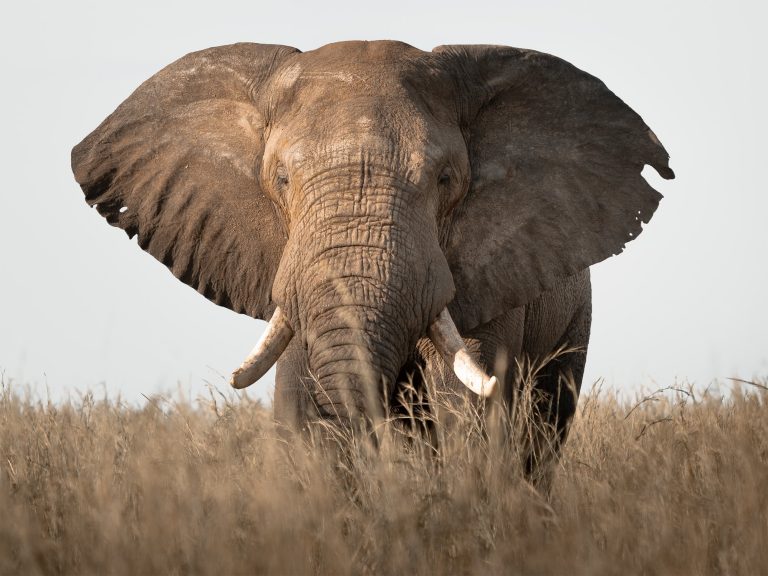
Is it worth the drive? Honest answer: yes, but manage what you expect. Game density here is lower than the Mara or the Serengeti, and visitors who arrive straight from East Africa’s big migration parks sometimes find the drives slow. What Queen Elizabeth gives you in exchange is space. It is entirely normal to sit with thirty elephants and not see another vehicle, which is not a sentence anyone writes about the Mara in August.
Game Drive Safaris on the Kasenyi Plains
The Kasenyi game drive safari is the park’s standard morning activity and the one most likely to produce cats. Kasenyi is short grass country on the eastern side of the park, north of the Kazinga Channel, and it exists as a wildlife spectacle because of one animal: the Uganda kob.
Kob gather here in the thousands and hold lekking grounds, small patches of trampled ground where males stand and display and fight for the right to breed. The lek is fixed, the kob keep coming back to it, and lions have worked this out. Guides drive the lek edges first thing because that is where the ambush happens.
Drives leave around half past six in the morning and again in the late afternoon, usually around four. Morning is the productive one. The cats are still moving, the light is workable and the tracks have not yet dried into dust. A Uganda Wildlife Authority ranger guide rides with you and is worth taking even on a guided trip, since the rangers know which pride was where yesterday and the radio traffic between vehicles runs through them.
Beyond lions, Kasenyi holds spotted hyena in numbers, leopard in the thicker scrub along the drainage lines, elephant moving between the plains and the water, buffalo in large herds, warthog, topi and waterbuck. Side striped jackal turn up at dawn. The park track network runs to roughly 200 kilometres, so a driver who knows it can keep you off the busy loops.
Kazinga Channel Boat Safari Between Lake Edward and Lake George
The Kazinga Channel boat safari is the single activity nobody who visits should skip, and it is the one thing here that genuinely outperforms comparable parks. The channel is a natural waterway roughly 32 kilometres long, joining shallow Lake George in the north east to much larger Lake Edward in the south west, and it carries what is widely held to be the densest concentration of hippo anywhere in the world.
Two hours on a launch puts you a few metres from pods of forty and fifty animals, stacked along the banks in the shallows. Nile crocodile bask on the mud. Buffalo stand chest deep. Elephant come down to drink and, in the drier months, to cross. The birding from the water is the best in the park: African skimmer, pied kingfisher in ridiculous numbers, saddle billed stork, yellow billed stork, African fish eagle, marabou, cormorant colonies on the dead trees.
Nobody explains the booking properly, so here it is. There are two operations. The Uganda Wildlife Authority runs the public launches from the jetty below Mweya, two decked boats holding around forty passengers split between an upper and lower deck, departing at fixed times through the day starting mid morning and running until late afternoon. Mweya Safari Lodge runs its own smaller boats seating ten to twelve, with fewer departures and more flexibility, including private hire.
The practical differences matter. On the big public launch the upper deck is worth the climb for sightlines and photography, and it fills first. Late afternoon is the productive departure because animals come to water as the heat drops, and the light behind you on the outbound leg is better. The boat turns at the Lake Edward end and comes back the same way, so a seat on either side gets its turn. Bring a hat regardless; there is shade on the lower deck and much less above.
Along the northern bank sit the fishing enclaves, Katunguru and Kasenyi among them, communities licensed to live and fish inside the park. You pass them on the launch. They are part of why the biosphere designation exists, and they are also the front line of human wildlife conflict here, since hippo and elephant do not respect the line between a village and a park.
Ishasha Tree Climbing Lion Safari in the Southern Sector
The Ishasha tree climbing lion safari is the park’s headline act and the part of this guide where honesty matters most, because almost nobody writes about it accurately.
Ishasha is the far southern sector, reached on a park road running down the western edge. It is fig and sycamore country, flat, hot and full of tsetse. The lions here spend a good part of the day lying along horizontal branches four or five metres up, draped over them with legs hanging. The behaviour is not unique in Africa but it is close: Ishasha and Lake Manyara in Tanzania are the two places where a whole population does it habitually rather than occasionally. Why they do it is unsettled. The plausible explanations are heat, since a breeze moves through a fig canopy that never reaches the ground, and tsetse, which are worse at ground level. Sightlines over long grass probably help too. No researcher has closed the question.
Now the part the brochures leave out. Uganda’s largest ever carnivore survey put the whole Queen Elizabeth lion population at around 39 animals across 2,400 square kilometres, a fall of more than forty percent from the previous count and a fall of over ninety percent from the four hundred or so believed present in the eighties. Poisoning by cattle keepers and snaring set for bushmeat did most of that damage. Ishasha’s share of those 39 is small. Cubs have been recorded in several Ishasha prides recently, and the Uganda Wildlife Authority has signed a ten year co management partnership with the Wildlife Conservation Society covering the sector, with tree climbing lion recovery named as a priority. But the population you are going to look for is a fraction of what it was.
What that means for a visitor is simple. Roughly half of people who make the trip see a lion in a tree. Trip reports routinely describe three and four hour searches ending with nothing, and equally often describe rolling into the fig groves and finding a pride within twenty minutes because a ranger had radioed a position. The variable is information, not luck alone. Go with a driver who is talking to the Ishasha rangers, go early morning or late afternoon when the cats are up rather than lying in deep shade, and give it a full session rather than an hour on the way past.
Two practicalities. There is nothing to buy in Ishasha, so take a packed lunch and water from your lodge. And wear light neutral colours; dark blue and black draw tsetse, and Ishasha is the sector where that stops being trivia and starts being a bite on the back of the neck.
The sector’s real advantage is routing. Ishasha sits on the road to Bwindi, so a night here breaks the long drive south and turns a lion search into something you were going to pass anyway rather than a detour costing a whole day.
Kyambura Gorge Chimpanzee Trekking Safari
The Kyambura Gorge chimpanzee trekking safari drops you off the savanna into a green slot in the ground, about a hundred metres deep and running some eleven kilometres, with a river at the bottom and a ribbon of gallery forest along it. Locally it is called the valley of the apes. A habituated chimpanzee community of roughly fifteen to twenty animals lives in that ribbon, cut off from the larger forest blocks by open grassland.
The trek starts with a briefing at the Fig Tree camp on the rim, then a steep descent on a clay path that turns slick after rain. Down at the river you follow the ranger along the forest floor, listening. Chimps announce themselves long before you see them. Time on the trail runs anywhere from an hour to five, and once the group is found the permit allows one hour with them.
Here is the part that needs saying plainly, because six ranking guides sell this activity and none of them says it. Finding the Kyambura chimps is roughly a fifty to seventy percent proposition, better in the dry months when the group’s movements are more predictable. Kibale Forest, two and a half hours north, runs at ninety percent and above. If chimpanzees are the reason you came to Uganda, do them at Kibale and treat Kyambura as a bonus. If you have already done Kibale, or if you want a hard walk through genuinely dramatic terrain with a decent chance of chimps at the end, Kyambura earns its place.
Kalinzu Forest Reserve, on the eastern edge near the Ishaka road, is the third option and the one most people have never heard of. Its community runs to around forty animals in continuous forest, the walking is far easier than the gorge, and the odds are better than Kyambura. It sits outside the national park boundary, which is why park focused guides skip it.
The gorge is more than chimpanzees. Black and white colobus move through the canopy, red tailed monkey and olive baboon are common, and the bird list along the river runs to several hundred species. Hippo use the pools. Take a walking stick if the rangers offer one, and expect to be muddy.
Crater Lake Tours and the Katwe Salt Works Experience
North of the Kazinga Channel the ground erupts into a field of explosion craters, blown out when this stretch of the Albertine Rift was volcanically active. The crater lake tour runs as a drive along the ridge road through the Katwe and Kikorongo fields, climbing from the channel at 910 metres to around 1,350 metres at the high points, and it is the best scenery in the park by a distance. Queen’s Pavilion, at the top, is where the royal party stopped and where most vehicles pull in now.
Some craters hold water, some hold forest, some are dry bowls with cattle in them. Lake Munyanyange takes lesser flamingo seasonally, usually from around August into November when conditions suit, and the sight of pink birds against a black crater wall is worth timing a drive for. Elephant and buffalo use the crater floors. The drive works as a late afternoon activity when a game drive would be winding down anyway.
Lake Katwe is the one to stop at. It is a salt lake, hypersaline, and it has been mined by hand for something like seven hundred years. Miners stand waist deep in brine pans marked out with sticks, cutting slabs of rock salt from the lake bed and stacking them on the bank. The pans are owned and inherited. The work is brutal, the brine burns skin, and the community runs its own guided tour through a tourism information centre at the lakeside, which is the only way you should visit. Go with a guide from the village, not on your own.
Community tourism around the park has grown well beyond the salt works. The Leopard Village project near the Ishasha side, the Kikorongo women’s craft and dance group on the Kasese road, and the Nyanz’ibiri cave community in the crater field all run visits that put money into households living with crop raiding elephants. These are not padding on an itinerary. They are the mechanism by which people who lose a season’s cassava to a hippo get a reason to tolerate the park.
Maramagambo Forest Walks and Birdwatching Safaris
Maramagambo is the block of medium altitude forest on the south eastern side, and the Maramagambo forest walk is the park’s quiet activity. Trails run between crater lakes with names most visitors never learn, Kyasanduka and Nyamasingiri among them, through forest holding red tailed monkey, black and white colobus, L’Hoest’s monkey, baboon and a chimpanzee population that is not habituated and will not be seen.
The bat cave is the reason most groups come. A viewing shelter looks into a cave mouth packed with Egyptian fruit bats, and a resident python or two lives in the cave feeding on them. The shelter exists because the cave carries Marburg virus in its bat population, so visitors watch from behind a barrier rather than entering. Take that seriously.
For birdwatching safaris, the park is Uganda’s headline site and the reason many birders come to the country at all. The list runs past 600 species, with roughly a hundred waterbirds and over fifty raptors. The habitat mix does the work: papyrus swamp, open water, short grass plain, crater rim, gallery forest and closed canopy forest, all reachable in a day.
The prize is shoebill, which uses the papyrus fringes of Lake George and the Kazinga swamps. It is not a given, and the birds that show most consistently are in the Mabamba wetland near Entebbe, but Queen Elizabeth shoebill do get seen and the birders who find them are the ones who went out at first light with a local guide. Papyrus gonolek, papyrus canary, African skimmer, black bee eater, white winged warbler and Verreaux’s eagle owl are all realistic targets. Birding is good year round, with the migrant boost running from around November into April.
Lion Tracking and Mongoose Research Safaris With the Park Ecologists
The experiential lion tracking safari is the park’s most interesting activity and the one with the fewest places available. You go out with the carnivore research team, in their vehicle, carrying a telemetry receiver, and you help locate collared lions by signal. When the beeping tightens you go off road, which no other activity here permits, and the researchers record what the pride is doing while you watch.
It runs at dawn and again in the late afternoon, takes a small number of people per session, and books out well ahead in the peak months. It is not a game drive with a gadget attached. The team is doing real work, the data feeds the monitoring that produced the population figures quoted earlier in this guide, and the fee goes to the research programme rather than into a general pot.
The same programme runs mongoose tracking on the Mweya peninsula, which is a gentler morning and a better fit for families. Banded mongoose troops around Mweya have been studied continuously for decades, making them one of the longest running wild mammal studies anywhere. You walk with a researcher, follow a habituated troop on foot, and watch behaviour at a metre or two. Small children who would fidget through a three hour game drive tend to love it.
Both activities are capacity limited by design. If either matters to you, ask your operator to book at the point you confirm dates, not when you arrive.
Planning Your Queen Elizabeth Safari: Sectors, Days and Seasons
The planning decision that shapes everything is which sectors you take. They are far apart, the park speed limit is 40 kilometres an hour, and the roads between them are unsealed. Kasenyi to Ishasha is about 90 kilometres and takes two and a half hours in dry conditions, longer after rain. Nobody does the whole park from one base comfortably.
| Sector | Base near | Main draw | Nights |
|---|---|---|---|
| Kasenyi | Mweya | Lion, kob leks | 1 to 2 |
| Mweya | Mweya | Channel launch | Same base |
| Kyambura | Kyambura rim | Chimp trek | 1 |
| Ishasha | Ishasha | Tree lions | 1 |
Two nights is the minimum that works: one at Mweya for a Kasenyi drive and the channel launch, one at Ishasha on the way to Bwindi. Three nights lets you add the gorge or the craters without rushing. Four is comfortable and is what people who come chiefly for the park should take. A four day gorilla and wildlife safari through Bwindi and Queen Elizabeth is among the shorter listings that include it.
Seasons here are softer than the standard dry and wet framing suggests. Rain falls in every month somewhere in the park, and the two wetter periods run roughly March into May and again September into November, peaking in April and November. Rainfall varies enormously by location, from around 1,250 millimetres a year in Maramagambo forest down to about 750 along the Kazinga Channel, which is why the channel country stays open and drivable when the forest is soaked. Temperatures sit between about 18 and 28 degrees Celsius most of the year, warm by day and mild at night.
Packing follows from that. Neutral colours, long sleeves and long trousers for tsetse country in Ishasha, and nothing dark blue or black. A fleece for the six o’clock start, because the open vehicle at dawn is colder than the equator suggests. Waterproofs in any month. Boots with grip if you are doing the gorge, since trainers on that clay are a bad idea. Binoculars matter more here than in a park with bigger herds, and a torch is worth having because electricity at the budget camps can be intermittent.
Rules are the usual ones and are enforced. Stay in the vehicle when cats are present, which visitors do break and rangers do act on. No off road driving except on the research activities. Entry tickets run for 24 hours from the moment they are issued, so an afternoon arrival and a morning drive the next day can sit inside a single ticket if the timing works, which is a saving worth asking your operator to plan around.
Self drive is possible and a reasonable number of independent travellers do it. Four wheel drive is not optional, two spare tyres and a repair kit are sensible, and the sector roads are unsigned in places. Weigh it honestly against a hired driver guide, who costs more but knows where yesterday’s lions were and can talk to rangers in Runyankole. On the tree climbing lions in particular, that difference is most of the reason some people find them and others spend four hours looking at empty fig trees.
Getting to Queen Elizabeth National Park and Where to Stay
By road from Kampala the run is around 400 kilometres via Masaka and Mbarara, six to seven hours with stops, entering at Katunguru gate on the main road or Kabatoro gate south of it near Katwe. From Entebbe add roughly forty minutes. Coming from Kibale Forest, which is the usual routing on a chimp and gorilla circuit, it is about 110 kilometres and two and a half to three hours. From Kigali across the Katuna or Cyanika border it is four to five hours to Ishasha.
Flying cuts the drive to a hop. Scheduled light aircraft leave Entebbe in the morning and reach Kasese or Mweya airstrips in about ninety minutes, with several departures on the main daily rotation. Kasese sits around 25 kilometres from the park boundary. Ishasha has its own strip, which is the useful one if you are flying on to Bwindi afterwards.
Accommodation splits cleanly by sector. Around Mweya, the old government built Mweya Safari Lodge holds the peninsula position above the channel, and there is a hostel alongside it for people travelling on much less. Katara Lodge and Elephant Plains sit up on the escarpment east of the park with long views over the plains. On the Kyambura rim, Kyambura Gorge Lodge is the established option, a converted coffee store run alongside a community trust. Down south, Ishasha Wilderness Camp puts tents along the Ishasha river under a canopy, and Ishasha Pride Lodge and a spread of smaller camps cover the mid range. Around Katunguru and the Kasese road there is a long list of budget places, including Bush Lodge, Irungu Safari Lodge, Enganzi, Buffalo Safari Lodge and Park View, most of them family run.
Book early for the peak months. The named lodges at Mweya and Ishasha fill six months ahead for June through September and for the Christmas period, and the mid range camps around Katunguru are the fallback everyone reaches for at the same time.
Queen Elizabeth National Park Safari Questions Answered
How many days do you need in Queen Elizabeth National Park?
Two nights is the working minimum and covers a Kasenyi game drive, the Kazinga Channel launch and a night at Ishasha on the way south. Three nights adds the gorge trek or the crater drive without compressing anything. Four is right for anyone whose main reason for coming to Uganda is savanna game viewing rather than primates. Less than two nights and you are paying a full day’s entry to spend most of it driving. A six day gorilla safari that pairs Kibale with this park is listed on the site.
What do park entry and activities cost?
Park entry for a foreign non resident has been running at 40 US dollars per adult per day, with children at half that and under fives free, and the ticket covers 24 hours from issue. A ranger guide for a game drive adds around 25 dollars, and a foreign registered vehicle is charged separately for each 24 hours, from 40 dollars for a saloon car up to 150 for a four wheel drive, which matters for self drivers bringing a car across a border. Driving yourself without a guide is 10. The Kazinga Channel launch is about 30 dollars per person on the Uganda Wildlife Authority boats and around 40 on the smaller lodge boats. A Kyambura chimpanzee permit is 100 dollars for foreign non residents and 80 for residents, and it does not include park entry; it rises to 200 for non residents on 1 January 2027. Experiential lion tracking is 200 dollars for foreign non residents and 150 for residents, sitting on top of a 10 dollar community fee and the vehicle charge, and it goes to 500 for non residents on the same date. Everything quoted here is the rate in force now under the Uganda Wildlife Authority tariff; the increases it has announced do not apply until 1 January 2027, so treat these as the shape of the bill and have your operator confirm before you pay.
How likely are you to actually see the tree climbing lions at Ishasha?
About half the people who go looking find one. That is the honest figure and it is lower than any brochure implies, because the park’s whole lion population has fallen to around 39 animals. Your odds improve sharply with a driver who is in radio contact with the Ishasha rangers, with a morning or late afternoon search rather than the middle of the day, and with allowing a proper session instead of an hour in passing. Plan the night at Ishasha as a stop on the road to Bwindi and the search costs you nothing extra if it fails.
Is Kyambura chimpanzee trekking worth doing if you are already visiting Kibale?
Only as an extra, not as your main chimp experience. Kibale finds its groups more than nine times out of ten. Kyambura runs at roughly half to two thirds, because the community is small and confined to a narrow forest strip. What Kyambura offers instead is the gorge itself, a genuinely steep walk into a hidden green corridor with hippo in the pools and colobus overhead. Go for the place. Treat the chimps as a possibility.
What should you pack for a Queen Elizabeth safari?
Neutral colours in long sleeves and long trousers, and nothing dark blue or black, since both draw tsetse and Ishasha is full of them. A fleece for dawn drives, waterproofs whatever the month, and boots with real grip if the gorge is on your list. Binoculars earn their space here more than in parks with bigger herds. Carry your own water and a packed lunch for the Ishasha day, because there is nothing to buy down there. A torch is useful at the smaller camps.
Can you self drive, or do you need a guide?
You can self drive, and plenty do. Four wheel drive is required rather than advisable, and two spares plus a repair kit is the standard advice for the park roads. The real question is not whether you can navigate but whether you will find anything. A hired driver guide is plugged into the ranger network, knows which lek the lions worked yesterday, and turns the Ishasha search from a gamble into something closer to a plan. For a first Uganda trip, take the driver.
What do lodges cost across the tiers?
Budget camps around Katunguru and the park edge sit at roughly 35 to 70 US dollars per person per night, mid range lodges from about 75 to 185, and the luxury properties at Mweya, Kyambura and Ishasha from around 190 upwards, with the best known of them reaching 350 to 550 per person in the peak months. Most park lodges quote full board, so meals are inside the rate and drinks are not. Rates drop noticeably in the wetter months of March to May and October to November.
When is the best time for a Queen Elizabeth safari?
June through September and December through February give the firmest roads, the shortest grass and the best game viewing, and they are also the busiest and priciest. April and November are the wettest, cheapest and greenest, with the best birding of the year and the worst conditions for finding cats. September and early December are the value windows, dry enough to work and quiet enough to have the plains to yourself.
Uganda Safaris works with licensed Ugandan tour operators who run this park week in and week out, know which rangers to call at Ishasha, and can hold a lion tracking place before it goes.
Compare what different operators include. A focused three day Queen Elizabeth safari out of Kampala is a different proposition from a circuit that also takes in the forests.
For the circuit version, a seven day gorillas, wildlife and chimps route puts this park between Kibale and Bwindi. Send an enquiry to the operators whose trip shape fits yours. No deposit is taken to ask a question.
2 Places to Visit in This Area
Individual sites within reach of here, each with its own guide. Some are written up because the name circulates and the place does not, which is worth knowing before you plan a drive around one.
Safaris That Visit Queen Elizabeth National Park
3 of the 14 safaris listed here that visit Queen Elizabeth National Park, from different operators where the listings allow it. Each is sold and run by an independent Ugandan tour company. This site lists them and passes on enquiries; it takes no booking and charges you nothing.
15 Days Uganda Safari
by Wild Whispers Africa Verified operator

4 Days Uganda Gorilla and Wildlife Safari
by Tranquil Safaris Verified operator


4 Days Gorilla Safari Uganda
by Oree Safaris Verified operator