
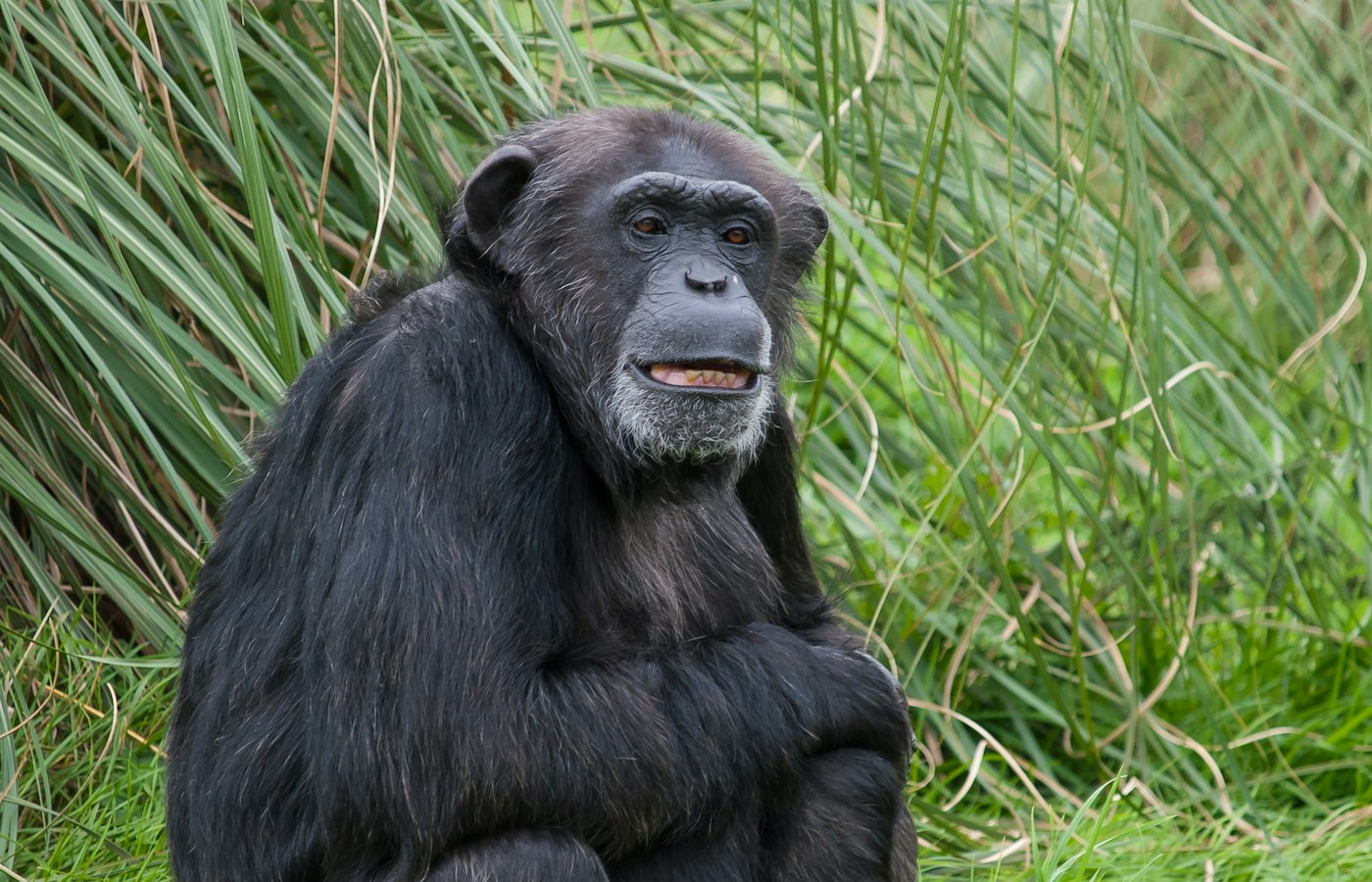
Kalinzu Forest is Uganda’s budget option for chimpanzee trekking, sitting a short drive from Queen Elizabeth National Park with a permit priced well under Kibale’s. Most visitors book it as a half day stop while crossing western Uganda. The reserve covers about 137 square kilometres of tropical forest in Bushenyi District, holds roughly 320 chimpanzees, and is run by the National Forestry Authority rather than the wildlife authority.
Kalinzu Forest Chimpanzee Trekking and What the Trek Involves
Chimpanzee trekking in Kalinzu Forest runs twice a day, at eight in the morning and again at two in the afternoon. You report to the forest station at Nkombe, sign in, sit through a short briefing on the rules, and walk out with a ranger guide. Groups are capped at six people, which is smaller than most park systems allow and makes a real difference to how much you actually see.
The walking is not hard. Kalinzu sits between roughly 1,000 and 1,500 metres, and the ground undulates rather than climbs, so the descent into the forest is the only part that will trouble anyone reasonably mobile. Trip reports repeat the same comparison: much easier than gorilla trekking, no long uphill sections, thick underfoot but flat once you are down among the trees.
Duration is the variable nobody can promise. Thirty minutes if the group is close to the trail head, four hours or more if they moved overnight. Two to three hours door to door is the usual figure. Once you find them, the contact window is one hour, timed, and the ranger will call it whether or not the light is any good.
What the hour is like depends entirely on where the chimps are. High in the canopy and you spend sixty minutes staring upward through leaves, which is hard on the neck and harder on a camera. On the ground and it becomes something else: grooming, squabbling, the pant hoot chorus running through the trees. Both happen. Neither is bookable.
Kalinzu’s Chimpanzees and Why Tracking Them Works Here
Chimpanzee tracking in Kalinzu exists because of research rather than tourism. Primates in this forest have been studied continuously since 1992, and the habituated groups that visitors now walk out to were habituated by scientists working on diet, ranging and social behaviour long before anyone sold a permit. That is an unusual origin story for a Ugandan trekking site and it explains why a reserve with almost no visitor infrastructure has chimps that tolerate people at close range.
The reserve holds somewhere around 320 chimpanzees. Roughly fifty are habituated and available to trekkers, with the rest living wild across the wider forest. Numbers quoted elsewhere run from 300 to over 320, and nobody publishes a recent census, so treat all of them as approximate.
Sighting odds are the figure to be careful about. Operator pages almost all print 95 percent. Comparison sources put Kalinzu closer to 50 to 70 percent, and the gap between those two claims is wide enough that one of them is marketing. The honest position is that Kalinzu finds its groups often but not as reliably as Kibale, where the habituated community is larger, better tracked and confined to a smaller working area. If seeing chimpanzees is the single reason for your trip, that matters. If it is one activity among several, it matters much less.
Booking a Kalinzu Chimpanzee Trekking Permit and Who Issues It
This is where most travellers get confused, and the confusion is worth clearing up before you pay anyone. Kalinzu is a central forest reserve, not a national park. It is managed by the National Forestry Authority, so the chimpanzee permit is an NFA product sold under NFA’s tariff. The Uganda Wildlife Authority, which sells every gorilla and chimpanzee permit you have read about for Bwindi, Kibale and Kyambura, has nothing to do with it.
That single fact explains almost every pricing contradiction you will find online. Pages that quote a Uganda Wildlife Authority figure for Kalinzu are quoting the wrong body. Pages that quote an old NFA figure are quoting a tariff that has since moved. NFA’s own website has not been kept current either, which is why the number it publishes sits far below what operators now charge. Figures and the full spread are in the questions section below.
Practically, you have three routes. A tour operator books it for you as part of an itinerary, which is what most visitors do and costs nothing extra if the operator is honest about the pass through. You contact the NFA office directly and arrange it in advance. Or you turn up at the Nkombe forest station and buy on the day, which usually works because Kalinzu is rarely full, though it is a gamble in the July to September window.
Permits are per person per session. Bring your passport, since the visitor category on the permit is checked against it. East African citizens and foreign residents pay considerably less than foreign non residents, which is standard across Uganda.
Chimpanzee Habituation Experience Safaris in Kalinzu
The chimpanzee habituation experience is the longer version and it is sold at Kalinzu alongside the standard trek, though far fewer people take it. Instead of one hour with an already habituated group, you spend most of a day with researchers and trackers working a community that is still getting used to human presence. You leave before dawn, you follow the group from their night nests, and you stay with them through the day.
It is a different product from a different angle. The standard trek is a sighting. Habituation is a day of fieldwork where the chimps may be visible for long stretches or barely visible at all, and where the interest is in watching a wild group behave normally rather than in getting a clean photograph. Anyone who has done a standard trek and found the hour too short is the natural customer.
Be realistic about the physical side. A habituation day is six to twelve hours in the forest with no facilities, no shop and nowhere to sit down that is not a log. Take more water than you think, take lunch, and expect to be wet. It is also worth confirming availability directly rather than assuming, since habituation slots at Kalinzu are not run every day and the number sold is small.
Primate Tracking Beyond the Chimpanzees in Kalinzu
Kalinzu carries six species of diurnal primate, and a decent primate tracking walk here will usually turn up three or four of them without any special effort. The chimpanzee is the headline. The other five are blue monkey, red tailed monkey, L’Hoest’s monkey, black and white colobus, and olive baboon.
Blue monkeys are the ones you will hear before you see, moving in loose parties through the mid canopy. Black and white colobus are the easiest to photograph because they sit still and their coats show against green. L’Hoest’s is the prize for anyone keeping a list, a dark, ground favouring monkey with a pale throat ruff that is restricted to the Albertine Rift forests and is far from guaranteed anywhere. Red tailed monkeys are common and busy. Baboons work the forest edge and the road.
Nocturnal primates are present too, though there is no organised night walk programme at Kalinzu the way there is at some Ugandan forests, so seeing a potto or a bushbaby comes down to luck around the campsite after dark.
Larger mammals exist but are rarely seen. Forest elephants move through, and River Kajojo takes its name from them, kajojo being the local word for elephant. Duiker, bushpig and giant forest hog are all recorded. Almost nobody sees them. Kalinzu is a forest where the primates and the birds are the wildlife, and going in expecting anything else leads to disappointment.
Birding Safaris and Butterfly Watching in Kalinzu Forest
Birding safaris in Kalinzu Forest are the quietest good thing about the place. The reserve’s list runs to around 378 species, which is high for a forest of this size and reflects both the altitude range and the mix of mature and regenerating woodland. Great blue turaco is the bird everyone wants and one of the more likely to show, a big, absurdly coloured thing that crashes between trees rather than flying between them.
Beyond the turacos, expect hornbills, a good run of sunbirds, forest flycatchers, woodpeckers, greenbuls and the Albertine Rift specialities that draw serious listers to this side of Uganda. Early morning is when the forest works. Late afternoon is second best. The middle of the day is close to dead, which is worth knowing if your driver has scheduled you a noon arrival.
A birding walk here is guided, on foot, along the same trail network used for everything else. Bring your own binoculars. The station does not hire them out and a shared pair between two people ruins the morning for both.
Butterflies are the surprise. Kalinzu has been recorded with around 262 butterfly species and roughly 97 moths, and on a warm morning after rain the puddles along the forest track hold clouds of them. It is a genuine activity here rather than a filler line, and several visitors rate the butterfly numbers above the birding.
Guided Nature Walk Hiking on the Four Kalinzu Forest Trails
Four marked trails run out of the forest station, and a guided nature walk on any of them can be arranged on the day. They differ enough that the choice actually matters, so pick on time available and legs rather than taking whatever the guide suggests first.
All four are guided. Walking the forest unaccompanied is not permitted, and given how quickly the trails close in behind you, that rule is doing you a favour rather than extracting a fee.
Kilyantama Waterfall Hiking Trail and the Kishunja Hill Viewpoint
The Kilyantama waterfall hike is the most demanding thing on offer at Kalinzu and the only activity here that fills a whole day. Eleven kilometres through forest, most of it under canopy, ending at a falls that is more about the setting than the drop. Nobody flies to Uganda for this waterfall. What walkers get is five hours in a working forest with a guide who knows the trees, which is a better use of a day than most people expect when they sign up.
Take the weather seriously on this one. The trail crosses drainage lines that run hard after rain, and the return leg in wet conditions turns a five hour walk into something considerably longer. Rangers will turn you back if the forecast is poor, and they are right to.
Kishunja Hill is the other thing worth walking to and it takes far less effort. From the viewpoint, on a clear morning, you look north across the forest canopy to the Rwenzori range, and west toward the rift. Clear mornings are the catch. Haze builds through the day and by mid morning the mountains are often gone, so this is a first light outing or nothing.
Camping Trips at the Nkombe Forest Station
There is a campsite at the Nkombe forest station, and for a certain kind of traveller it is the best accommodation decision on this whole stretch of road. Facilities are basic in the honest sense: pit latrines, solar showers, a cleared area for tents. You bring the tent, or you check in advance whether one can be hired, because that varies.
What you get for the discomfort is the forest at night. Kalinzu is loud after dark in a way that no lodge on the highway can offer, and being on site means walking to the eight o’clock briefing rather than driving forty minutes to reach it. For anyone doing an early trek or the waterfall trail, that is a real advantage.
Two practical points. Nights at this altitude are cooler than visitors expect, so a proper sleeping bag rather than a liner. And there is nothing to buy at the station, so food, water and a torch come in with you from Ishaka or Bushenyi.
When to Plan a Kalinzu Forest Trekking Trip
Kalinzu sits under a bimodal rainfall pattern, with two wetter spells and two drier ones, and the forest receives somewhere between 1,370 and 1,580 millimetres a year depending on which recording period you look at. It is never truly dry. Temperatures are mild and stable, running from around 14 degrees at night to 27 in the afternoon, so the seasonal variable is rain and mud rather than heat.
The forest reads differently in the wet. Fruiting patterns change, chimps range less far, and the butterflies are at their best in the days right after heavy rain. There is a decent case for going in the shoulder months if you can accept the mud, and a poor case for going in April.
Combining Kalinzu with a Queen Elizabeth National Park Safari
Almost nobody builds a trip around Kalinzu alone, and there is no reason to. The forest sits on the Mbarara to Kasese highway, which is the road you are already driving between Queen Elizabeth National Park and the south, so a Kalinzu chimpanzee trekking safari costs you a morning rather than a day.
From Mweya, in the middle of Queen Elizabeth, the forest station is roughly forty five minutes. The standard shape is a game drive at Kasenyi at dawn, a Kazinga Channel launch in the afternoon, then an early start the next day to reach Kalinzu for the eight o’clock briefing, back on the road south by lunchtime. It slots equally well going the other way, as a stop between Bwindi and Queen Elizabeth.
Kyambura Gorge is the alternative in the same corridor and the two get compared constantly. Kyambura is inside the national park, its chimp community is small, and its odds are the worst of the three western sites. Kalinzu has more chimpanzees, better ground and a lower fee. What Kyambura has is the gorge, which is a striking place regardless of what you find in it. If you have time for one, and the primates are the point, take Kalinzu.
Getting to Kalinzu Forest and Where to Stay
Kalinzu is about 375 kilometres from Kampala, a five to seven hour drive depending on Masaka traffic, and the forest station sits 10 kilometres west of Ishaka town on the Mbarara to Kasese highway. The Ishaka to Katunguru section of that road was rebuilt at considerable cost and is now in good condition, so a saloon car will reach the roadside without difficulty, though four wheel drive is sensible for the short track in to the station in wet weather.
Public transport works. Buses running the Kampala to Kasese route pass the forest and will drop you at the signposted junction for a small fare, which makes Kalinzu one of the few Ugandan primate sites a budget traveller can reach without hiring a vehicle. From the junction it is a walk or a boda ride to the station.
For accommodation, the campsite at the forest station is the closest and cheapest bed. Kalinzu Ecolodge is the upmarket option built inside the reserve, with a small number of cottages, an infinity pool and a spa, and it is the only property that puts you in the forest in comfort. Ishaka and Bushenyi towns, both within half an hour, carry a spread of ordinary Ugandan hotels at ordinary Ugandan prices, and Tuzza Hotel in Bushenyi is the one backpackers name most often. The Queen Elizabeth lodges at Katunguru and Mweya are the other option if you are already staying in the park, which most visitors are.
Questions Travellers Ask About Kalinzu Forest Safaris
How much is a Kalinzu chimpanzee permit, and why do the prices online disagree?
Most Ugandan operators currently quote 130 US dollars per person for foreign non residents and 65 dollars for foreign residents and East African citizens, with the habituation experience at around 150 dollars. The National Forestry Authority’s own website still publishes 50 dollars, and figures of 40, 95 and 160 dollars circulate on other pages. The gap is real and it is not all marketing: the NFA site is demonstrably stale, since it also lists a Kibale chimpanzee permit at 150 dollars when the wildlife authority now charges 250 in peak season and 200 in the low months of April, May and November, and will charge 300 from 1 January 2027. Budget on the 130 dollar figure, ask your operator to confirm in writing before you pay, and expect a modest forest reserve entry fee of around 10 dollars on top for foreign non residents. Kibale is due to rise again, which widens the gap in Kalinzu’s favour.
How fit do you need to be for chimpanzee trekking in Kalinzu?
Moderately fit, no more. The terrain undulates rather than climbs and there is no equivalent of the long uphill grind on a Bwindi gorilla trek. What you need is the ability to walk for two to four hours on uneven, often wet ground, sometimes off any trail, at whatever pace the chimps set. People in their seventies do it. Anyone with a bad knee should say so at the briefing, since the guide can pick an easier line. The gorge descent at Kyambura is the harder walk of the two if you are choosing between them.
What should you wear and pack for the trek?
Long trousers tucked into boot socks, and pull the socks up over the trouser hems. Safari ants are the thing everyone who has walked this forest mentions, and they get inside a loose trouser leg in seconds. Gaiters do the job better if you have them. Long sleeves, gardening or work gloves for grabbing branches on the descent, and boots with real grip rather than trainers. Add a light rain jacket whatever the month, insect repellent, more water than feels necessary, and a camera you can hold steady while pointing straight up. Neutral colours. Leave the bright blue at the lodge.
What is the minimum age, and are there other rules?
Twelve is the figure most commonly applied, though some operator pages quote fifteen for Kalinzu, so confirm it if you are travelling with a child near that line. The other rules are the standard primate protocol: groups of six maximum, a minimum distance of seven to eight metres from any chimpanzee, one hour of contact time, no flash photography, no eating or smoking in sight of the group, and nobody with a cold or flu goes in. That last rule is enforced and it exists because chimpanzees catch human respiratory infections easily and die of them.
Are you likely to actually see chimpanzees at Kalinzu?
Probably, but the 95 percent figure printed on most operator pages is optimistic. Independent comparisons put Kalinzu nearer 50 to 70 percent against Kibale’s 90 plus. The habituated group here is around fifty animals in 137 square kilometres of forest, so a bad morning is a genuine possibility. Improve your odds by taking the eight o’clock session rather than the afternoon one, by going in the drier months when tracking is easier, and by accepting that hearing them without seeing them is still a good morning in a forest this loud.
Is Kalinzu worth doing if you are already going to Kibale?
Only if you want more forest time, not more chimpanzees. Kibale does the chimp trek better in every measurable way and a second trek at Kalinzu will feel like a repeat. What Kalinzu offers a Kibale visitor is different: the four trail walks, the butterfly numbers, the waterfall day and a forest with almost nobody in it. Come for those and treat any chimps as a bonus.
What do lodges near Kalinzu cost?
Camping at the forest station is the cheapest bed in the area, at a nominal nightly fee. Hotels in Ishaka and Bushenyi run from roughly 20 to 60 US dollars per room. Kalinzu Ecolodge publishes rates from about 320 dollars per night for a cottage sleeping two, rising to around 410 for the family cottage, and is the only genuinely upmarket property at the forest itself. Queen Elizabeth lodges at Katunguru and Mweya span the full range from about 35 dollars a night at the budget camps to well over 300 at the top end. Rates soften noticeably in April, May and November.
Can you visit Kalinzu without a chimpanzee permit?
Yes, and plenty do. The four nature trails, the birding, the butterflies and the Kishunja Hill viewpoint are all available on a forest reserve entry fee plus a guide fee, without touching the chimpanzee tariff. The Valley Trail in particular often puts you within earshot of a group. For a traveller who wants a morning in an Albertine Rift forest rather than a primate tick, this is the cheapest way in the country to get one.
Uganda Safaris lists licensed Ugandan operators who run the western circuit regularly and can confirm the current National Forestry Authority permit rate before you commit to anything. Most travellers reach the forest on a western circuit that already stops in Queen Elizabeth, such as this six day gorillas, wildlife and chimpanzees route.
Browse the full list of itineraries, compare what each operator puts in the price, and send your questions to the ones whose routing suits your dates. Asking costs nothing and no deposit is taken to enquire.