
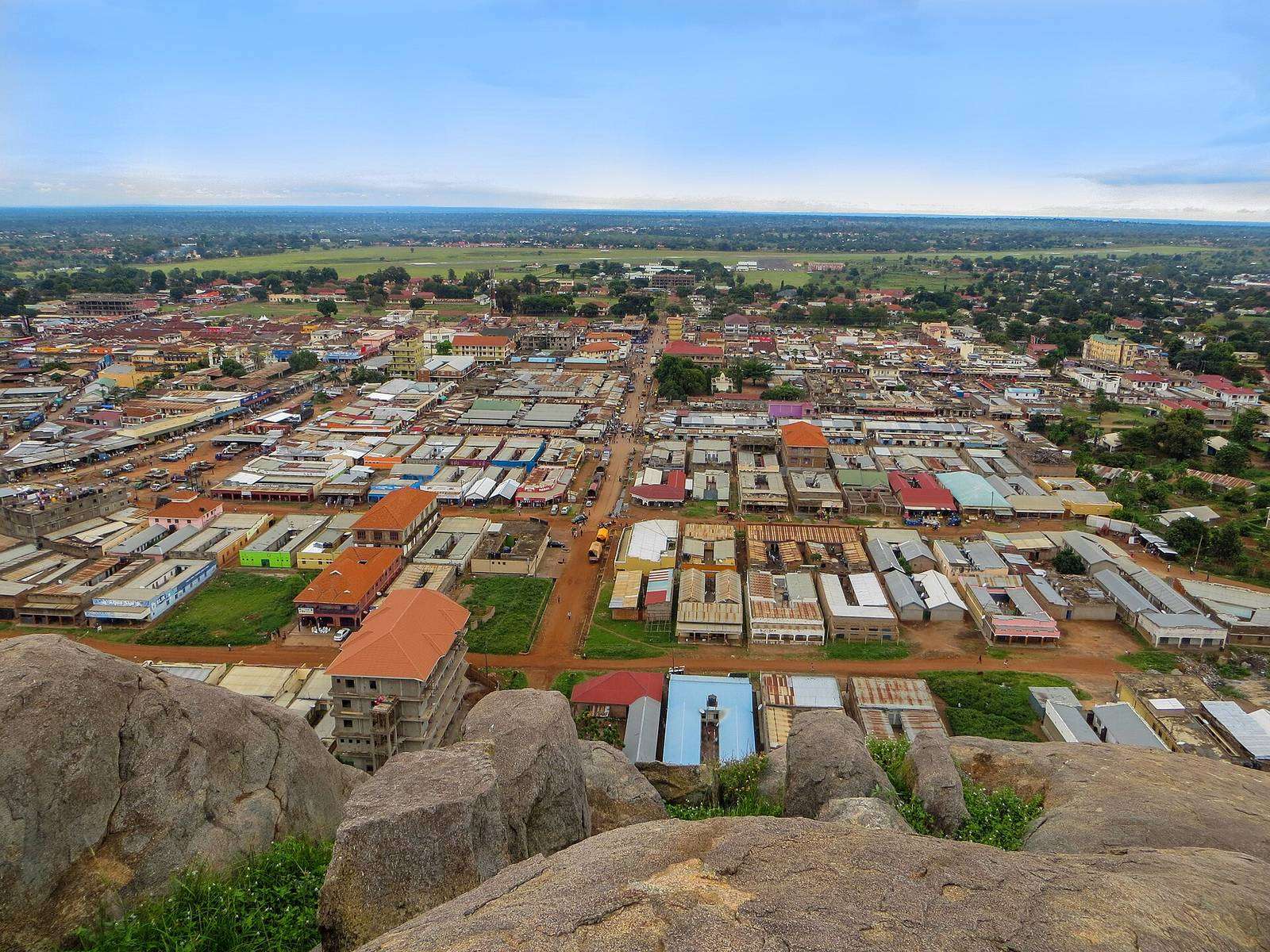
Soroti is a small eastern Ugandan city built around a granite rock, on the edge of Lake Kyoga and at the centre of the Teso sub region. Most visitors arrive on an eastern Uganda trip running between Mbale, Karamoja and the north rather than on a dedicated safari. The city sits about 326 km northeast of Kampala, at roughly 1,130 m on flat, open country.
Soroti as a Stop on an Eastern Uganda Trip
Let us be straight about this one, because most of what is written about Soroti online is either recycled or invented.
Soroti is not a destination. It is a pleasant, low key regional city with one genuine landmark, a good market, a lake nearby that almost nobody takes visitors onto, and two wetlands that matter enormously to birders and to almost nobody else. If you are driving between Mbale and Lira, or heading up to Karamoja, it is a sensible and agreeable overnight stop. If you are looking for somewhere to spend three days, it is not that place, and anyone who tells you otherwise has not been.
What it does have is space. The Teso country is flat, wide and dotted with granite outcrops, with cattle, cassava and orange groves rather than banana. It looks nothing like the crowded green hills of the south and nothing like the dry thorn of Karamoja next door. The city holds about 134,000 people at the last national census, and you will see figures anywhere from 42,000 to 372,000 online because pages quote the old town, the current city and the district interchangeably.
The other thing Soroti has is a history the travel pages skip entirely, and it explains a great deal. When the national militia arrangements were dismantled after the change of government in the mid 1980s, Teso lost its protection against cattle raiding from Karamoja next door, and the raids came almost at once. Hundreds of thousands of cattle went. In a society where cattle were the savings account, the bride price and the insurance policy all at once, that was the end of the old economy. An insurgency followed through the late 1980s and into the early 1990s, ending in negotiation rather than defeat. A decade later the Lord’s Resistance Army came into Teso from the north and pushed a large part of the rural population into camps around Soroti for a couple of years.
None of that is happening now. Teso has been quiet for two decades and the whole sub region is ordinary to travel in. But it is why average cattle holdings here are still counted in single animals per household, why so much of the town is newer than it looks, and why the place has the unhurried, rebuilt feel that visitors notice and cannot quite place.
One night covers Soroti properly. Two if the lake or the wetlands are the reason you came.
Soroti Rock Hiking Tours at Moru Apesur
The Soroti Rock hike is the reason anybody stops here, and it takes about two hours including the time you will spend at the top not wanting to leave.
Moru Apesur is a granite inselberg standing roughly 90 m above the plain, right on the edge of the city, which puts its summit somewhere around 1,220 m above sea level. Several travel pages state 1,730 m. That is wrong by a clear margin and appears to be a transposition somebody copied. From the top, on a clear morning, you can pick out Lake Kyoga to the west and the bulk of Mount Elgon away to the southeast, with the Teso plain running flat in every direction and other outcrops standing out of it like islands.
The climb is short and steeper than it looks. It is bare rock in places, there is no shade, and the friction of granite under a dry shoe is the only thing holding you on, so footwear matters more than fitness. Part of the route has had steps built into it, which helps on the way down. Go at first light. By mid morning the rock surface is hot enough to be unpleasant and the haze has usually closed in on the long views.
One practical thing nobody mentions and everybody should. You are expected to get permission before climbing, through the municipal authorities and the police, and to go up with a local guide rather than on your own. This is partly about safety and partly about the quarrying, because the base of the rock is worked for stone and there are crushing operations and loose ground on parts of the lower slopes. Arrange it through your hotel the evening before and it is a formality. Turn up alone at dawn and you may be turned back.
The quarrying is worth looking at on the way past, and it is a live argument locally. The same rock that brings the visitors is being broken up for aggregate, hand tools and hammers mostly, with the injuries that go with that work. Nobody has resolved whether the outcrop is a landmark or a resource, and both answers have people behind them who need the money.
There are small churches and prayer sites on and around the rock, used regularly. If you come across a group praying, give them room and do not photograph them.
Soroti City Tours: the Market, Teso Culture and the Quarry
A Soroti city tour is an hour or two on foot and works better than it sounds, largely because the town is small, flat and entirely unbothered by tourism.
Soroti Central Market is the anchor. This is orange country, so citrus is piled everywhere in season alongside cassava, millet, sorghum, groundnuts, sweet potato, dried fish from Kyoga and smoked fish from the landing sites. Teso grows fruit that most of Uganda does not, and it shows. Prices are honest and the haggling is gentle by Ugandan standards.
Teso culture is the other reason to slow down. The Iteso are a Nilotic people with no relationship to the Bantu south, speaking Ateso, and their music centres on the akogo, a thumb piano built from metal tongues on a resonating body, played at births, marriages and funerals and giving its name to a courtship dance performed across the sub region. A cultural centre in town runs dance, music and craft sessions, though the hours are approximate and a call ahead through your hotel saves a wasted walk. Basketry and pottery are the crafts to look for, and buying them at the market rather than in a shop gets the money to the maker.
Eat Teso food while you are here. Atapa, the millet bread, is the staple, usually with groundnut sauce, beans or dried fish. Malakwang turns up here too, though it belongs more properly further north. Oranges by the bagful cost almost nothing.
The most distinctive thing in the town’s economy sits on the outskirts and nobody writes about it: a fruit processing plant that takes local oranges and mangoes and turns them into juice and concentrate under a local brand. It is majority government owned with the Teso fruit growers’ cooperative holding the rest, was built to give the sub region’s citrus somewhere to go other than the roadside, and it has had the usual difficulties of a rural factory working with seasonal supply. It is not set up for tours, but it explains why every second shamba between here and Kumi has orange trees in it.
Lake Kyoga Boat Trips and the Landing Sites
Lake Kyoga boat trips are the most underused thing in eastern Uganda, and the reason is simply that nobody has built a product around them.
Kyoga is not a lake in the way Victoria is a lake. It is a drowned river system, shallow almost everywhere, filled with papyrus and floating vegetation and broken into a maze of arms, channels and islands. Water hyacinth and papyrus rafts move around with the wind and close channels that were open a month before. Over three hundred and fifty bird species have been recorded around it, shoebill among them, and it holds serious numbers of hippo and Nile crocodile.
Several landing sites in the district are accessible from Soroti, with Kagwara the nearest and Bugondo the best known, and there are others at Mugarama and Mulondo. These are working fishing villages. Boats go out at night, the catch is sorted and smoked at dawn, and nobody there is running tours. What you can do is arrange a boat with a fisherman for a couple of hours, which is cheap, informal and entirely dependent on your ability to explain what you want.
Two cautions and they are real ones. There are no life jackets on local canoes unless you bring your own, and the combination of hippo, crocodile, sudden wind and shallow water that suddenly is not shallow deserves respect. Look at the boat before you get in it and do not go out if the wind is up. Bilharzia is present, so do not swim.
Anamulemuka Island, out in the lake and reached from a landing site around 71 km from the city, is the one island that gets named in the district’s own tourism material. It is thinly settled, has hippos and a long bird list, and getting there is a project rather than an afternoon. Olianai Swamp, ten kilometres out on the Lira road, is the easy version: papyrus, waders, and a chance of something good at dawn without leaving the tarmac for long.
Lake Bisina and Lake Opeta Birding Safaris
Lake Bisina birding safaris are the strongest reason a specialist would come to Teso at all, and this is the part of the region that genuinely rewards a detour.
Bisina and Opeta are the eastern arms of the Kyoga system, lying southeast of Soroti towards Kumi and Katakwi, and both carry international Ramsar protection. The Bisina wetland runs to over 54,000 hectares and Opeta to nearly 69,000, mostly papyrus with hippo grass and thatching grass on the margins. Together they act as a refuge for fish species that have gone extinct in Lake Victoria and in the main body of Kyoga, which is a quiet piece of conservation almost nobody knows about.
The bird that matters is Fox’s weaver. It is the only bird species endemic to Uganda, found nowhere else on earth, and the Bisina and Opeta wetlands are its confirmed breeding ground. Anyone building a Uganda list has to come here or go without it. Shoebill use both lakes as feeding grounds. Alongside those, the papyrus specialists, Goliath heron, African jacana, kingfishers and large numbers of waders.
Access is undeveloped and that is the honest position. There is no gate, no guided programme, no hide and no boat service. You go with a birding guide who knows the access roads and can find a canoe, and you go at first light in the dry season when the tracks in are passable. Arrange it in advance through a Ugandan birding operator rather than improvising on the day. For a general visitor this is a swamp and a long drive. For a birder it is one of the few places in the country that cannot be substituted.
Bugondo Hills and Short Trips Around Teso
The short trips around Teso from Soroti are modest and worth knowing about mainly so you can judge whether to bother.
Bugondo and Ogera Hills sit about 42 km northwest, above the lake, and give a walk with a view over the Kyoga arms and the fishing country below. There are no marked trails and no facilities; you go with someone local. The district has talked for years about tented camping up there and it has not happened.
Closer in, the country around Soroti is dotted with granite outcrops of the same family as Moru Apesur, most of them unnamed on any map and all of them climbable with a guide and a morning. Ostrich are farmed a few kilometres out of town, which is unexpected enough to be worth the short drive if you have an hour spare. Plantation forest blocks lie further out at thirty to fifty kilometres and are working timber rather than anything to visit.
This is the section where several competing pages fill space with places that do not appear to exist. If you have read about a waterfall near Soroti, a cave at Kumi hospital or a named forest reserve just outside the town, treat all of it with suspicion until someone local confirms it. The Teso plain is flat. There is no waterfall.
The Flying School and Soroti’s Working Landmarks
Soroti has one genuine claim nobody else in Uganda can make, and it is at the airfield rather than in the town.
The East African Civil Aviation Academy, universally called Soroti Flying School, has trained pilots and aircraft maintenance engineers here since 1971. It was set up as a regional institution under East African Community arrangements, which is why its ownership has been complicated ever since the community first collapsed, and negotiations for the Ugandan government to take it over have been running for years without a conclusion. That limbo has held it back more than anything else. It still runs, still graduates classes in piloting, maintenance engineering and flight operations, and small training aircraft working the circuit above the town are part of the soundtrack here.
There is no tour and no visitor centre. The reason it belongs in a guide is context: this is why Soroti has an airfield at all, and why a town this size has an aviation community in it.
The railway is the other working landmark. The line from Tororo through Mbale, Kumi and Soroti up to Lira and Gulu has been under rehabilitation, aimed at freight to the logistics hub in the north, with passenger services talked about once the work and the supporting infrastructure are finished. Do not plan to arrive by train. The station building is worth a look if you like that kind of thing.
Beyond those, the town carries a regional referral hospital, a university, an agricultural college at Arapai, a research institute at Serere and a golf course. That list is what the older directory pages give you instead of attractions, and it is more revealing than it sounds: Soroti is an administrative and educational centre for a large rural sub region, and that is what the town is for.
Nyero Rock Paintings and Day Trips to Kumi and Mbale
The Nyero rock paintings day trip is the best half day out of Soroti, and the first thing to fix is the distance.
Several pages put Nyero at about five kilometres from Soroti. It is roughly fifty, south towards Kumi and then eight kilometres west of Kumi town, an hour each way on tarmac. That is a morning, not a stroll, and getting it wrong wrecks a day’s plan.
What is there is the oldest known art in Uganda, painted in red pigment on the undersides of overhanging granite. Six shelters, of which three are the ones shown to visitors. The images are geometric rather than figurative: concentric circles, canoe shapes, dots and lines, layered where somebody painted over somebody else’s work. They are attributed to hunter gatherer communities ancestral to the Batwa, and the shelters were used as shrines by local communities long after the painting stopped. The site has sat on Uganda’s tentative list for World Heritage status since the late 1990s. There is a small site museum, a caretaker and a modest charge.
Mbale is the other direction to go, under two hours south, and it opens up Sipi Falls on the Elgon escarpment, the coffee farms around them and the mountain itself. Those are separate destinations rather than day trips from Soroti, and treating them as extensions of a Teso stop is how people end up driving all day and seeing nothing properly.
Pian Upe and Kidepo Safaris From the Teso Side
A Pian Upe safari is the nearest real wildlife to Soroti, roughly 110 km east and about two hours, out where the Teso plain gives way to Karamoja.
Pian Upe is Uganda’s second largest protected area at around 2,275 square kilometres of open grassland and thorn, and it is the emptiest feeling place in the country. The wildlife was decimated during the same decades that emptied Teso of cattle, and what is there now is a slow recovery: cheetah in small numbers, which is unusual for Uganda, roan antelope, eland, oribi, mountain reedbuck, zebra, ostrich, and a group of Rothschild’s giraffe brought down from Murchison Falls to restart a population that had been gone for forty years. Sightings are sparse and you should expect long drives between them. The compensation is that you will have the reserve to yourself and the country itself is worth the trip.
Entry is charged per person for each twenty four hours and ranger guided walks are charged separately, with figures below. There is limited accommodation at the reserve and more in Soroti, so many visitors run it as a long day from here.
Kidepo Valley, further north through Karamoja, is a genuinely different proposition and not something to attempt from Soroti in a day. It is the best park in Uganda and the drive up through Moroto or Kotido is long, rough and to be done in daylight only. If Kidepo is the plan, Soroti works as the night before rather than as a base.
Getting to Soroti, Where to Stay and the Best Time for a Teso Trip
Soroti sits on tarmac in every useful direction. From Kampala it is about 326 km, six to seven hours, either through Jinja and Mbale or up the northern road through Lira, and both are reasonable. Buses run daily on both routes and take rather longer. Minibuses cover the shorter hops to Mbale, Kumi, Lira and Katakwi and leave when full.
One seasonal caution that matters more here than anywhere else in this guide. The Mbale to Soroti road crosses the Awoja swamp, and in heavy rains that crossing floods and cuts the route. Lake Kyoga itself bursts its banks periodically and low ground around the lake goes under, sometimes for months rather than days. If you are travelling in the wet season, ask locally about Awoja before committing to that road, and have the Lira route in reserve.
The airfield is a flying school rather than a commercial airport and there are no scheduled passenger services worth planning around. Within the city, boda boda handles everything and costs almost nothing. For the lake landing sites, the wetlands or Pian Upe, hire a car with a driver through your hotel.
Accommodation is modest and adequate. The better known places sit on the edges of town, are quiet, have large clean rooms and charge around what you would expect for a regional Ugandan city. Service is friendly and unhurried. The recurring complaint in every review is the electricity, and it is a municipal problem rather than a hotel one: cuts are frequent, most places have a generator, and not all of them run it through the night. Charge your things in the evening and ask about the generator when you book if that matters.
On timing, Teso has a long wet season running from around March or April through to October or November, with the heaviest falls around April and May and again in August and September, and a dry stretch from December into February that is hot, dusty and hazy. The dry months are much easier for the rock, the wetland tracks, the lake landing sites and the drive to Pian Upe. The wet season is greener, cooler to walk in, and the season when the roads and the flooding become a real planning constraint. For birding at Bisina and Opeta the drier months are better for access, though the wetlands hold birds year round.
Frequently Asked Questions About Visiting Soroti
Is Soroti worth visiting, honestly?
As an overnight stop on an eastern or northern route, yes. The rock is a genuinely good short climb with a long view, the market is enjoyable, the town is relaxed and safe, and it breaks a drive that otherwise runs a very long way. As a destination in its own right, no, and several pages that suggest otherwise are describing attractions that do not appear to exist. The exception is birding. If Fox’s weaver, Uganda’s only endemic bird, is on your list, then Bisina and Opeta are the reason to be here and nowhere else will do.
Do I need permission to climb Soroti Rock?
Yes, in practice. The expectation is that you clear it with the municipal authorities and the police and go up with a local guide rather than setting off alone. Your hotel can sort it out the evening before and it is a formality rather than an obstacle. There are two reasons behind it: the lower slopes are worked as a stone quarry with loose ground and crushing operations, and the upper rock is bare granite where a slip has nowhere to stop. Go at first light, wear shoes with grip, carry water and give yourself two hours.
How far is Nyero from Soroti?
About 50 km, not the five kilometres several travel pages claim. The paintings are eight kilometres west of Kumi town, so you drive south to Kumi on tarmac, about an hour, then turn off. It is a comfortable half day out of Soroti and worth doing: the shelters hold the oldest known art in Uganda, painted in red geometric patterns on the undersides of granite overhangs, with a caretaker, a small site museum and a modest charge at the gate. Anyone planning it as a quick stop before breakfast has been misled.
What does a stay in Soroti cost?
Little. Rooms at the better hotels on the edge of town run roughly thirty to fifty dollars a night with breakfast, mid range places around twenty, and simple guesthouses well under ten. Meals at local restaurants cost a few dollars. A boda hop across town is under a dollar and a car with a driver for a day out to the lake or the wetlands usually lands between forty and eighty. Entry at Pian Upe has been around thirty five dollars per person for each twenty four hours for a foreign non resident, with a separate charge for a ranger guided walk and lower bands for residents and East African citizens. Tariffs move between cycles, so confirm before budgeting.
Is Soroti safe?
Yes. Teso has been quiet for around two decades and Soroti has the ordinary urban risks of any small Ugandan city, meaning opportunistic theft around the market and the taxi park rather than anything worse. Visitors are not targeted and no foreign office advises against travel here. The genuine hazards on a trip to Teso are the road after dark, boda boda rides taken without a helmet, and the water, which means bilharzia in the lake and crocodile and hippo on it. Malaria is present year round. The districts on the Karamoja boundary have historically seen cattle raiding and it is worth asking locally before driving east in the small hours, though the picture there is far better than it was.
Can I go out on Lake Kyoga from Soroti?
Yes, informally. Kagwara is the nearest landing site and Bugondo the best known, both under an hour out with the last stretch on dirt, and a fisherman will take you out for a couple of hours for very little. There is no tour operator, no timetable and no safety equipment, so take your own life jacket if you have one, look properly at the boat, and do not go out when the wind is up. What you get is papyrus channels, hippo, crocodile, a long bird list including a chance of shoebill, and a fishing economy that nobody has packaged. Go at dawn when the boats come in.
What is Fox’s weaver and where do I see it?
It is the only bird species found in Uganda and nowhere else on earth, a yellow and black weaver of seasonally flooded wetland, and the Lake Bisina and Lake Opeta system southeast of Soroti is its confirmed breeding ground. That makes these swamps unavoidable for anyone building a serious Uganda list. There is no visitor infrastructure at either lake, no hide and no boat service, so go at first light with a birding guide who knows the access roads, in the drier months when those roads work. Shoebill feed on both lakes as well.
Will the roads be a problem in the rains?
The tarmac to Mbale, Lira and Kumi holds up, with one exception that catches people out. The Mbale to Soroti road crosses the Awoja swamp, and heavy rain has flooded that crossing and cut the route more than once. Lake Kyoga also bursts its banks periodically and low ground near the lake can stay under for months. Ask locally before committing to the southern road in the wet season and keep the Lira route as an alternative. Everything off tarmac, which includes the landing sites, the wetlands and the tracks around the hills, becomes considerably harder from April through to November.
Can I visit the flying school?
Not as a tourist. The East African Civil Aviation Academy at the airfield trains pilots and aircraft maintenance engineers and has done since the early 1970s, but it is a working training institution with no visitor programme, no tour and no viewing area. It is in this guide because it explains the airfield and the small aircraft you will hear working the circuit above the town. If you have a professional reason to make contact, contact the academy directly rather than going through a tour operator.
What language do people speak, and does English work?
English works everywhere you are likely to need it, in hotels, with guides and in the market. The first language is Ateso, a Nilotic language with no relationship to Luganda at all, so phrases picked up in Kampala will not help and may land oddly. Yoga is the greeting and eyalama means thank you. Both are worth having. Swahili turns up among traders and along the routes towards Karamoja and Kenya.
Uganda Safaris works with Ugandan operators who actually run the east, with drivers who know whether the Awoja crossing is open, birding guides who can find the access roads at Bisina and Opeta rather than guessing at them, and the local contacts to have the rock climb cleared before you arrive.
No listing on the site stops in Soroti. The nearest in shape is a fifteen day best of Uganda circuit, which runs east to Sipi Falls and then north to Kidepo.
Compare what each operator includes, and ask directly for help fitting Soroti into a route that also takes in Mbale, Pian Upe or the road north to Kidepo.
5 Places to Visit in This Area
Individual sites within reach of here, each with its own guide. Some are written up because the name circulates and the place does not, which is worth knowing before you plan a drive around one.
No operator on the marketplace currently lists a safari to Soroti.
See every Uganda safari