
A Toro Semliki Wildlife Reserve safari means chimpanzee tracking at Mugiri, game drives across palm savanna and a shoebill boat on Lake Albert, all inside a reserve that is not Semuliki National Park. Most visitors stay one or two nights, at the lodge inside the reserve or in the wildlife authority bandas at Ntoroko. Toro Semliki covers 542 square kilometres of rift valley floor in Ntoroko and Kabarole districts, western Uganda.
Toro Semliki Wildlife Reserve and Semuliki National Park Are Not the Same Place
Two protected areas sit about twenty kilometres apart in the same corner of western Uganda, and almost everything written about either one borrows from the other. Sort this out before you book anything, because the activity you want may not be where you think it is.
Toro Semliki Wildlife Reserve is savanna. It is 542 square kilometres of grassland, acacia and combretum woodland and Borassus palm running down to the southern shore of Lake Albert, and it holds the game drives, the chimpanzee research walks at Mugiri and the shoebill boat. Semuliki National Park is lowland rainforest, about 220 square kilometres of it, pressed against the Congo border in Bundibugyo, and it holds the Sempaya hot springs and the forest trails.
The spelling makes it worse. The reserve appears in print as Toro Semliki, Toro Semuliki, Semliki Wildlife Reserve and Semuliki Wildlife Reserve, sometimes with a hyphen in the middle and sometimes without, and every one of those is the same place. The wildlife authority itself uses more than one of them. Meanwhile the park is Semuliki National Park, and the river that gave both their names is the Semliki, which flows out of Lake Edward and into Lake Albert past the western edge of the whole area.
That last line catches a lot of people. Those three properties are listed on dozens of pages as accommodation for Semuliki National Park. They are not. Booking one of them and planning to walk the Kirumia trail at dawn does not work, since the drive between the two protected areas eats the morning.
One more correction while we are here. Several guides give the reserve a gazettement date of 1932. That is the year the forest at Semuliki was set aside, and it belongs to the park.
Uganda’s Oldest Protected Area and What a Toro Semliki Safari Looks Like Now
The colonial administration set this ground aside as a game reserve in 1926, with formal gazettement following in 1929, which makes it the earliest protected area in the country. The reason was Uganda kob. The Toro plains carried them in enormous numbers and the reserve exists because somebody wanted them protected from hunting.
Then came the seventies and eighties. Poaching through the war years emptied the reserve, and the numbers from the early nineties are grim reading: fewer than a thousand kob left, and buffalo down to something like fifty animals. That is close to a functional collapse.
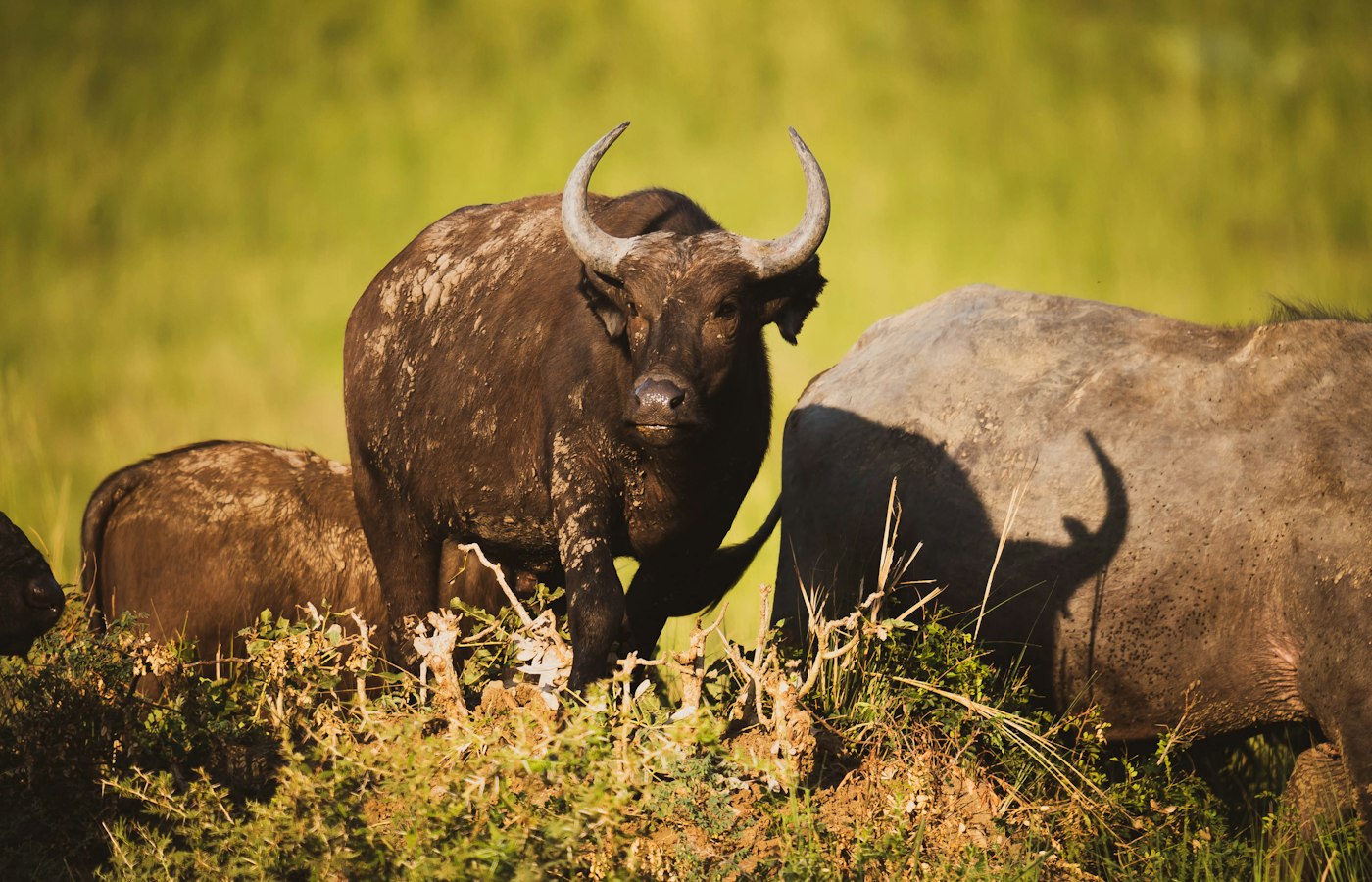
What makes Toro Semliki interesting now is what happened next. Kob are back into the thousands. Buffalo have passed a thousand again. Elephant, a mix of savanna, forest and hybrid animals, number somewhere near two hundred and move through the reserve and the surrounding country. The reserve carries IUCN category III status and has been designated a lion conservation unit, though the lions themselves are the part of the story that has not recovered.
So the honest description of a Toro Semliki safari today is a quiet one. This is not a park where animals stand about in the open waiting to be photographed. Wildlife here is shy, because within living memory being visible got you shot. Trip reports from the reserve say the same thing repeatedly: black and white colobus are relaxed, everything else keeps its distance. Come for the setting, the birds and the strangeness of the place, and treat every large mammal as a bonus.
Chimpanzee Tracking Safaris in the Mugiri River Forest
Chimpanzee tracking in Toro Semliki is a different product from anything else offered in Uganda, and the difference is worth grasping before you pay for it. These are dry habitat chimpanzees. They live in gallery forest strung along the Mugiri River through open savanna, rather than in a continuous block of rainforest, and that makes them scientifically unusual and practically hard to find.
A research project has been working with this community since the mid nineties, run out of an American university, and its interest is exactly that dryness. The habitat resembles what early hominins are thought to have lived in, so the animals are studied for what they suggest about the origins of walking upright and about how apes cope with heat, distance and scattered food. They hunt rarely. They use surprisingly few savanna foods. The community is larger than the habitat would predict.
Habituation has been under way for more than twenty years and the animals are still described as semi habituated. That word is doing a lot of work. In practice it means researchers can follow them for long periods, and it means a visitor on a guided walk may get a distant view of an animal moving off through the trees, or may get nothing at all.
The walk itself runs three to four hours with a guide, sometimes alongside the research team, through riverine forest and out across open ground between forest strips. It is not steep. It is hot, and the distances are real. Trip accounts are consistent that this can be a long hard morning that ends with a glimpse rather than an hour in a fig tree.
Book it as a research walk rather than a chimpanzee viewing. People who do that come back pleased, because the forest is quiet, the guiding tends to be genuinely expert and you learn more about chimpanzee ecology in three hours here than in a week of ordinary trekking. People who book it expecting Kibale come back disappointed, and they were sold the wrong thing.
Game Drive Safaris Across the Kob Plains and Palm Savanna
Game drive safaris in the reserve run morning and late afternoon, with several route options that take in different country: open kob grassland, the palm stands, the woodland along the watercourses and the tracks running north towards the lake. Drives are arranged through the wildlife authority at Karugutu or through the lodge, and the lodge builds two shared activities a day into its rates.
The Borassus palm savanna is the signature. Tall fan palms standing over grassland with the Rwenzori foothills behind them is not a view Uganda offers anywhere else, and photographers rate the reserve highly for that reason alone even on days when the animals do not cooperate.
What you can reasonably expect to see: Uganda kob in numbers, warthog, waterbuck, bushbuck, olive baboon and vervet, hippo near water. Buffalo herds are around and are seen often enough. Elephant pass through and turn up near the lodge. Leopard and the smaller cats are present and almost never seen by daylight. Lion are in the reserve on paper and down to a handful of animals in reality, so anyone hoping for a lion sighting should plan on Queen Elizabeth or Murchison instead.
The night drive is the one to prioritise. Nocturnal drives with a spotlight are where this reserve does something the big parks mostly do not offer, and guests consistently rate them above the daylight ones. White tailed mongoose, genet, bushbaby, nightjars sitting on the track, occasionally a leopard or a serval. Take a jacket. The rift floor is warm by day and it cools fast after dark.
Shoebill Boat Trips on Lake Albert from Ntoroko
The shoebill boat trip is the single most reliable thing the reserve sells. Ntoroko sits at the southeastern tip of Lake Albert, between the mouths of the Wasa and Muzizi rivers, and the swamps and papyrus fringes there hold shoebill year round. Among Ugandan sites this ranks with Mabamba as one of the better bets for the bird.
Boats run daily and the scheduled trip leaves early, around seven in the morning, taking roughly two hours. Motorised canoe is the usual vessel, and you work the shoreline and the estuary channels slowly rather than crossing open water. Private hire is available for anyone who wants to control the timing or bring a long lens and stay put.
Shoebill are not the only reason to go. A breeding colony of red throated bee eater nests in the sandy banks along the shore and is worth the trip on its own. Add pelicans, African fish eagle, grey headed kingfisher, hamerkop, African sacred ibis, pygmy goose and a long list of waders depending on water level. Hippo and crocodile are in the water. Fishing boats from the Ntoroko village work around you the whole time, which is either an intrusion or the most interesting part of the morning depending on your temperament.
Two practical points. The lake is open and it gets rough when the wind comes up, so morning is not just about birds. And the shoebill is a bird that stands motionless for an hour at a time, so the sighting, when it comes, is quiet rather than dramatic. Reviewers who found the boat trip the highlight of their stay were the ones who understood that going in.
Birding Safaris in Toro Semliki Wildlife Reserve
Birding is what the reserve is actually good at, and the species total sits at around 440, with counts in circulation from 400 up to 460 depending on who is doing the counting and where they draw the boundary. The variety comes from having four habitats stacked into one small area: open savanna, palm stands, riverine gallery forest and lake swamp.
The savanna and woodland list runs to Abyssinian ground hornbill, red necked falcon, black billed barbet, black bellied bustard and a good spread of raptors along the escarpment. Gallery forest along the Mugiri and Wasa holds forest species that have no business being this far into dry country, which is the same ecological oddity that makes the chimpanzees interesting. Down at the lake you get the wetland list, headed by shoebill.
A birding safari here works best over two full days, one worked around the boat and the lake shore and one spent in the reserve on foot and by vehicle. Guides at Karugutu and at the lodge know the sites. Turning up without one and hoping to find gallery forest patches on your own is a way to spend a day driving.
Nyaburogo Gorge Hiking and Guided Nature Walks
The Nyaburogo Gorge trail is the reserve’s proper walk, about seven kilometres following the gorge cut by the Nyaburogo River. It takes you off the savanna into a narrow band of forest, and it is the walk where primates, forest birds and butterflies show up rather than kob and warthog. Half a day with a ranger, and the going is moderate rather than hard.
Shorter guided nature walks run from the reserve headquarters at Karugutu and from the lodge, and they suit anyone who wants to be out of a vehicle without committing to the gorge or the chimpanzee walk. Walking in the reserve requires an armed ranger, which is standard practice anywhere buffalo and elephant are present, and is not a signal that the place is dangerous.
Take more water than the distance suggests. Rift floor heat at midday is a different proposition from forest heat at Kibale, and the shade on the savanna sections is thin.
Cultural Tours with the Karugutu and Ntoroko Communities
Community tourism around the reserve is organised through an association based at Karugutu, and the visits it runs are modest and unstaged: farm walks, craft work, food, and conversation about what living next to a wildlife reserve is like when elephants come through the gardens.
Ntoroko is the other half of it and is the more memorable stop. The village is a working lake shore fishing community wedged onto a spit of land at the top of the reserve, with boats coming in through the morning and fish drying along the shore. It is not a cultural attraction dressed up for visitors. A boat trip out of Ntoroko usually includes some of this whether you plan it or not.
Book community visits in advance through the reserve office or your lodge rather than arriving and asking. The association is small and the people who guide these visits have other work.
Wildlife Recovery, Lions and Oil in the Albertine Graben
Two things are happening to this reserve at once, and a visitor should know about both.
The first is recovery. Kob and buffalo numbers have climbed back from near nothing over three decades of protection, which is a genuinely good story and one that almost nobody tells. The animals are still wary and the reserve still looks empty compared with Queen Elizabeth, but the direction of travel has been upward for a long time.
The second is pressure. The reserve sits in the Albertine Graben, which is where Uganda’s oil is, and the southern end of Lake Albert around Ntoroko lies over thick sediment beds. Road upgrades tied to the oil programme have been pushed through this district, including the road running north from Karugutu to Ntoroko, and transmission lines and water schemes are in the same planning pipeline. Better roads make the reserve easier to reach. They also make it easier to reach for everyone else, and conservation planning documents flag the corridor as needing careful handling.
Lions are the visible casualty of the older pressure. A population that was once large enough for the area to be named a lion conservation unit has fallen to a handful, and nothing in the current picture suggests a quick reversal. That is the reason this guide keeps saying the game viewing is quiet. It is not modesty about a good product, it is the actual state of the reserve, and you will have a better trip knowing it.
Best Time to Visit Toro Semliki Wildlife Reserve for a Safari
Two wet seasons cross the rift here, March through May and again from about August into November, with the drier windows falling December to February and June to July. Daytime temperatures on the valley floor run around 30C and drop to about 18C at night, which is hotter than most Ugandan parks because you are down at 700 metres rather than up on the plateau.
| Months | Rain | Tracks | Verdict |
|---|---|---|---|
| Dec to Feb | Low | Firm | Best |
| Mar to May | High | Soft | Difficult |
| Jun to Jul | Low | Firm | Best |
| Aug to Sep | Rising | Mixed | Fair |
| Oct to Nov | High | Soft | Birding |
The dry months do the obvious thing for game viewing: animals concentrate near water, grass drops and the tracks stay drivable. They also make the chimpanzee walk more bearable, since the ground is firm and the gallery forest less overgrown.
Birders should think about it differently. The wet months bring migrants through and put the swamps at their fullest, and shoebill do not care about the season. If your trip is built around the boat and the bird list, October and November are a reasonable choice and you will have the reserve close to yourself.
What the rains genuinely affect is access. The reserve tracks are unsurfaced and the run north to Ntoroko is long, so a wet week can turn a two hour drive into something considerably worse. Ask about road conditions before you commit to a Ntoroko night in April or November.
Where to Stay on a Toro Semliki Safari
Semliki Safari Lodge is the established property inside the reserve, a tented lodge of six safari tents plus a pair of suites and a family tent, set on high ground looking over forest canopy. Rates are full board and cover drinks, two shared game activities a day and a shared night drive, which changes the arithmetic once you compare it with a cheaper bed plus separately purchased activities. It is the top of the market here by a wide margin.
Aramaga Rift Valley Lodge is the newer mid to upper option nearby, built as a small number of individual units with escarpment views. Ntoroko Game Lodge sits up on the lake shore and is the natural base if the boat and the birds are your reason for coming, since it puts you at the water rather than an hour from it.
At the budget end, the wildlife authority runs bandas and a campsite at Ntoroko and facilities at Karugutu, plus there is a fishing camp on the river. These are simple, cheap and perfectly serviceable, and they are what most independent travellers and birding groups use. Bring your own food if you are camping, since Karugutu is a small trading centre rather than a supply town.
Fort Portal is the other answer. It is roughly an hour from the reserve gate, it has the best range of hotels and guest farms in the region, and plenty of people visit Toro Semliki as a long day out from there. That works for a game drive and the gorge walk. It does not work for the Ntoroko boat, which leaves too early.
Getting to Toro Semliki Wildlife Reserve for Your Safari Trip
Fort Portal is the gateway.
From Kampala the Mubende road covers about 290 kilometres and takes four to five hours; the southern route through Masaka, Mbarara and Kasese is far longer at around 465 kilometres and only makes sense if you are already down that way.
From Fort Portal, take the Bundibugyo road roughly thirty kilometres north to Karugutu, where the reserve headquarters sits and where the turning for Ntoroko branches north. Allow an hour. Karugutu to Ntoroko on the lake is a further fifty odd kilometres, and this stretch has been part of the oil roads upgrade programme, so conditions have been improving. Check locally rather than trusting a guidebook, since work on it has run in phases.
There is an airstrip serving the reserve and charter flights from Entebbe or Kajjansi cut the whole thing to under an hour of flying, with the lodge running shared transfers from it. That is the option for travellers with a short trip and a preference for spending their days on the ground rather than in a vehicle.
On routing, Toro Semliki sits well on a western circuit. Kibale for chimpanzees, the Rwenzori foothills, Semuliki National Park for the hot springs and the Congo basin birds, then the reserve, then south to Queen Elizabeth. Two nights is the right allocation if you want the boat, a game drive and the chimpanzee walk without rushing. One night gets you two of the three.
Toro Semliki Safari Questions Travellers Ask Most
What does it cost to enter Toro Semliki Wildlife Reserve?
Reserve entry has been running at around USD 35 for foreign adults with a much reduced rate for children aged five to fifteen, and lower bands for foreign residents and East African citizens. Vehicles are charged separately. Rates move between tariff cycles and the wildlife authority does not publish them in a form that is easy to check, so confirm the figure with the authority or your operator before you budget. Note also that reserve entry does not cover Semuliki National Park, so anyone doing both pays two sets of fees.
What do the reserve activities cost on top of entry?
The chimpanzee research walk at Mugiri has been offered at around USD 45 to USD 60 per person for roughly four hours, depending on whether you book through the lodge or the reserve. The wildlife authority shoebill boat is the expensive one, at about USD 100 for foreign non residents and USD 80 for foreign residents. The lodge runs its own scheduled Lake Albert boat, priced per boat rather than per head, so a group of four splits it far more cheaply than a couple does. Game drives are modest by comparison and are included in the lodge rate.
What does it cost to stay in the reserve?
There are two markets and almost nothing in between. The tented lodge inside the reserve runs in the high hundreds of dollars per person per night, full board, including drinks, two shared activities daily and a night drive, with green season rates well below high season ones. The wildlife authority bandas and campsite at Ntoroko and Karugutu are at the opposite end and cost a small fraction of that, with meals available or self catering possible. Ntoroko Game Lodge and Aramaga fill the middle and upper middle.
Is Toro Semliki the same as Semuliki National Park?
No. They are separate protected areas about twenty kilometres apart, with different habitats and different activities. The reserve is savanna and palm country running to Lake Albert, and it holds the game drives, the Mugiri chimpanzee walk and the shoebill boat. The national park is lowland Congo basin rainforest and holds the Sempaya hot springs and the forest trails. The names are used interchangeably all over the internet, including for lodges, so check which area an activity is in before you book it.
How likely are you to see chimpanzees at Mugiri?
Less likely than anywhere else in Uganda that sells chimpanzee tracking. The Mugiri community has been under study for decades and is described as semi habituated rather than habituated, and the animals range widely through gallery forest and open ground. Plenty of walks end with distant views or with nothing. Go for the research walk and the ecology of a dry habitat chimpanzee population, and treat a proper sighting as a good day. Anyone who wants a guaranteed hour with chimpanzees should book Kibale.
Is the Lake Albert boat trip reliable for shoebill?
It is one of the better sites in the country, alongside Mabamba, and the birds are resident rather than seasonal. Reliable is not the same as guaranteed, and water levels change where the birds stand, but boatmen here know the channels and the odds are good. Go on the early boat, take the trip even in the wet months, and treat the red throated bee eater colony and the pelicans as reasons enough on their own.
How good is the game viewing in Toro Semliki?
Quiet, and honest guides will say so. The reserve lost most of its large mammals to poaching in the seventies and eighties, and although kob and buffalo have recovered strongly the animals stay wary and the lion population is down to a handful. Expect kob, warthog, waterbuck, baboon, hippo and a decent chance of buffalo and elephant. Do not expect a big five morning. The night drive is where the reserve outperforms its reputation.
What should you pack for a Toro Semliki safari?
The rift floor is hot, so light long sleeves and long trousers in muted colours, a hat and real sun protection come first. Add boots with grip for the gorge and the chimpanzee walk, insect repellent, a warm layer for the night drive, binoculars and far more water than you think. A dry bag helps on the boat. Bring cash for reserve fees, since card facilities at Karugutu are not something to rely on.
How many nights does Toro Semliki need?
Two, if you want the boat, a game drive or two and the Mugiri walk without compressing them. One night gets you a drive and either the boat or the chimpanzees, not both, because the boat leaves at first light and the walk takes most of a morning. Day tripping from Fort Portal works for a game drive and the Nyaburogo gorge and does not work for anything at the lake.
Uganda Safaris works with Ugandan operators who know the difference between the reserve and the national park and price the two accordingly, which is rarer than it should be.
No listing on the site is built around the reserve on its own, so start from the Uganda destinations index to see how it sits beside Semuliki, Kibale and Queen Elizabeth. Check whether a quoted Semliki activity is happening in the reserve or in the park, and ask an operator directly for help putting the boat, the gorge and the chimpanzee walk into an order that actually fits the daylight.
Safaris That Visit Toro-Semliki Wildlife Reserve
Every safari listed here that visits Toro-Semliki Wildlife Reserve. Each is sold and run by an independent Ugandan tour company. This site lists them and passes on enquiries; it takes no booking and charges you nothing.
Open the full Toro-Semliki Wildlife Reserve listing