
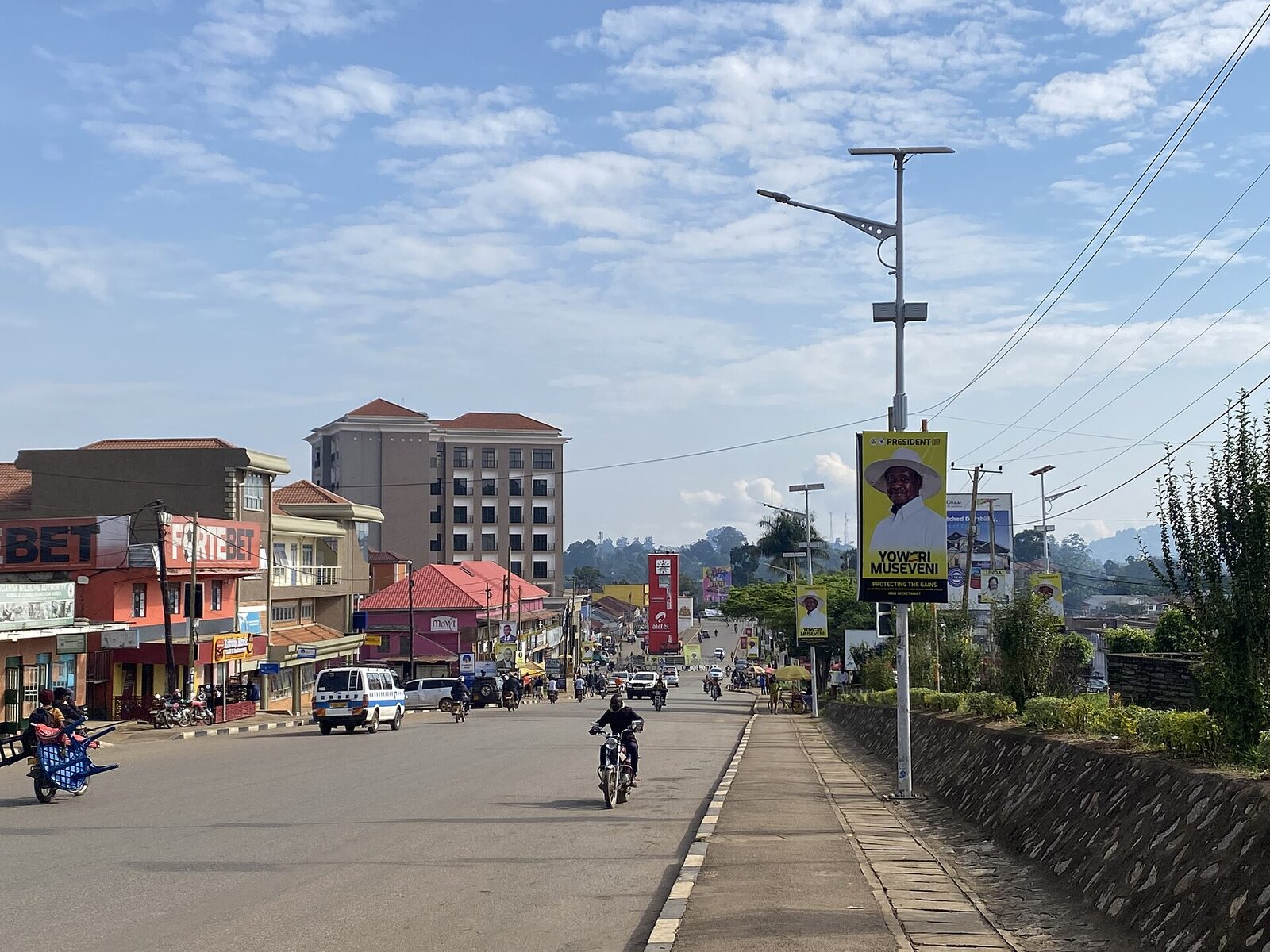
Fort Portal is western Uganda’s crater lake base and the country’s designated tourism city, sitting under the Rwenzori foothills with more than fifty explosion craters within an hour’s drive. Most visitors give it two or three nights, pairing a crater lake circuit with chimpanzee trekking in nearby Kibale Forest. The city is the seat of the Tooro kingdom, stands at about 1,520 metres, and lies roughly 300 kilometres west of Kampala.
Fort Portal Tours and Uganda’s Tourism City at a Glance
Let us deal with the awkward question first, because it is the one people are actually asking. Fort Portal itself is a pleasant, green, well fed small city with a handful of modest attractions, and if you arrive expecting a place stuffed with things to see you will be underwhelmed. Forum posts say so bluntly and at least one honest travel blogger has admitted she got as far as the town, could not decide what to do, and left having done none of the region’s headline activities.
What Fort Portal is, is the best located base in western Uganda. Within an hour you have a chimpanzee forest, a field of volcanic crater lakes, a set of caves wrapped in Batooro folklore and a waterfall you can swim under. Within two you have savannah game drives, hot springs and the foot of the Rwenzoris. Nowhere else in the country puts that much variety inside a single day’s radius of a comfortable bed and a decent coffee.
It was made a city, with the formal title of tourism city, in July 2020, absorbing a ring of surrounding sub counties in the process. The census that followed put the population at roughly 137,000. It takes its name from Sir Gerald Portal, the British special commissioner whose fort was built here in the eighteen nineties to shore up the Tooro kingdom against raids from Bunyoro. The fort itself is gone. The name outlasted it, which is a very Ugandan outcome.
Plan two nights minimum, three if you want the crater lakes properly rather than as a photo stop. A four day Kibale and Queen Elizabeth trip is listed here too.
Crater Lake Tours Around Fort Portal and the Kasenda Cluster
The crater lakes are the reason this page exists. South of the city, on the plateau between Fort Portal and Kibale Forest, the ground is punched through with more than fifty explosion craters formed over several thousand years, most of them now filled with deep green water and ringed by banana gardens. The main concentration is the Ndali and Kasenda cluster, roughly twenty five to thirty kilometres south of town, and a second smaller group sits close to the north.
They are not a park. There is no gate, no permit and no ranger. They are farmland with lakes in it, which is what makes a crater lake tour here feel so different from anything else in Uganda: you walk between them on tracks people use to get to their gardens, and the views arrive without a viewing platform in sight.
Swimming is possible in several of the lakes and is one of the pleasures of the area, but ask locally first rather than assuming. Bilharzia risk varies from crater to crater, and the people who live beside a lake know which ones visitors use.
Crater Lake Hiking and Cycling Trips on the Kabata Roads
The best way to take in the craters is slowly. A crater lake hiking trip of four to five hours will link three or four lakes on dirt tracks, past small banana plantations, tethered goats and boys driving cattle along the road, and it needs no particular fitness beyond a tolerance for hills in the sun. Guides can be arranged through any of the lakeside camps, and independent walkers manage the main tracks without one, though a guide turns a nice walk into an explained one.
Cycling covers more ground and the descents are excellent. So does the local alternative, which is to hire boda boda motorcycles with drivers for the day and let them ferry you between viewpoints. That option gets you seven lakes, the Top of the World and a waterfall in a single day, at a fraction of the cost of a vehicle, and it is how a good many residents do it. One passenger per bike rather than two, and agree the route and the price in the morning.
A few things worth knowing before you set off. The roads are dust in the dry season and slick red mud in the wet, and some of the steeper access tracks down to the lakeside camps are genuinely impassable to a low clearance car after rain. There is a cold spring near Isunga that bubbles gas up through the water like a pot of soda, sitting in a farmer’s field below the main road and signposted by nobody. And the farmers along the forest edge here lose crops to elephants coming out of Kibale with a regularity that would surprise most visitors, which is worth remembering before you photograph somebody’s flattened garden.
Amabere ga Nyina Mwiru Caves Tour and Nyakasura Falls
A short drive north west of the city, under ten kilometres out on the Bundibugyo road, the Amabere ga Nyina Mwiru caves tour takes about an hour and a half and combines a cave, a waterfall and a story. The name translates roughly as the breasts of Nyina Mwiru, and the stalactites hanging from the roof, dripping a white mineral solution, are what earned it.
The story goes that Nyinamwiru was the daughter of King Bukuku, that a prophecy said her son would kill him, that she was mutilated and shut away, and that she bore a son here anyway who was raised in secret and became Ndahura, the first of the Chwezi kings. The caves are where she is said to have fed him. Batooro guides tell it well and it is folklore rather than history, which does not make it less worth hearing.
Geologically the formations are ordinary calcium carbonate deposits, built up over a very long time, since a stalactite grows a fraction of a millimetre a year. The site sits behind Nyakasura Falls, which drops over the mouth of the cave through mossy rock, and the walk takes you on boardwalks and steps through a pocket of forest to see both. A small local fee is charged at the gate.
It is a modest attraction and it should be sold as one. An hour and a half, an interesting story, a good photograph. It fits neatly into a morning alongside the palace and the botanical gardens.
Tooro Kingdom Palace Tours and the Karambi Royal Tombs
Karuziika, the royal palace, stands on a hill above the city with a full circle of views across Fort Portal to the Rwenzoris. The round building went up in the early sixties, fell into ruin after Uganda’s kingdoms were abolished under Amin, and was restored decades later. A Tooro palace tour covers the grounds, the regalia and the kingdom’s history, which is one of the more interesting in Uganda because Tooro broke away from Bunyoro in the eighteen thirties and has been asserting itself ever since.
Four kilometres or so south of the city, the Karambi Royal Tombs hold the graves of the Tooro kings, including Omukama Kasagama who ruled through the arrival of the British, and now the grave of Omukama Oyo. The tombs were renovated ahead of his burial. It has been a quiet site with a caretaker, no crowds and none of the scale of the Kasubi tombs in Kampala, though access may be tighter in the months after the burial, and it makes more sense visited with a guide who can put the names in order for you.
Ask about Empaako while you are here. Batooro and Banyoro people carry a pet name from a short traditional list, given alongside the birth name and used as a greeting and a mark of respect, and it is recognised as intangible cultural heritage. There is a monument to it in the city. Learning the one that suits you takes two minutes and changes how conversations start.
Mahoma Falls Day Trips and the Village Walk Below
Mahoma Falls sits south of the city near Kabata village, off the crater lake circuit, and it is where a dusty day out ends properly. The water comes down over smooth boulders in a long series of drops into pools big enough to sit in, and standing under the last of them after a day on dirt roads is the single best thing on this itinerary that nobody talks about.
Entry is charged at the community gate on the usual tiered basis, citizen, resident, visitor. Take your own drinks and food, because there is no reliable kiosk.
The warning matters more than the description. The path down to the base runs on a steep wooden ladder and across wet rock, both slippery, and visitors have been hurt on it, including at least one broken ankle. Go down slowly, go in shoes with grip, and do not carry anything in your hands that you need to keep hold of. The walk back up is the easier direction.
Tea Estate Tours and the Fort Portal Food Trail
The green corrugated hills between Fort Portal and Kibale are tea, planted in long blocks that follow the contours, and a tea estate tour gets you into a field with a picking basket and a set of shears rigged to a cut down jerrycan, which is the local invention for stripping the top leaves at speed. Some of the estates run factory visits alongside the field walk. Vanilla grows here too, in shade under bananas, and a few farms will show you the vines and explain why the pods are hand pollinated.
Then there is the eating, which is genuinely a reason to stay in this town rather than at a lodge outside it. Fort Portal punches above its size on cafes and restaurants, with a cluster of good places around the centre, decent coffee and a bakery culture that has no business existing in a city of this scale.
The street food is better still. Around four in the afternoon the corners fill with chapati stalls, dough balls waiting on the board to be rolled and thrown onto the hotplate, and the rolex arrives folded around an omelette for the price of nothing. There is a fruit market by the Mpanga bridge where most things come in bags at a flat price and the trick is to ask how many the price buys rather than what a thing costs. That, plus a fried chicken bucket under a hurricane lamp, is a Fort Portal evening.
Fort Portal City Walking Tours, Market and Botanical Gardens
A Fort Portal walking tour takes a couple of hours and covers more history than the map suggests. The main street is short, dusty and lined with hardware and phone shops, but step off it and the residential roads are clean, quiet and shaded, with views north to the Rwenzoris on a clear morning. The Gerald Portal monument marks the colonial founding, the cathedral and the older mission buildings mark what came after, and the central market is where the city actually happens.
The Tooro Botanical Gardens lie a short walk or a very short ride from the centre, running to about a hundred acres and set up to conserve western Uganda’s threatened tree species. There is a long list of indigenous trees, propagation beds, seedling sales and good birding in the early morning. A guide is supposed to be included with entry, though visitors report turning up and finding nobody available, so ask at the gate rather than assuming.
Do not expect a craft shopping town. There is about one decent souvenir and card shop, which is either a disappointment or a relief depending on your temperament.
Kibale Forest Chimpanzee Trekking Safaris from Fort Portal
Under an hour south, Kibale National Park holds the highest concentration of primates in East Africa and is Uganda’s main destination for chimpanzee trekking safaris. Permits are issued for a morning and an afternoon departure, groups are small, and sightings on habituated communities come off more often than not, though sightings are never guaranteed. A separate habituation experience puts you with a community for most of a day. Our Kibale National Park guide covers the permits, sectors, birding and the Bigodi wetland walk in full, and there is no point repeating it here.
What belongs on this page is the logistics. Staying in Fort Portal and driving down for a morning trek works well and gives you a better choice of beds and restaurants than the forest edge offers. Staying at a crater lake camp between the city and the park works even better, because it cuts the pre dawn drive and puts you in the middle of the lake circuit at the same time. A six day gorilla safari through Kibale and Queen Elizabeth routes through here.
Book the permit before you commit to dates. Trekking slots are capped and the morning departures fill first, since most itineraries pair them with an afternoon somewhere else.
Semuliki, Queen Elizabeth and Rwenzori Safaris from Fort Portal
Roughly two hours north west, over the escarpment and down into the Albertine rift, Semuliki National Park is a piece of central African lowland forest that has ended up in Uganda, with a bird list full of species that occur nowhere else in the country. The Sempaya hot springs are the headline: a male and a female spring, one of them jetting boiling water several metres into the air, hot enough that eggs and matooke are cooked in it while you watch.
Two hours south, Queen Elizabeth National Park gives you the standard savannah day: elephant, buffalo, kob, the Kazinga channel boat and, if you go far enough down, the Ishasha sector and its tree climbing lions. It is a long day from Fort Portal and better as an onward stop than a day trip, though people do it.
West, the Rwenzori Mountains rise straight out of the plain, and on a clear morning you can see the snow from the city, which is a strange thing to say about a place on the equator. Full Rwenzori trekking to Margherita takes the better part of a week and starts from trailheads around Kasese and Kilembe, about two hours from here. Shorter foothill hikes from the Fort Portal side are possible for a day.
The Semuliki Wildlife Reserve, distinct from the national park, sits north of the city on the way to Lake Albert and offers game drives, a boat trip on Lake Albert and a chimp habituation project in Toro Semliki. It is the quietest of all these options.
Birding and Nature Walk Tours Around Fort Portal
Birders do well here without going anywhere in particular. The crater rims, the forest fragments around Lake Nkuruba, the botanical gardens and the swampy ground between the lakes each hold something different, and a morning with a local guide on the lake circuit turns up a long and varied list. Serious Albertine rift endemics need the forest and the rift proper, which means Kibale and Semuliki, both covered above.
Guided nature walk tours also run on the tea and forest edge, at the crater lake camps and around Kyaninga’s crater rim trail. These are gentle, an hour or two, and the point is the setting rather than a species count. Monkeys are common on the rim trails and in the surviving forest patches, red tailed and vervet mostly, colobus at Nkuruba, where the old forest patch still stands.
Karangura waterfalls, on the Rwenzori side of the city, is the least visited thing on this page and involves a proper walk to reach. Ask locally about the state of the track before setting out.
Best Time for Fort Portal Tours and Crater Lake Hiking
Fort Portal is wetter than most of Uganda. It sits high, it sits against a mountain range, and it collects a great deal of rain, which is exactly why the hills are as green as they are. Nothing here closes for the season, but the surface underfoot changes completely.
| Month | Rain | Roads | Crater hike |
|---|---|---|---|
| January | Low | Dusty | Prime |
| February | Low | Dusty | Prime |
| March | Rising | Soft | Fair |
| April | Heavy | Muddy | Hard |
| May | Heavy | Muddy | Hard |
| June | Light | Firm | Prime |
| July | Light | Firm | Prime |
| August | Light | Firm | Prime |
| September | Rising | Soft | Fair |
| October | Heavy | Muddy | Hard |
| November | Heavy | Muddy | Hard |
| December | Easing | Firm | Good |
Use it like this. December to February and June to August are when the crater tracks are firm, the boda tour is a pleasure rather than a slog, and a hire car will get down the steep access lanes to the lakeside camps. These are also the months when Kibale permits sell out earliest, so book ahead.
April, May, October and November are the wet ones. Mahoma runs harder and the hills look their best, but the dirt roads soften, the ladder at the falls gets slippery, and low clearance vehicles start getting stuck on the lake tracks. If you are travelling then, hire a driver with a proper vehicle rather than the cheapest car, and treat afternoon plans as provisional. Lodges are noticeably cheaper.
Temperature barely moves. Days run comfortably warm, nights are cool enough at this altitude that a fleece earns its place in the bag, and the mornings when the Rwenzoris come out of cloud are more likely in the drier months.
Where to Stay and How to Reach Fort Portal for Your Safari
Three choices, and they suit different trips. In the city itself, the older hotels and newer boutique places give you restaurants, coffee and the market on your doorstep, with names such as Mountains of the Moon Hotel and the Duchess familiar to most repeat visitors. On the crater rims north of town sit the upper tier lodges, Kyaninga among them, built on the edge of a deep crater with a walking trail around it. South, spread through the Kasenda cluster, are the lake camps and cottages, from bandas and campsites at Lake Nkuruba to Ndali and Crater Safari Lodge at the top end, which put you in the middle of the walking country.
| From Fort Portal | Drive | Best for |
|---|---|---|
| Crater lakes | 30 to 60 min | Hiking |
| Amabere caves | 20 min | Folklore |
| Kibale Forest | Under 1 hr | Chimp trekking |
| Semuliki park | 2 hrs | Hot springs |
| Queen Elizabeth | 2 hrs | Game drives |
| Rwenzori base | 2 hrs | Trekking |
| Kampala | 4 to 6 hrs | Arrival |
The drive from Kampala runs about 300 kilometres on tarmac and takes four to five hours in a private vehicle. On a public bus, allow six, because they stop. Buses and shared minibuses run the route all day from Kampala and there are direct services from Mbarara and Kasese as well. Kasese has an airstrip with scheduled flights, which puts Fort Portal within an hour’s drive of a domestic connection if you would rather not spend the day on the road.
Around the city, motorcycle taxis are the default and are cheap and quick. Shared cars and minibuses run the crater lake roads but infrequently, so an independent traveller heading out to a lake camp should plan on either hiring a boda for the trip or waiting a while at the junction. Vehicle hire with a driver is the sensible option if you are chaining the region’s parks together, and Fort Portal is a natural place to pick one up.
Frequently Asked Questions About Fort Portal Tours
What do the Fort Portal attractions cost to enter?
They are all small local fees rather than national park rates, because none of these sites is inside a park. Amabere ga Nyina Mwiru with a guide runs at roughly 6 to 8 US dollars for international visitors, with lower tiers for residents and citizens. Mahoma Falls charges around 5 dollars for international visitors and less for residents. The Top of the World viewpoint takes a token amount, a dollar or two. Tooro Botanical Gardens is a few dollars. Crater lake walking has no entry fee at all, though you pay a guide and sometimes a small amount to cross a camp’s land. Rates are set locally and change without announcement, so carry cash and confirm at the gate.
How much does a crater lake tour or a day out from Fort Portal cost?
A guided crater lake walk of half a day sits at the low end, typically the price of a guide plus a tip. Hiring boda boda motorcycles with drivers for a full day circuit of the lakes, the viewpoint and Mahoma Falls is one of the better value days in Uganda and costs a fraction of a vehicle. A car with a driver for a day out to Semuliki or Queen Elizabeth is the expensive option and is priced by distance. Kibale chimpanzee permits are set nationally by the wildlife authority and are far and away the largest single cost of a stay here, so budget for them separately.
What should I budget for a room in Fort Portal?
Campsites and bandas at the crater lakes start in the low tens of US dollars, guesthouses and city hotels sit somewhere from about 30 to 120, and the crater rim lodges at the top of the market run well above 200 with meals. The city tends to be better value than the lodges and the lodges tend to have better views, which is the whole trade. Rates soften noticeably in the wet months.
Is Fort Portal itself worth stopping for, or is it only a base?
Honestly, both, and it depends what you want. The city has a modest set of attractions: a palace, some caves, botanical gardens, a market, a monument. None of them would justify a detour on their own. What justifies the stay is everything within an hour of it, plus the fact that it is a genuinely comfortable, green, well fed place to sleep between parks, with better coffee and better restaurants than anywhere else in western Uganda. Travellers who arrive expecting a sightseeing town are disappointed. Travellers who arrive planning to use it are not.
Can I visit the Tooro palace at the moment?
Check locally before you plan around it. The Omukama has died and has been buried at Karambi, the Supreme Council has confirmed Prince Edward Rukidi Kijanangoma as the next Omukama, his coronation is set for the twenty ninth of September at Karuziika, and members of the late king’s family still dispute the choice. All of that still affects access and cultural programming at Karuziika. Your lodge or a Fort Portal based guide will know the current position better than any website. The Karambi Royal Tombs south of the city are a separate site, and now the late king’s burial place, so ask about access there as well rather than assuming it is open.
How many days do I need in Fort Portal?
Two nights covers a chimpanzee trek and a half day in the city and caves. Three lets you add a full crater lake day, which is the thing most people wish they had allowed for, and gives you an afternoon at Mahoma Falls. Four or five turns it into a proper base, with Semuliki and its hot springs on one day and a tea estate or a Rwenzori foothill walk on another. Anyone passing through on a single night should skip the town and sleep at a crater lake camp instead. A five day Bwindi gorilla and Kibale primates safari passes through Fort Portal.
Can I explore the crater lakes without a car?
Yes, and plenty of people prefer to. Motorcycle taxis will take you out to any of the lakes and will do a full day circuit with a driver each if you arrange it in the morning. Walking between the lakes on the dirt tracks is straightforward and safe in daylight. Shared minibuses do run the routes but not often, so allow waiting time at the junctions. What you cannot rely on is a low clearance hire car reaching the steeper lakeside camps after heavy rain.
Is it safe to swim in the crater lakes?
Several of them are swum in regularly and the water is clean and deep. Bilharzia risk is not uniform, though, and it varies lake by lake depending on the snail population and how much livestock uses the shore. Ask at the camp or the village rather than judging by appearance, since the lakes people swim in and the lakes people avoid look identical. The pools at Mahoma Falls are moving water and are the safer bet.
What should I pack for Fort Portal and the crater lakes?
Shoes with grip, because the ladder at Mahoma and the lake access tracks are both slippery when wet. A fleece or a light jacket for the evenings at this altitude. Rain gear in any month, since the Rwenzoris make their own weather. Sun protection for the open hilltops, insect repellent, a swimsuit and a towel, and enough small denomination cash for gate fees, guides and boda fares, since card payment stops at the city limits.
Does Fort Portal suit families and older travellers?
Well, on the whole. The caves, the botanical gardens, the palace grounds, the tea estates and the viewpoints are all short, gentle and drivable. Crater lake walking can be scaled from a twenty minute stroll on a rim to a five hour circuit. The two things to think about are the descent to Mahoma Falls, which is steep and slippery and unsuitable for anyone unsteady on their feet, and chimpanzee trekking in Kibale, which has a minimum age and involves a couple of hours on rough forest ground.
Fort Portal rewards planning more than most Ugandan stops, because everything good is within an hour and nothing is signposted. Most trips arrive here on a primate route, the shortest of which is the chimpanzee tracking adventure through Entebbe, Fort Portal and Kibale.
Browse the wider crater lake, chimpanzee trekking and western Uganda packages from vetted Uganda based tour operators on Uganda Safaris, ask which lakes and which viewpoints a day trip actually includes, and confirm the state of the crater roads before you travel in the wet months.
12 Places to Visit in This Area
Individual sites within reach of here, each with its own guide. Some are written up because the name circulates and the place does not, which is worth knowing before you plan a drive around one.
Safaris That Visit Fort Portal & the Crater Lakes
3 of the 7 safaris listed here that visit Fort Portal & the Crater Lakes, from different operators where the listings allow it. Each is sold and run by an independent Ugandan tour company. This site lists them and passes on enquiries; it takes no booking and charges you nothing.


3 Days Chimpanzee Double Tracking Safari
by Ancient Africa Safaris Verified operator

15 Days Uganda Safari
by Wild Whispers Africa Verified operator

4 Days Queen Wildlife Viewing, Kibale Chimps tracking
by Kori Safaris Verified operator
From $1,050 per person
View Safari