
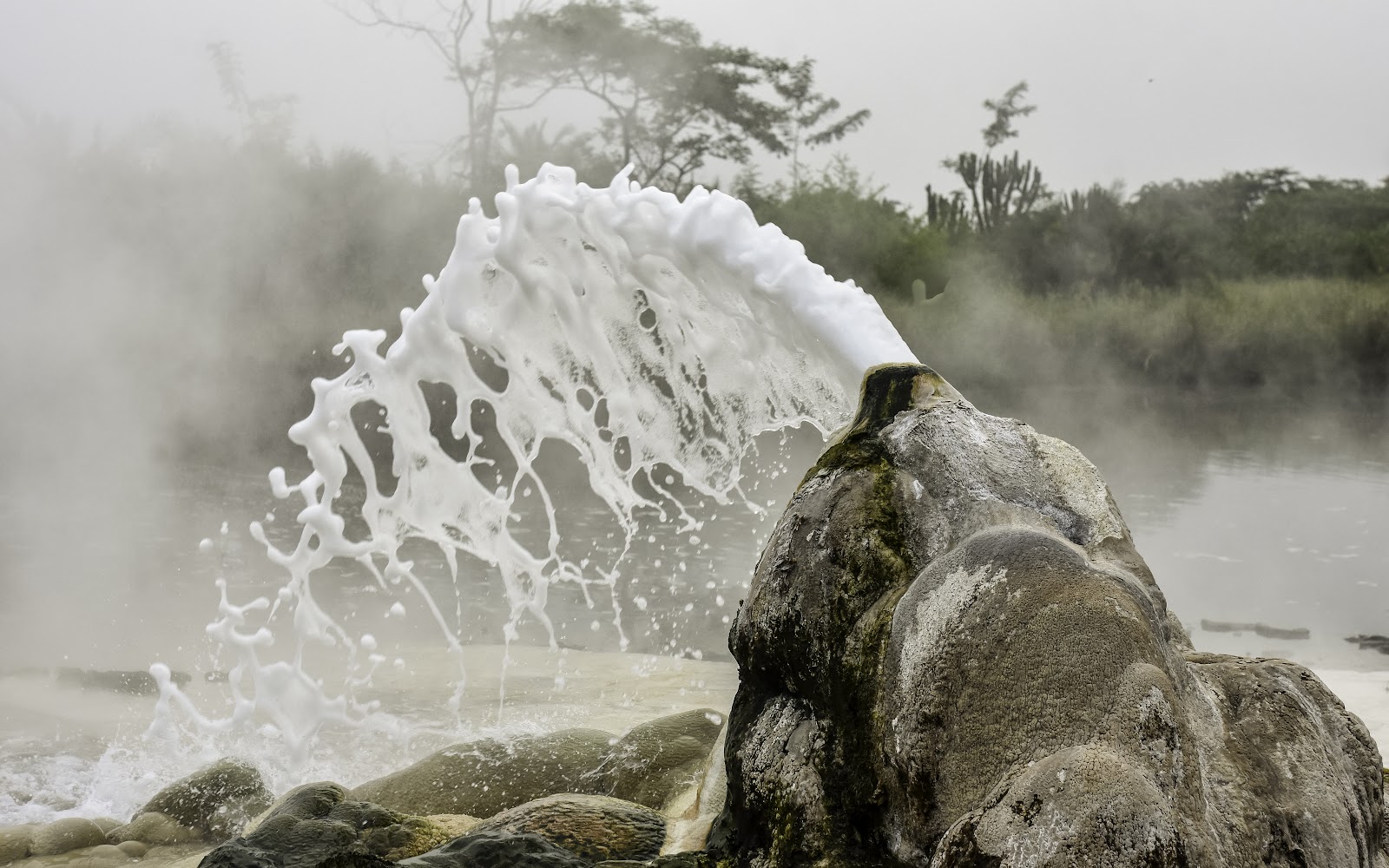
A Semuliki safari is a birding and forest walking trip rather than a game drive trip, built around the Sempaya hot springs and the only true lowland Congo basin rainforest in East Africa. Most visitors come for one or two nights out of Fort Portal, booking guided trails at the Sempaya gate. Semuliki National Park covers about 220 square kilometres in Bundibugyo District, western Uganda, along the Democratic Republic of Congo border.
What Makes a Semuliki Safari Different From the Rest of Uganda
Every other forest in Uganda is a montane forest sitting somewhere above 1,500 metres. Semuliki is not. The park drops to between 670 and 760 metres on the floor of the Albertine Rift, and the forest growing there is the eastern tip of the Ituri, the vast Congo basin system that runs west for hundreds of kilometres towards the Congo River itself. That is the whole point of the place. Central African species that occur nowhere else on this side of the continent reach their eastern limit here and then stop.
It has been protected in one form or another since 1932, when it was set aside as a forest reserve, and it became a national park in 1993. The Semliki River marks the border with the Democratic Republic of Congo along the park’s northern edge, which explains both the biology and a certain amount of the paperwork.
Here is the part that needs saying early, because no other guide to this park will say it. A general wildlife traveller with ten days in Uganda, a gorilla permit and a list that starts with elephant and lion should probably not come. There is no game drive circuit. The mammals are forest mammals, which means you hear them and rarely see them. A Semuliki safari earns its place on an itinerary for birders, for people who want a forest that feels genuinely different from Kibale or Bwindi, and for anyone routing through Bundibugyo anyway. For everyone else it is a long drive to a hot spring.
Said plainly like that, the people who should come will still come, and they will not be disappointed.
Semuliki National Park and Toro Semliki Wildlife Reserve Are Two Different Trips
This is the thing to get straight before you book anything, because almost every page written about the park gets it half right. It states that the two are different, then lists lodges and activities from one under the heading of the other.
They are two separate protected areas, about twenty kilometres apart, with different habitats, different management arrangements and completely different products. Semuliki National Park is closed lowland rainforest. Toro Semliki Wildlife Reserve, set aside in 1926 and the oldest protected area in the country, is over five hundred square kilometres of dry savanna, Borassus palm and riverine woodland running down to the southern tip of Lake Albert.
Neither is better. They pair well, and a three night trip that takes in both is the version most birders build. What causes the trouble is booking a lodge in one while planning activities in the other and discovering the transfer eats half of every day.
Sempaya Hot Springs Tours at Bintente and Nyasimbi
The Sempaya hot springs tour is the activity almost everyone does, and it is the shortest thing in this guide. A boardwalk runs from near the park gate through the forest to the two springs, and the walk out and back with a ranger takes a couple of hours at a gentle pace with plenty of stops for monkeys, hornbills and butterflies along the way.
The female spring, Nyasimbi, is the one people photograph. Water boils out of the ground at over 100C and throws a plume up to about two metres, and the steam sits in the trees around it so the whole clearing looks like it is smoking. The male spring, Bintente, is broader and flatter, a wide grey pool in a mineral crusted swamp, more geothermal pond than geyser. Rangers boil eggs and green bananas for visitors in about ten minutes, and honestly that small ritual is what people remember rather than the water itself.
The Bamaga people, who have lived alongside the springs for generations, name them for a couple: the story tells of a woman called Nyasimbi who went into the forest looking for her missing husband and never came back, and of the clothes found afterwards near the spring that now carries her name.
One honest note, because trip reports are consistent about it. If you have stood at geothermal sites in Iceland, Yellowstone or the Rift Valley lakes, Sempaya is not going to move you. It is unusual for Uganda rather than unusual in itself. Come with that expectation and the visit lands well. Come expecting a natural wonder and the four hour drive will feel long on the way home.
Birdwatching Safaris in Semuliki National Park
Birdwatching safaris are the real reason this park exists on itineraries, and the numbers behind that are worth stating properly. More than 440 species have been recorded, though you will see anywhere from 410 to 441 quoted depending on which list a source copied. Around 216 of them are true forest birds, which is roughly two thirds of Uganda’s entire forest bird list packed into one small park.
The figure that matters most is smaller and much more interesting: 46 Guinea Congo biome species occur here and nowhere else in East Africa. Not rare in East Africa. Absent from it, apart from this one forest. That is what pulls serious birders down the escarpment from Fort Portal.
The list people come for includes Nkulengu rail, lyre tailed honeyguide, long tailed hawk, Congo serpent eagle, spot breasted ibis, white crested hornbill, red billed dwarf hornbill, piping hornbill, African piculet, swamp palm bulbul, black wattled hornbill and Oberländer’s ground thrush. Nine hornbill species have been recorded in the park, which is a hard number to beat anywhere.
Now the part the promotional pages leave out. These birds are difficult. Published trip reports from organised birding tours routinely record misses on the headline species: an afternoon at Sempaya producing a fine long tailed hawk and nothing at all from Nkulengu rail, no white naped pigeon, the same specials called for and not answering. That is a normal outcome, not bad luck. Come for two or three days rather than one, take a guide who knows the calls, start early, and treat every special as a bonus. Birders who plan it that way leave delighted. Birders who arrive with a one day tick list leave frustrated.
The Kirumia Trail Trek to the Semliki River
The Kirumia trail trek is the serious one. Thirteen kilometres in, the same thirteen back out, roughly eight hours as a round trip with a standard start at eight in the morning. The path runs from the road straight through the middle of the forest to the Semliki River, passing a chain of oxbow lakes on the way.
Those oxbows are the point. Twenty to thirty species associated with them are all but unavailable elsewhere in Uganda, so the trail is not a longer version of the other walks but a different set of birds entirely. Waterside specials, swamp species, and the river itself at the far end with Congo on the opposite bank.
It is flat, which sounds easy and is not. Eight hours of walking in lowland heat and heavy humidity is more tiring than a shorter climb somewhere cooler, and the trail turns to deep mud in the wet months when the floodplain sections back up. Take more water than you think, take lunch, take a change of shirt for the drive back, and be honest with yourself about whether you want the full day. If you do not, the guides will turn you round part way, and the first few kilometres still hold plenty.
Red Monkey Trail and Sempaya Nature Trail Hikes
Two shorter guided hikes fill out the trail network and both are worth doing if you have a second day.
The Red Monkey trail runs about eleven kilometres along the park’s eastern edge towards the Semliki River, named for the red tailed monkeys that use it. The animal people actually want on this one is de Brazza’s monkey, a striking white bearded species with a very limited Ugandan range, and this trail is among the better chances of seeing one anywhere in the country. Forest and woodland birds work the edges along the whole route.
The Sempaya nature trail is the short option at around eight kilometres and three hours, taking in the hot springs and looping through forest where grey cheeked mangabey, black and white colobus and red tailed monkey are all regular. It is the walk to pick if you have arrived late, or if the full day treks feel like more than you want.
Nyaburogo Gorge, on the park’s southern side, is a separate half day walk through a steep sided valley that reliably turns up primates and forest birds together. Night walks with a ranger are also possible and turn up potto, bushbaby and, if you are lucky with the torch, something larger moving off the path.
Primate Walks and Forest Wildlife Safaris in Semuliki
A primate walk safari here works on forest terms, which is to say you will hear far more than you see. At least eight primate species live in the park: chimpanzee, grey cheeked mangabey, black and white colobus, red colobus, red tailed monkey, blue monkey, de Brazza’s monkey, olive baboon, plus potto and bushbaby after dark.
The chimpanzees are the ones to be careful about. They are present, they are heard often and they are occasionally seen crossing a trail, but there is no habituated group in the national park and no chimpanzee tracking product here, whatever a booking page tells you. The habituated community that people track is in the wildlife reserve, which is the next section.
Larger mammals include forest buffalo, forest elephant, hippo along the river, leopard, and nine species of duiker along with the tiny pygmy antelope. Sightings are uncommon and nobody should book on the strength of them. On how many mammal species live here, sources disagree sharply and none of them cite a survey: 53 is the number most often repeated, 60 and 63 also circulate, and the park authority’s own page carries a figure above 120 that looks like a valley wide count rather than a park one. Somewhere between fifty and sixty is the honest answer.
What the park does hold in genuine abundance is smaller. Over three hundred butterfly species, including a long list of forest swallowtails, several hundred moths, and a plant list running past three hundred species with a handful restricted to this forest alone.
Semliki River Trips Along the Congo Border
The Semliki River runs out of Lake Edward, drains north through this valley and empties into Lake Albert, and along the way it forms the international boundary. A river trip here is a walk to the bank rather than a boat cruise in most cases, reached at the end of the Kirumia or Red Monkey trails, and standing there looking at forest on the far side that is in a different country is a strange and quiet thing.
Hippos use the deeper stretches and crocodiles lie on the sandbanks. Riverine birds work the edges. In the wet months the floodplain sections spread out and access to parts of the bank closes off entirely.
Carry your passport or a national ID whenever you are working the northern edge of the park. This is a functioning international border, patrols happen, and being asked to identify yourself is routine rather than alarming.
Batwa and Bamba Cultural Tours Around Semuliki
A cultural tour near Semuliki usually means a visit to one of the Batwa communities living around the park’s edges. The Batwa were forest people before the forest became a reserve and then a park, and the visit covers hunting and gathering techniques that are no longer practised for food, forest medicine, fire making, music and dance. It is arranged through the park and a fee goes to the community.
The Bamba and Bakonjo, who farm the valley and the Rwenzori foothills behind it, are the other communities here, and Bundibugyo’s cocoa and vanilla smallholdings are a large part of daily life in a district that most visitors drive straight through.
Treat these visits the way you would want to be treated. Ask before photographing anyone, buy something if craft is being sold, and go with a guide who has an ongoing relationship with the community rather than one who turns up with a vehicle full of strangers.
Game Drives, Chimpanzee Tracking and Shoebill Boat Tours in Toro Semliki Wildlife Reserve
Twenty kilometres east, the reserve offers everything the park does not, and a well built Semuliki safari tour usually includes both.
Game drives run here across open savanna and palm country, morning, afternoon and after dark. Elephant, buffalo, waterbuck, Uganda kob, warthog and leopard are all on the list, though visitors consistently describe the game as skittish, which is what fifty years of intermittent poaching pressure does to animals. Densities are nothing like Queen Elizabeth. Come for the setting and the quiet rather than for numbers.
Chimpanzee tracking in the reserve is unusual and genuinely interesting. The community in the Mugiri River forest lives in dry habitat rather than rainforest, one of only a handful of such populations studied anywhere, and researchers have been habituating them slowly since the late 1990s. They are semi habituated rather than fully habituated, which in practice means the tracking is harder and the sightings less certain than at Kibale. Anyone who wants a guaranteed hour with chimpanzees should book Kibale. Anyone interested in how chimpanzees live where there is not much water should book here.
Boat trips run out of Ntoroko on the southern shore of Lake Albert, and this stretch is one of Uganda’s more reliable places for shoebill. Early morning, flat water, a lot of patience. The same trip turns up pelicans, fish eagles and a long list of waterbirds whether or not the shoebill obliges.
Best Time to Visit Semuliki National Park for a Safari
Semuliki is hot, humid and wet by Ugandan standards, taking around 1,250 mm of rain a year with daytime temperatures sitting between roughly 18C and 30C and very little seasonal variation in heat. The two drier spells, from December to February and again from June to August, make the safari trails passable and the trekking bearable. Rain concentrates from March to May and again from September to November.
Birders face the usual trade. The wet months bring breeding activity and, from November through April, migrants on top of the resident list, so the birding peaks precisely when the walking is worst. Most serious birding groups take the mud.
| Month | Rain | Trails | Birding |
|---|---|---|---|
| January | Low | Firm | Very good |
| February | Low | Firm | Very good |
| March | Heavy | Muddy | Good |
| April | Heavy | Flooded | Peak |
| May | Heavy | Flooded | Good |
| June | Low | Firm | Fair |
| July | Low | Firm | Fair |
| August | Low | Firm | Fair |
| September | Rising | Muddy | Good |
| October | Heavy | Muddy | Good |
| November | Heavy | Flooded | Peak |
| December | Falling | Firm | Very good |
Read the flooded months as a straight instruction: take a vehicle with proper clearance, expect the lower Kirumia sections to be impassable, and build a spare afternoon into the plan. The escarpment road above the park is the other seasonal problem, and it is covered further down. In the firm months the trails dry hard, the walking is easy, and the birding is still good enough that nobody sensible would call December to February a bad time to come.
Where to Stay on a Semuliki Safari
Accommodation is the weakest part of a Semuliki safari and it pays to plan around that rather than be surprised by it. Trip reports put it bluntly: the park is off the main tourist route and the infrastructure has not caught up.
Inside the park, the wildlife authority runs bandas and a campsite at Bumaga, a couple of kilometres from Sempaya. They are simple, clean and very cheap, meals can be ordered or you can self cater with hired equipment, and they put you at the trailhead for a dawn start, which for a birder outweighs every comfort argument. Kirumia Guest House, about ten kilometres from the Sempaya gate, is the other budget option and sits close to the long trail.
Semliki Safari Lodge and Ntoroko Game Lodge are the two properties usually listed as Semuliki accommodation. Both are in the wildlife reserve, not the national park. They are good lodges, and if your trip is built around game drives and the Lake Albert boat then they are the right choice, but staying there and trekking Kirumia in the same day does not work.
Many visitors solve the whole problem by basing themselves in Fort Portal, which has a proper range of hotels and guest farms, and driving in for a day. It costs you the early morning, and on a birding trip that is the wrong trade. For a hot springs visit it is entirely reasonable.
Getting to Semuliki National Park for Your Safari Trip
Fort Portal is the gateway for every Semuliki safari trip.
From Kampala you reach it either on the Mubende road, which is the shorter run at four to five hours, or on the long southern route through Masaka, Mbarara and Kasese, which takes seven to eight and only makes sense if you are already down that way.
From Fort Portal it is about 52 kilometres to the park, and that short distance takes around two hours. The road climbs over the Bwamba Pass in the Rwenzori foothills and drops down the escarpment into the valley in a long series of bends. It has been tarmacked, which helps enormously, but this is landslide country and sections of the Fort Portal to Bundibugyo road have collapsed or subsided during heavy rains more than once. Check locally before setting out in April, May, October or November.
Charter flights run from Entebbe or Kajjansi to the Semliki airstrip in roughly forty minutes, which turns a two day round trip into a comfortable overnight for anyone who values the time more than the money.
On routing, Semuliki sits naturally on a western circuit with Kibale for chimpanzees, the Rwenzori foothills, and Queen Elizabeth to the south. Two nights is the sensible allocation: one for the hot springs and a short trail, one for Kirumia or the reserve. Anyone treating it as a day trip from Fort Portal should accept that they are getting the springs and very little else.
Semuliki Safari Questions Travellers Ask Most
How much does it cost to enter Semuliki National Park?
Park entry sits in a lower band than Uganda’s larger parks, at around USD 35 for foreign non residents and USD 25 for foreign residents, with East African citizens paying about UGX 15,000. Entry is valid for 24 hours, and children aged five to fifteen pay only USD 5, with under fives exempt. Vehicles are charged separately, at UGX 20,000 for a Uganda registered saloon car and UGX 30,000 for a minibus, pick up or four wheel drive, with foreign registered vehicles paying from USD 40 up to USD 150. Several websites quote USD 40 for park entry; that is the rate for the bigger parks and does not apply here. Confirm rates at the time of booking, since the conservation tariff is revised periodically and a new schedule takes effect on 1 January 2027.
What do activities in and around Semuliki cost?
Guided birding and guided nature walks both run at USD 40 per person for foreign non residents, USD 30 for foreign residents and UGX 30,000 for East African citizens. The Batwa cultural experience is USD 10 flat. In the wildlife reserve next door, a ranger guided day game drive is USD 25, and the shoebill boat trip is USD 100, which buys the boat for three people with USD 20 for each extra head. Chimpanzee tracking in the reserve has no line in the conservation tariff at all, so treat any figure you are quoted for it as the operator’s own and get it in writing. These are activity fees on top of park or reserve entry, and the reserve fees are collected separately from the park ones.
What does accommodation near Semuliki cost per night?
The wildlife authority bandas at Bumaga are among the cheapest beds in any Ugandan park, priced in the tariff at UGX 52,000 for a single self contained banda, UGX 82,000 for a twin and UGX 122,000 for a family one, with camping cheaper still. Kirumia Guest House is in similar territory. The lodges in the wildlife reserve are a different market entirely and sit in the upper bracket, full board. Fort Portal fills everything in between, with guest farms and mid range hotels at prices well below what a park lodge charges.
What is the difference between Semuliki National Park and Toro Semliki Wildlife Reserve?
They are separate protected areas about twenty kilometres apart. The national park is lowland rainforest and holds the hot springs, the forest trails and the Congo basin birds. The reserve is savanna and palm country running to Lake Albert, and it holds the game drives, the chimpanzee tracking and the shoebill boat trips. Semliki Safari Lodge and Ntoroko Game Lodge are both in the reserve. Many sources blur the two, so check which area an activity or lodge is actually in before you book.
Is Semuliki National Park worth the drive?
For birders, easily. Forty six species here occur nowhere else in East Africa, and no other Ugandan park gives you a Congo basin list. For anyone routing through Bundibugyo or building a western circuit, yes, for two nights. For a general wildlife traveller with limited days and a big five list, probably not. Being honest about that is more useful than another paragraph calling it undiscovered.
Can you track chimpanzees in Semuliki National Park?
No. Chimpanzees live in the park and are heard regularly, but there is no habituated group and no tracking product. The chimpanzees people track in this area are the semi habituated dry habitat community in the wildlife reserve’s Mugiri River forest, which is a different protected area with a separate fee. Sightings there are less certain than at Kibale, where the groups have been habituated for decades.
How hard is the Kirumia trail?
Thirteen kilometres each way, about eight hours round trip, flat throughout. The difficulty is heat and humidity rather than gradient, and in the wet months deep mud and standing water on the floodplain sections. Reasonable fitness and a full day are what it asks for. Guides will turn a group back part way if the pace is not working, so it is not an all or nothing commitment.
What should I pack for a Semuliki safari?
Boots that cope with mud, long sleeves and long trousers in muted colours, a waterproof layer whatever the month, and far more water than the walk seems to need. Add insect repellent, a dry bag for camera gear, a change of shirt for the drive back, and binoculars worth using. Bring your passport or national ID for the border stretches. If you plan to self cater at Bumaga, bring your food from Fort Portal.
Is Semuliki safe, given the Congo border?
Bundibugyo is stable, wildlife authority rangers and police maintain a presence at the tourism sites, and visitors move through the district without difficulty. It is still a border area, so travel with a guide or operator who is current on local conditions, carry identification, follow ranger instructions on the northern trails, and check advisories before a trip rather than assuming. The practical hazards you are far more likely to meet are the escarpment road in heavy rain and dehydration on a long trail.
Uganda Safaris works with Ugandan operators who run Semuliki properly, with guides who know the Guinea Congo calls and itineraries that put you at the trailhead at dawn rather than driving in from Fort Portal at ten.
A fifteen day wildlife and primate circuit is the longest listing on the site that takes the Semliki valley in alongside Kibale, Queen Elizabeth and Bwindi. Check which protected area each activity belongs to, and ask an operator directly for help building the birding days around the rest of your trip.
3 Places to Visit in This Area
Individual sites within reach of here, each with its own guide. Some are written up because the name circulates and the place does not, which is worth knowing before you plan a drive around one.
Safaris That Visit Semuliki National Park
Every safari listed here that visits Semuliki National Park. Each is sold and run by an independent Ugandan tour company. This site lists them and passes on enquiries; it takes no booking and charges you nothing.
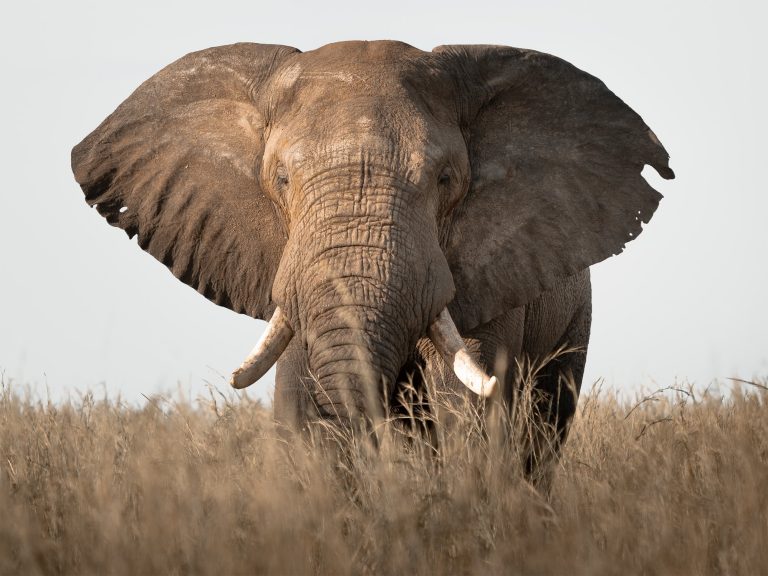
15 Days Uganda Safari
by Wild Whispers Africa Verified operator
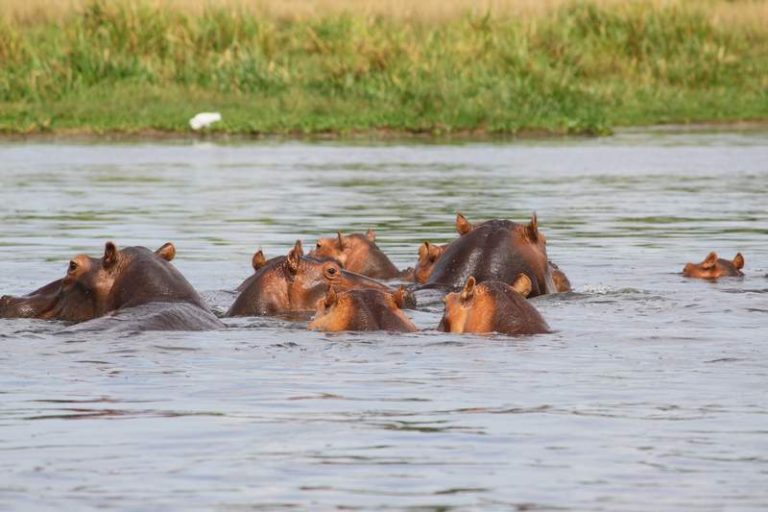

15 Days Uganda Wildlife & Primate Safari
by Oree Safaris Verified operator