

Entebbe is worth a night rather than a taxi ride, with botanical gardens, a wildlife centre, shoebill swamps and chimpanzee islands all within an hour of the terminal. Most visitors book it as the first or last stop of a Uganda safari, or fit a short tour around a layover. The town sits on a peninsula in Lake Victoria, about 40 km south of Kampala.
Entebbe as the First or Last Stop on a Uganda Trip
Almost everyone who visits Uganda passes through Entebbe, and most of them see nothing of it but the airport road. That is the wrong instinct, and the reason is simple: the town is quiet, flat, green and small enough to walk, which after a long flight is worth more than anything Kampala can offer.
It was the colonial capital before Kampala was. The British administration set up here from the 1890s because the peninsula was healthier than the swampy hills inland and because the lake was the road. When independence came in 1962 the seat of government moved north, but State House stayed, a good deal of officialdom stayed, and the town settled into being a place where things happen quietly. The airport is the other legacy, and it carried Entebbe’s name around the world in the summer of 1976 when Israeli commandos landed at night and freed the hostages from a hijacked airliner. The old terminal still stands.
Around seventy to a hundred thousand people live here depending on where you draw the boundary, and the town runs along one main road with the lake on both sides of the peninsula. The air is cleaner than Kampala’s, the traffic is a fraction of it, and you can walk from most hotels to a beach.
So which do you sleep in, Entebbe or Kampala? For the first night after an overnight flight, Entebbe, and it is not close. You are twenty minutes from the terminal rather than an unpredictable ninety, you will sleep better, and the wildlife centre gives you something to do that requires no energy at all. For the last night before a dawn departure, Entebbe again, for exactly the same reason. Kampala earns the middle of a trip, not the ends of it.
Entebbe Botanical Gardens Walking Tour on the Lake Shore
The botanical gardens walking tour is the easiest good thing to do in Entebbe and the one most people wish they had allowed longer for. The gardens were laid out in 1898 by the protectorate’s first conservator of forests, run to about forty hectares along the lake shore, and have been left to grow into something closer to forest than to a park.
Black and white colobus move through the canopy in troops, vervets work the picnic areas with the confidence of animals that have taken sandwiches before, and over a hundred bird species have been recorded inside the fence. Great blue turacos are the ones people remember. Kingfishers work the shoreline, weavers hang their nests over the water, and fish eagles call from the tall trees near the landing.
Two practical things nobody mentions. There is almost no signage, so a guide hired at the gate turns a pleasant walk into a genuinely good one, and they will find you the birds far faster than you will find them yourself. And payment is cashless, by card or mobile money, so the notes you changed at the airport will not get you in.
An hour and a half covers the loop down to the water and back. Early morning and late afternoon are when the monkeys and the birds are moving. One of the old Tarzan films was shot here, which every guide will tell you and which is entirely true.
Uganda Wildlife Education Centre Tours and the Shoebill Pens
Calling it the Entebbe zoo undersells it and also explains why some visitors skip it. The Uganda Wildlife Conservation Education Centre tour is a rescue and rehabilitation centre that happens to be open to the public, most of its animals arrived confiscated or orphaned, and the enclosures are large, planted and set along the lake shore rather than laid out in rows.
For a first day in Uganda it does something no park can: it puts names to what you are about to see. Rhinos, lions, giraffe, leopard, chimpanzees, a rescued elephant, and the birds that are genuinely hard to find in the wild. The shoebills are the reason a lot of people come, because seeing one at close range here makes the search at Mabamba far more satisfying, and if the swamp trip does not deliver you have at least seen the bird.
It opens early and closes late, which makes it the best option for an awkward arrival or a slow departure day. Two extras are worth knowing about. A behind the scenes tour takes you into the kitchens and the off display areas with a keeper, and a keeper for a day programme puts you on the actual rounds, cleaning enclosures and preparing feeds. Both need booking ahead and both are far better with children than the ordinary walk round.
Allow two hours for a normal visit, three if you stop at the lake shore restaurant. Go before four in the afternoon if you want the animals awake.
Mabamba Swamp Shoebill Watching Safari by Canoe
The Mabamba shoebill watching safari is the single best half day in the Entebbe area and the one thing here that birders come for on its own account. Mabamba Bay is a papyrus wetland on the western side of the lake, protected under the Ramsar convention, and it holds one of the most reliable populations of shoebill anywhere.
Getting there is half the pleasure. Boats leave from Nakiwogo landing, ten minutes from Entebbe town, and cross the open water in about forty five minutes before you transfer into a narrow wooden canoe to work the channels. You can also drive round, which takes longer and is duller. Leave at seven in the morning. The birds hunt early, the water is flat before the wind gets up, and by mid morning the lily channels are busy with fishermen.
A shoebill hunts by standing still for a very long time, which means the guides find them by knowing the channels rather than by scanning. Sightings run at roughly seven trips in ten, so it is likely rather than certain, and anyone selling it as a guarantee is selling badly. What you will definitely get is the rest of the swamp: over three hundred bird species recorded, African jacanas walking on the lilies, malachite kingfishers, papyrus gonoleks, herons and pygmy geese, and sitatunga if you are lucky.
Take a hat, sun cream and something waterproof for a camera. The canoes sit low and take water over the sides in the channels. Long sleeves are worth it in the papyrus. The whole outing runs three and a half to four hours door to door, which is why it fits a morning before an afternoon flight and why so many people do exactly that.
Ngamba Island Chimpanzee Boat Trips on Lake Victoria
Ngamba Island boat trips take you to an island refuge about 23 km out on the lake, run by the Chimpanzee Trust, where around fifty chimpanzees rescued from the pet and bushmeat trades live on a forested island with a supplementary feeding regime. It is not a park and nobody pretends otherwise. What it offers is chimpanzees at close range, on a raised platform above the feeding area, which no forest trek can promise.
Boats leave Entebbe in two slots, one in the morning and one around midday, timed so you arrive for a feed. A speedboat takes about forty five to fifty minutes and a motorised canoe about ninety, and the choice mostly comes down to price and stomach, because the lake gets choppy in the afternoon wind. Book ahead. This is not somewhere you turn up.
The trust also runs longer options, including staying overnight in tents on the island and a caregiver programme that gets you closer to the young chimpanzees under supervision. Overnight is the one people rate highest, because the day visitors leave and the island goes quiet.
Worth being honest about the comparison. If your trip already includes chimpanzee trekking in Kibale, Ngamba is a duplicate rather than an addition and Mabamba is the better use of the same morning. If it does not, Ngamba is the only place in the country where you will reliably watch chimpanzees for an hour without walking.
Lake Victoria Beaches, Boat Tours and Sport Fishing Trips
Entebbe has more shoreline than anywhere else you will stay in Uganda, and the lake tours range from a beer at sunset to a full day after Nile perch.
The beaches are a mixed bag and the difference matters. Lido and Imperial are the maintained ones with staff, loungers and something to eat. Aero Beach is the eccentric one, a bar and family hangout built around the wrecks of old aircraft, including a full Uganda Airlines passenger plane and a scatter of Amin era military airframes rusting in the sand, and it is either the strangest thing in town or the best, depending on your mood. Kitubulu has forest running down to the water. Nakiwogo is the working landing site, not a swimming beach, but it is where the boats go from and worth ten minutes of watching.
On swimming, take the honest answer rather than the brochure one. Bilharzia is present in Lake Victoria and the risk concentrates in still shallow water near reed beds and settlements. Swim off the managed beaches where staff monitor the water, stay out of the reeds, get into deeper water rather than paddling at the edge, and rinse off with fresh water afterwards. Plenty of residents swim here regularly. Plenty of others use the hotel pool and think nothing of it.
Sunset boat tours run from the sailing club and from most lakeside hotels, an hour or two out with the light going and the fishing boats coming in. Sport fishing trips go after Nile perch, which grow to sizes that sound like exaggeration until you see the photographs, along with tilapia. Full day charters are the serious version; most hotels can arrange a half day.
Entebbe Town Tours: Markets, Crafts and the Reptile Village
A walking tour of Entebbe town takes about two hours and covers more than the sights list suggests, mostly because everything is on or just off one road.
The craft village on Nambi Road, sometimes called the Juakali centre, is the sensible place to buy anything, with basketry, carvings, bark cloth and fabric at stalls where haggling is expected and gentle. Kitooro and Nakiwogo markets are the working ones, fruit and fish and secondhand clothing, and they are far calmer than anything in Kampala. Victoria Mall covers the supermarket and the ATM in one stop.
The Uganda Reptile Village sits a few kilometres out towards the highway and is better than it sounds. It is a rescue operation for snakes, chameleons and tortoises taken out of villages where they would otherwise have been killed, and the guides handle the education side well. Chameleons in the hand are the bit children remember.
Other stops for anyone with time. Entebbe Golf Club has been going since 1901, is one of the oldest courses in Africa, and takes visitors for a green fee. Bugonga Catholic Church and St John’s Anglican church both date from the early protectorate years. Kigungu landing site, on the far side of the airport, is where the first Catholic missionaries came ashore in the late 1870s, marked by a small monument that hardly anyone visits. The Uganda Virus Research Institute occupies the site associated with the Zika forest, which gave the virus its name. State House and the UN regional support base are visible from the road and photographing either is a bad idea.
Ssese Islands Trips and Day Tours Beyond Entebbe
Ssese Islands trips are the one thing here that cannot be squeezed into a spare morning, and that is the point of them. The archipelago runs to 84 islands off the northwestern shore of the lake, forested, slow, and set up for hammocks rather than itineraries.
The passenger ferry leaves Nakiwogo daily in the early afternoon, boarding an hour before, and takes about three and a half hours to Lutoboka on Bugala Island. It comes back first thing in the morning, which means the minimum sensible trip is two nights. There is a shorter crossing from Bukakata near Masaka if you are driving, roughly forty five minutes with several sailings a day.
Closer options for a spare day. Kampala is an hour away on a good run and holds a full day of royal tombs, markets and mosques, which is covered properly in its own guide. Mpanga Central Forest Reserve, west along the Masaka road, is a quiet patch of tropical forest with marked trails and good birding. Mamba Village on the peninsula keeps crocodiles. Jinja and the source of the Nile is a long day from here, better from Kampala, and better still as an overnight.
Planning an Entebbe Layover Tour Around Your Flight
This is the calculation every guide to Entebbe skips, so here it is worked properly. The numbers that matter are three hours before an international departure, twenty minutes to the airport from town, and the fact that you cannot leave the terminal without a visa.
That last point catches people out. Uganda does not issue visas on arrival at all any more. Everything is applied for online before you fly, and if you are transiting and want to go outside, you need a transit visa, valid up to seven days and not extendable, applied for in advance like any other. Staying airside needs nothing. Walking out of the door does.
Work backwards from your departure, subtract three hours for the airport and twenty minutes each way for the road, and whatever is left is your real window. Then match it against what actually fits.
One thing to avoid: attempting Kampala on a layover. The drive is unpredictable in a way the Entebbe roads are not, and a bad hour on the expressway turns a comfortable plan into a missed flight.
Getting Around Entebbe and the Trip Into Kampala
Entebbe is the one place in Uganda where you may not need a vehicle. The town runs along a single spine and most of what you want is within a couple of kilometres of it.
Walking works, which cannot be said of Kampala. Boda boda motorbikes are everywhere and fares here are a fraction of the capital’s, though the same rules apply: agree the number first, take a helmet, and use an app where you can, since ride hailing operates in Entebbe as well. Special hire cars wait outside the hotels and the airport and are the sensible choice with luggage. Shared minibus taxis run the Kampala road constantly and cost almost nothing, which is fine if you have time and no bags. Bicycles can be hired, and on this flat peninsula they are a genuinely good way to see the place.
For the trip into Kampala, the expressway is the answer and any driver worth hiring will use it. Clear, it is under an hour. Friday evening, or after a heavy afternoon downpour, it can be double that, and the old road through Kajjansi is worse rather than better. A shared shuttle service runs the route on a schedule for those travelling light, and a private car and driver is what most visitors end up with because it waits.
If you are staying in Entebbe and doing Kampala as a day trip, leave by half past eight and start back by four. Anything outside those windows and you spend the difference sitting still.
Where to Stay in Entebbe and When to Visit
Location matters more here than category. Lakeside places on the eastern shore near the gardens are the nicest to spend an evening and are ten to twenty minutes from the terminal. Places clustered nearer the airport trade the view for five minutes on the road, which is worth it only for a genuinely brutal departure time. Town centre guesthouses put you within walking distance of restaurants and the market.
The range runs from simple guesthouses and backpacker dorms through comfortable mid range hotels with pools and gardens up to lakeside resorts. Almost everywhere does airport pickup, and almost everywhere is used to guests who arrive at odd hours or leave before dawn, which is not true in most of the country. A four day honeymoon safari pairing Entebbe with Kidepo is listed on the site.
On timing, Entebbe sits almost on the equator at the lake shore, so the temperature barely moves through the year, hovering in the mid to high twenties by day with cooler nights than the figure suggests because of the water. Two wetter spells, roughly March to May and September to November, bring heavy short afternoon rain rather than continuous drizzle. The drier months of December to February and June to August give flatter water, which matters if boats are your plan, and slightly better odds on the lake crossings not being cancelled for wind.
Rain will not stop a shoebill trip. Wind will. That is the one seasonal fact that changes what you can book.
Frequently Asked Questions About Visiting Entebbe
How long should you spend in Entebbe?
One night either side of a safari is the standard and it works. Two nights lets you fit both a shoebill morning at Mabamba and a proper look at the wildlife centre and gardens without rushing, which is the shape of the three day Ngamba Island and Lake Victoria trips sold from here. Three nights only makes sense if you are heading out to the Ssese Islands or you want a genuine rest, which is a perfectly good reason after a long flight.
Do you need a visa to leave the airport on a layover?
Yes. Uganda no longer issues any visa on arrival, so everything is applied for online before you travel. If you are transiting and want to go outside the terminal, you need a transit visa, granted for up to seven days and not extendable. Staying airside needs nothing. Apply through the government immigration portal rather than any of the lookalike agency sites, and carry a printed approval letter alongside the digital copy.
What do the main Entebbe attractions charge?
The wildlife centre is 15 USD for foreign non resident adults and 10 USD for children aged three to fourteen, with foreign residents paying 10 and 5 USD. Its behind the scenes tour runs about 70 USD and the keeper for a day programme about 150 USD. The botanical gardens charge roughly 6 USD for foreign visitors, payable by card or mobile money only, with a guide extra at the gate. The reptile village is about 5 USD. A half day Mabamba shoebill trip runs from roughly 35 USD per person in a group of five or more up to about 70 USD if you are alone. Ngamba Island day trips sit around 150 USD per person including the boat, dropping sharply with group size. The Ssese ferry costs a few dollars either way. A tourist visa is 50 USD single entry.
Is it safe to swim in Lake Victoria at Entebbe?
With sense, yes, and residents do it regularly. Bilharzia is present and the risk concentrates in still shallow water near reed beds and populated shorelines, so use the managed beaches where staff watch the water, get out into deeper water rather than wading at the edge, stay away from the reeds, and rinse with fresh water afterwards. Hippos and crocodiles exist in the lake but not at the maintained town beaches. If any of that unsettles you, most hotels have a pool.
Are you likely to see a shoebill at Mabamba?
Likely rather than guaranteed. Sightings run at somewhere around seven trips in ten across the year, and the birds are resident rather than seasonal, so a wet month is not a bad month. Leave at seven in the morning, which is when they hunt and when the water is calm, and take the boat from Nakiwogo rather than driving round. If you miss, the wildlife centre keeps shoebills and you will at least see the bird properly.
Should you stay in Entebbe or Kampala on arrival?
Entebbe, for the first night and the last. You are twenty minutes from the terminal rather than an unpredictable hour or more, the town is quiet enough to sleep off a flight, and there is enough within walking distance to fill a jetlagged afternoon. Kampala is worth a full day in the middle of a trip, not the ends of it, and arriving into its traffic straight off a long haul flight is nobody’s good introduction to Uganda. A five day chimps and gorillas safari is one of the listings that includes Entebbe.
Is Ngamba Island worth it if you are already trekking chimpanzees?
Probably not. Kibale gives you wild chimpanzees in forest, which is a different and better thing, and Ngamba is a rescue population on a managed island. If your route includes Kibale or Budongo, spend the morning at Mabamba instead. If it does not, Ngamba is the only place in Uganda where you will watch chimpanzees at close range for an hour with no walking and no permit lottery, and for families and anyone with mobility limits that makes it the right choice.
What should you pack for a day around Entebbe?
For the swamp, a hat, sun cream, long sleeves against the papyrus, and something waterproof for a camera, because the canoes sit low and take water in the channels. For the gardens and the wildlife centre, closed shoes and insect repellent late in the day. A light rain layer year round. A card or a phone with mobile money, since the gardens do not take cash. And a fleece for evening boat trips, which are cooler on the water than the day suggests.
What is the airport like now?
Larger than the guides describe. A major expansion has added a new passenger terminal of roughly twenty thousand square metres, lifting capacity from about two million passengers a year towards three and a half million, along with three more aerobridges, a lot of extra check in desks, self service machines, a new cargo centre and resurfaced runways. Departure immigration has moved into the new building. Airside catering past security is still limited, so eat before you go through if you have a long wait.
When is the best time of year to visit Entebbe?
December to February and June to August are the drier stretches and the better ones for anything involving a boat, since the lake is calmer and crossings are less likely to be blown out. The wetter spells, March to May and September to November, bring heavy short afternoon rain rather than all day cloud, and they do not affect the shoebill or the wildlife centre much at all. Temperature barely moves year round.
Uganda Safaris works with Ugandan operators who build the Entebbe end of a trip properly, with drivers who know the flight schedules, boat crews who leave at seven rather than eight, and guides at Mabamba who work the channels rather than the shoreline. Birders who want the shoebill morning inside a longer route will find Mabamba written into circuits such as this fifteen day wildlife and primate safari.
Browse the wider Entebbe and Lake Victoria itineraries on the site, compare what each operator includes, and ask an operator directly for a hand fitting the town around the flights you have already booked.
8 Places to Visit in This Area
Individual sites within reach of here, each with its own guide. Some are written up because the name circulates and the place does not, which is worth knowing before you plan a drive around one.
Safaris That Visit Entebbe
3 of the 21 safaris listed here that visit Entebbe, from different operators where the listings allow it. Each is sold and run by an independent Ugandan tour company. This site lists them and passes on enquiries; it takes no booking and charges you nothing.
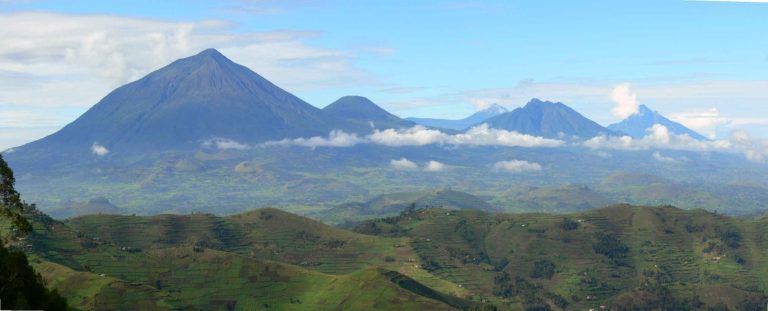 Photo: Byekwaso Blasio / CC BY-SA 4.0

7 Days Mount Mgahinga Gorillas, Golden Monkey and Volcano Hike
by Insight Safari Holidays Verified operator

11 Days Uganda Primates Safari
by Tranquil Safaris Verified operator


5 Days Chimps & Gorilla Safari
by Oree Safaris Verified operator