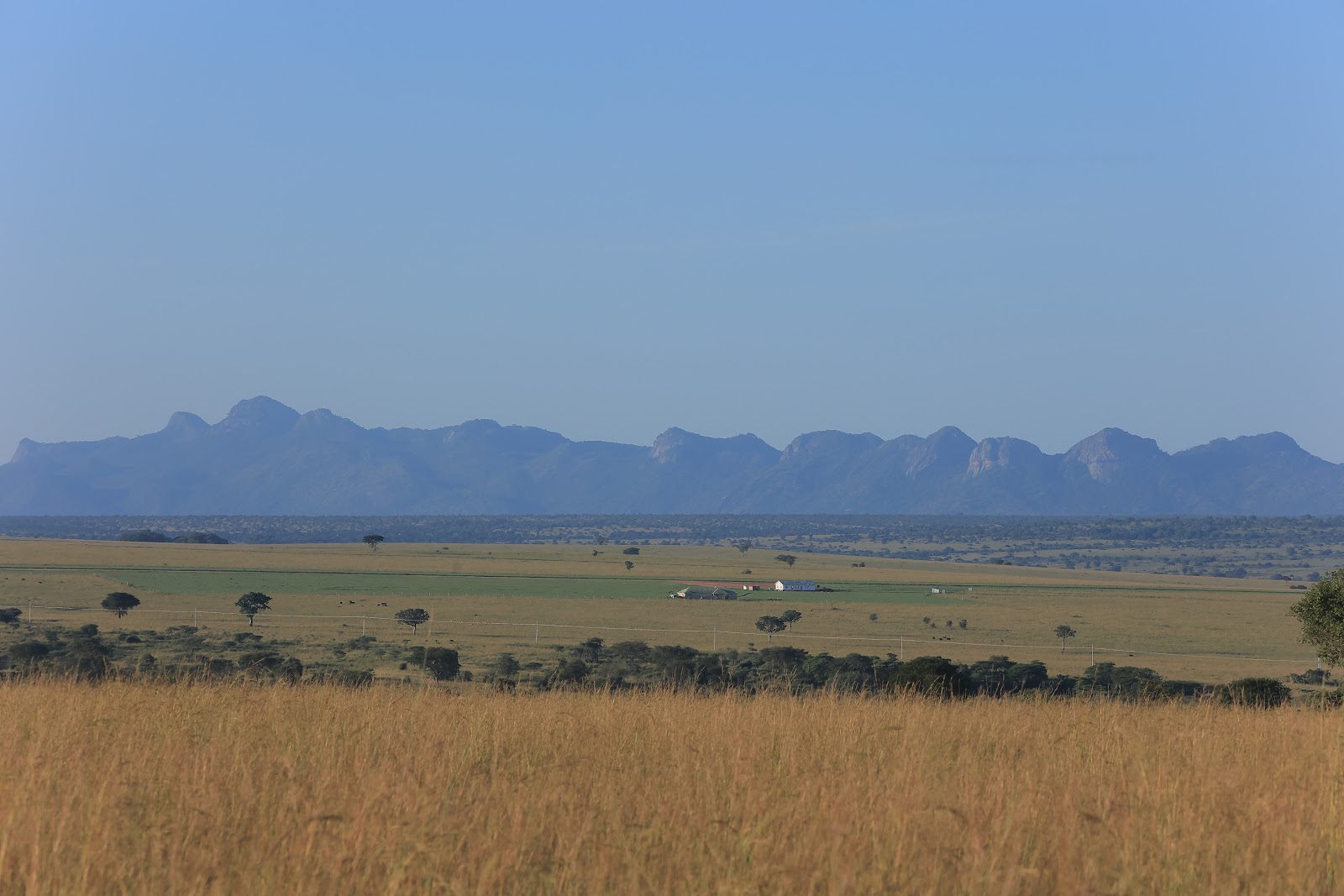
The best time to visit Uganda depends on which half of the country you are going to, because the north and the southwest run on different rainfall cycles. For gorilla trekking in the southwest, June and July are the driest months by a wide margin, while Kidepo and the north are driest from December to February. Uganda sits on the equator at altitude, so temperature hardly moves all year and rain sets the safari calendar.
The Short Answer on the Best Time to Visit Uganda for a Safari
If you want one answer and you are going to see gorillas, go in June or July. Those two months are drier in the Kigezi highlands around Bwindi than anything else on the calendar. July averages two wet days in the month against sixteen in April. Trails are firmer, the briefing is not held in a downpour, and the drive in on the steep access roads is a different proposition.
If you are going to Kidepo Valley, go between December and February. Those are the months the far north actually dries out, and they are not the months the guidebooks send you.
If you are doing both in one trip, which is what most two week itineraries attempt, you are choosing a compromise rather than an optimum. December through early February is the better compromise, because it is decent in the southwest and genuinely good in the north. June and July are excellent in the southwest and wet in the north.
And the honest caveat that every Ugandan guide will give you: this is equatorial highland weather and it does what it likes. A dry month still produces afternoon storms. A wet month produces plenty of clear mornings.
Why One Safari Season Does Not Fit the Whole of Uganda
Nearly every page answering this question tells you Uganda has two dry seasons, June to September and December to February, and two wet ones, March to May and October to November. That is the classic bimodal East African pattern, and in the southern half of Uganda it holds up well.
In the north it does not hold at all.
Northern Uganda lies far enough from the equator that it gets a single rainy season rather than two, and the two regimes are out of phase with each other. Long term station records kept by Uganda’s national meteorological service make the gap plain. At Kabale, the highland town that serves the Bwindi and Mgahinga area, July averages about twenty millimetres of rain across two wet days in the month. At Gulu, on the road north, August averages closer to two hundred and forty millimetres across sixteen wet days, and August is the single wettest month of its year. August is also, on eight out of eight of the pages currently ranking for this query, described as peak dry season.
Masindi, the town at the gateway to Murchison Falls, sits in between and leans north: its driest stretch is December to February, and August is one of its wetter months. So the northern arc of Uganda’s safari circuit, which is the half most travellers do first, is on the opposite cycle from the gorilla forests.
None of this makes June to August a bad time to visit Uganda. It makes it a great time for the southwest and an average one for the north, and knowing which is which lets you put the right park in the right week.
Month by Month in the Gorilla Highlands: Bwindi and Mgahinga Trekking
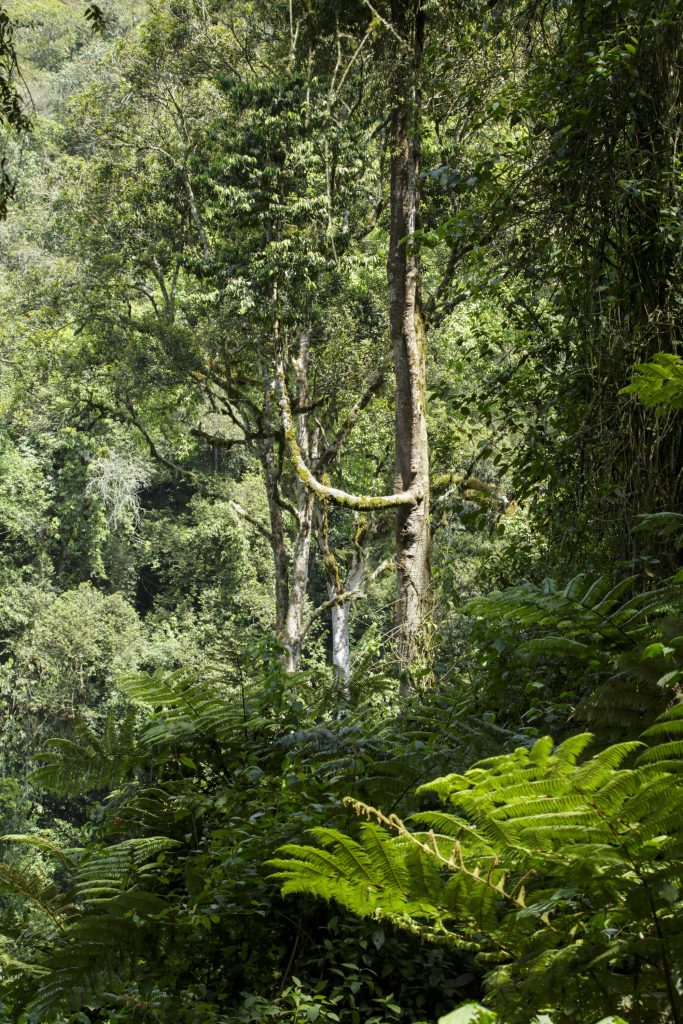
These figures are long term station averages for Kabale, the highland town in Kigezi that most travellers pass through on the way to Bwindi, Mgahinga and Lake Bunyonyi. Bwindi itself, being forest and higher, runs wetter than Kabale, so read the shape of the year rather than the exact depth. Wet days matter more than millimetres for a trek, because rain here arrives as storms rather than drizzle.
| Month | Rain mm | Wet days | Verdict |
|---|---|---|---|
| January | 65 | 8 | Good |
| February | 81 | 10 | Fair |
| March | 113 | 13 | Wet |
| April | 140 | 16 | Wettest |
| May | 98 | 10 | Wet |
| June | 29 | 3 | Best |
| July | 20 | 2 | Best |
| August | 54 | 6 | Good |
| September | 99 | 11 | Fair |
| October | 111 | 13 | Wet |
| November | 117 | 16 | Wet |
| December | 89 | 10 | Fair |
Read the wet days column rather than the depth and the year reorganises itself. June and July are not merely drier, they are a different kind of month: rain falls on two or three days out of thirty, so a trek booked in that window is very likely to be a dry one. April and November both hit sixteen wet days, which is a coin flip every morning.
The other thing the table shows is that November is wetter in the gorilla highlands than March, and September is wetter than February. The neat framing of long rains and short rains does not survive contact with the numbers here. What you actually have is a dry spell in the middle of the year, a milder dry spell around January, and rain either side of both.
Practically: January is an underrated month for a Bwindi trek and cheaper than July. August is the tail of the dry season and still firm underfoot. September is where the ground starts giving way again.
Month by Month in the North: Kidepo and Murchison Falls Safaris
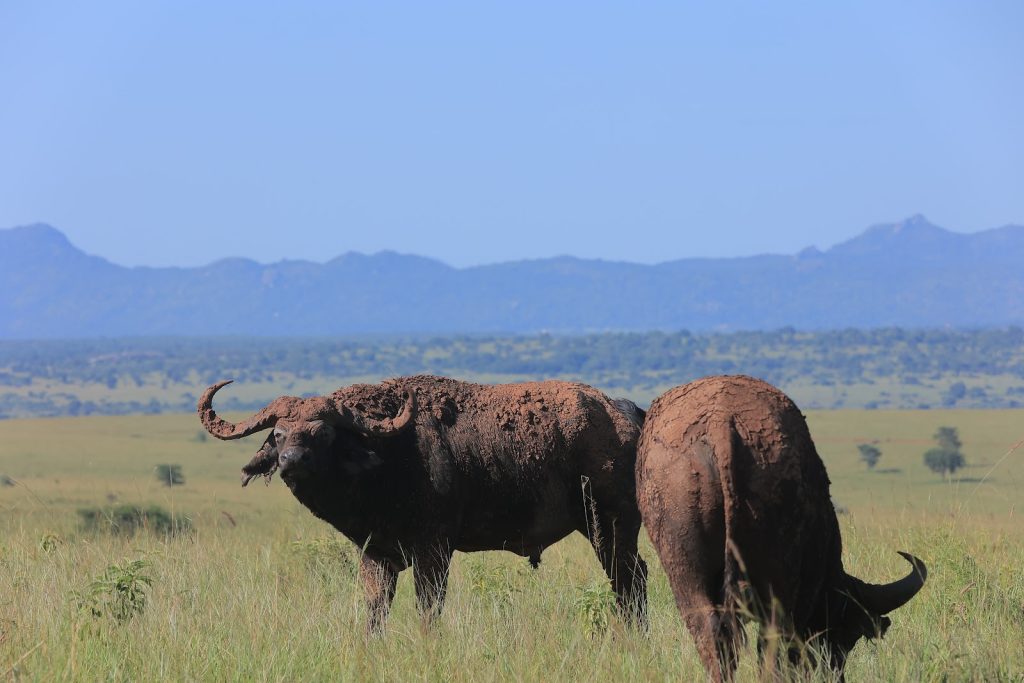
These are long term averages for Gulu, standing in for the northern arc that carries Kidepo Valley, Karamoja and the road up from Murchison Falls. Kidepo itself is drier than Gulu overall, being semi arid, but it follows the same single peaked shape.
| Month | Rain mm | Wet days | Verdict |
|---|---|---|---|
| January | 17 | 3 | Best |
| February | 29 | 4 | Best |
| March | 85 | 8 | Fair |
| April | 166 | 14 | Wet |
| May | 176 | 15 | Wet |
| June | 152 | 12 | Wet |
| July | 169 | 14 | Wet |
| August | 238 | 16 | Wettest |
| September | 175 | 15 | Wet |
| October | 187 | 16 | Wet |
| November | 109 | 11 | Fair |
| December | 37 | 4 | Best |
One peak, running roughly April to October, and a hard dry season from December into February. That dry season is what drives game viewing in the north: grass falls away, the Narus valley waterholes in Kidepo pull animals in, and the tracks that turn greasy in August are firm. It is also the window when Kidepo’s remoteness stops being a gamble, because the last stretch of road into the park is the part that punishes rain.
Murchison sits on a softer version of the same curve. Its driest run is December to February, its wettest months are August through October, and the mid year window that suits Bwindi so well is merely acceptable there. A launch cruise below the falls works in any month. A morning game drive in the delta works better when the grass is short.
Best Time for Gorilla Trekking Safaris in Bwindi and Mgahinga
Gorilla trekking is the activity that most often decides when a Uganda trip happens, and it is the one most sensitive to the calendar. The forest floor in Bwindi is steep, root tangled and slick, and mud is the whole difference between a walk and a scramble.
June, July and August are the strong months, with January close behind. Those are the weeks when a trek is likely to be dry and the access roads from Kabale or Kisoro are behaving. They are also the weeks when permits vanish first.
Trekking in the wet is entirely possible and thousands of people do it every year. What changes is the effort. Trip reports from rainy season treks describe two to three hours of climbing through mud that flows rather than sits, nettles that punish anyone grabbing a plant for balance, and boots that stop gripping on the steeper pitches. The hour with the gorillas is unaffected: they carry on feeding whether or not you are soaked, and the thick wet vegetation can actually put you closer to them.
There is a counterintuitive upside to the wet months. Gorillas drop to lower altitude in the rains to feed on fresh bamboo shoots, which can mean a shorter walk to reach them. A wet season trek is sometimes easier in distance and harder in footing.
Mgahinga follows the same pattern with an added wrinkle: its single habituated family has a history of wandering across into Rwanda and the Congo, so availability there is less predictable in any month.
Best Time for Chimpanzee Tracking Safaris in Kibale and Kyambura
Kibale National Park tracks chimpanzees year round and sits in the bimodal southern pattern, so its drier windows mirror Bwindi’s: June to August, and December into February.
Timing changes chimp tracking differently from gorilla trekking. Gorillas move slowly and stay put; chimpanzees travel, and finding them depends on hearing them. Wet forest is quieter to walk through, which helps, but heavy rain sends the group high into the canopy where they are audible and hard to see. Dry months bring them lower and more often to the ground, though fruiting cycles matter more than rainfall on any given week.
Kyambura Gorge in Queen Elizabeth is a different proposition. The gorge is steep and the descent is the hard part, so the wet months make an already demanding walk unpleasant. Sightings are less reliable there than at Kibale in any season, which is reflected in the fee.
Chimpanzee tracking is one of the two activities carrying a discounted permit in April, May and November, which makes the wet months genuinely attractive at Budongo Forest and Kibale if you are willing to trade conditions for cost.
Best Time for Game Drive Safaris in Queen Elizabeth and Lake Mburo
Savannah game viewing is the one activity where the dry season advantage is straightforward and well understood. Grass falls, leaves thin, water concentrates, animals concentrate with it.
For Queen Elizabeth, that means January and February, and June through August. The Kazinga Channel holds hippo and buffalo year round, so the launch cruise is less seasonal than the drives. The tree climbing lions of the Ishasha sector are seen more often when the fig trees are not hidden by growth, though they remain a matter of luck on any given afternoon rather than a scheduled event.
Lake Mburo, small and close to the Kampala road, is best in the same dry windows and is the park where expectations most need managing. It is an acacia and zebra park with no elephants in numbers and no lions to speak of, and an hour of driving can produce very little. Its walking safari and night drive are the better reasons to go.
Murchison Falls, being on the northern curve, peaks for game drives from December to February rather than in the mid year window, which is the single most useful scheduling fact on this page for anyone building a two park trip.
Birding Safaris and the Migrant Season in Uganda
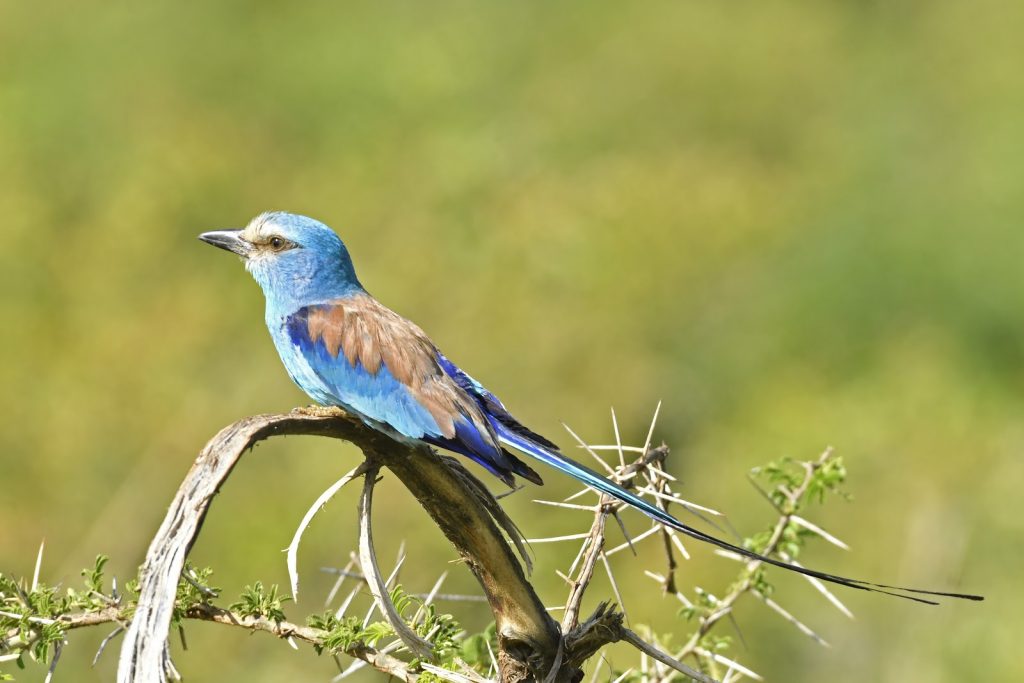
Birding inverts the whole calendar. Uganda has one of the longest bird lists in Africa for its size, and the months that suit a game drive least are the months that suit a bird list best.
Palearctic migrants arrive from about November and stay through to April, overlapping with the wet months in both halves of the country. Resident species breed in the rains, so plumage is at its best and birds are calling rather than skulking. Food is abundant, which spreads birds through the forest instead of concentrating them.
The shoebill is the exception most people are chasing, and it works the other way. At Mabamba Wetland on Lake Victoria the birds are resident and findable all year, though lower water in the drier months pushes them into more predictable channels. The same is true of the boat searches at Toro Semliki.
For the Albertine Rift endemics that draw serious birders to Bwindi’s Ruhija side and to Echuya Forest, the practical compromise is the shoulder: late May into early June, or September, when the migrants overlap with passable trails.
Trekking the Rwenzori and Mount Elgon: Picking a Month
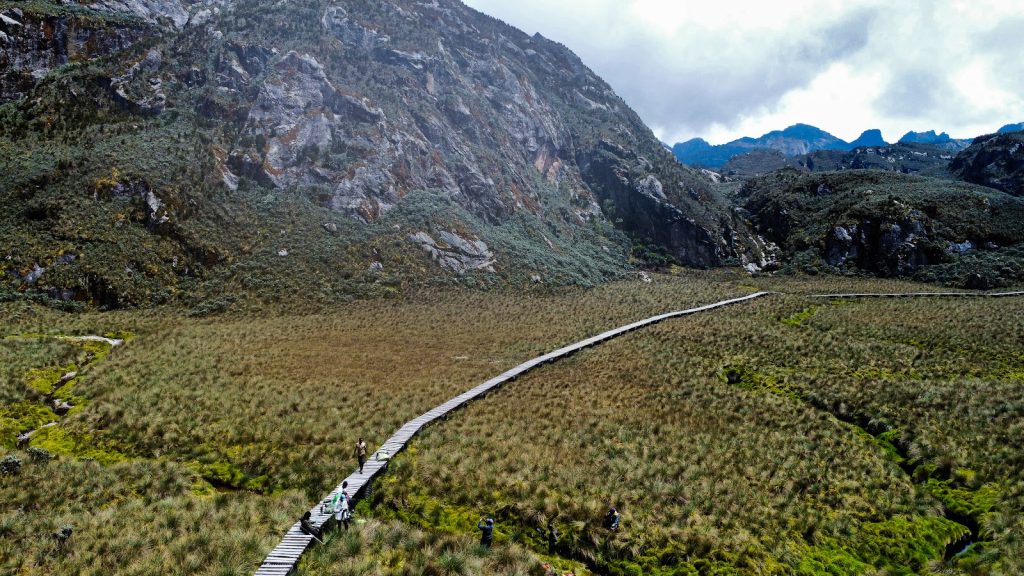
The mountains have their own calendar and it is stricter than the parks’.
Rwenzori Mountains National Park is one of the wettest places in East Africa and there is no month that is reliably dry. The two windows that work are roughly late June to August and December to February, and even then the bog sections stay bog. Snow and ice on the summit routes have retreated a long way, which has made the technical sections harder rather than easier in places.
Mount Elgon is more forgiving. It is drier, lower and less technical, and the same two windows apply with a wider margin for error. The Wanale and Sipi side of the mountain around Sipi Falls is walkable most of the year, and the coffee harvest brings its own reason to come in the second half of the year.
Rafting and the adventure activities at Jinja on the Nile run all year, since the river is dam regulated rather than rain fed. Water levels change the character of individual rapids rather than closing the run.
Low Season Safaris in April, May and November
The case for the wet months got a good deal stronger recently, and most pages have not caught up.
The wildlife authority now sells discounted gorilla and chimpanzee permits for April, May and November only, at a meaningful saving on the standard rate. These are not operator discounts and cannot be negotiated further; they are a published low season tariff. The one condition attached is that a low season permit cannot be rescheduled, so it is a commitment to a date rather than a flexible booking.
Alongside that, lodge rates soften across the board in those months, availability opens up, and permits that are gone a year ahead in July can sometimes be had weeks out. The forest is at its greenest, waterfalls run hard, and the briefing shed has ten people in it rather than thirty.
The trade is real and worth stating plainly. April and November are the two wettest months in the gorilla highlands, both averaging around sixteen wet days. Trails are mud. Photography through wet foliage is hard. Transfers take longer and the unpaved roads in to Bwindi are the worst part of it. Anyone who is not comfortable walking several hours on steep, slippery ground should weigh the saving against the experience.
When Uganda Safari Permits Sell Out
Timing a Uganda trip is about more than weather. The wildlife authority caps visitors at eight people per gorilla group per day and one hour per group, which is a hard ceiling, and demand for the dry months exceeds it comfortably.
For June, July, August and February, operators consistently advise six months of lead time as a minimum and nine to twelve months if you want a particular sector or a specific lodge alongside it. Permits for those months routinely go close to a year ahead. In April, May and November you can often secure one within weeks.
One rule changed recently and it matters for anyone planning around a date. The reservation window that once allowed an operator to hold a permit unpaid for a few days has been suspended, and the booking system now releases a permit only against full payment at the time of booking. In practice that means the decision to travel in July is a decision you make and pay for well before you have finished planning the rest of the trip. If an operator tells you they are holding a permit for you, ask whether it is paid.
Rain, Roads and Drive Times on the Uganda Safari Circuit
Rain in Uganda costs you road time more than it costs you activity time, and this is the part that reshapes an itinerary.
The main highways are paved and hold up. The access roads are the problem: the last stretch into Bwindi is steep, unpaved and unforgiving in the wet, the track into Kidepo is long and remote, and the Ishasha sector road in Queen Elizabeth turns greasy quickly. Travellers who have driven the circuit report the western loop transfers running three to five hours in good conditions, with the Murchison to Bwindi leg at eight to ten hours on a dry day and longer on a wet one.
Two consequences. A wet season itinerary needs more slack than a dry season one, and cutting a park is better than arriving at a trailhead at midnight. And the flights between Entebbe and the airstrips at Pakuba, Kihihi and Kisoro do more work in the wet months than the dry ones, because what they buy back is a road day that has just become unpredictable.
Frequently Asked Questions About the Best Time to Visit Uganda
What is the single best month to visit Uganda? July, if gorillas are the priority. It is the driest month of the year in the Kigezi highlands, averaging around two wet days in the month against sixteen in April. If your trip is weighted towards Kidepo Valley and Murchison Falls, January is the better answer, because the north is on a different cycle and July there is wet.
What is the worst month to visit Uganda? April in the southwest, on the numbers: the wettest month of the year around Bwindi and the muddiest trekking. In the north the answer is August, which is the wettest month there and the one most often recommended by pages that treat Uganda as having a single national season. Neither month is unusable, and both carry real compensations in price and quiet.
Can you go gorilla trekking in the rainy season? Yes, and it runs every day of the year. Expect two to three hours of climbing through mud that flows rather than sits, and expect to be wet from the waist down whatever you wear. Hire a porter. The hour with the gorillas is unchanged, and the family may be lower down the slope than usual because they follow fresh bamboo growth in the rains.
Does the temperature change much through the year? Barely. Uganda sits on the equator and most of it sits high, so the calendar is about rain rather than heat. Around Kampala and Entebbe, daytime highs hold between about twenty five and twenty nine degrees all year with nights around seventeen or eighteen. In the Kigezi highlands the days are similar but the nights drop to about ten degrees, which surprises people who packed for the tropics. In the far north the dry season days push past thirty degrees.
Is it cheaper to visit Uganda in the wet season? Yes, and more so than it used to be. The wildlife authority sells discounted permits in April, May and November: gorilla tracking at USD 600 for foreign non residents and USD 500 for foreign residents, against the standard USD 800 and USD 700, and chimpanzee tracking at USD 200 and USD 150 against the usual USD 250 and USD 200. Low season permits cannot be rescheduled. Lodge rates also soften in those months. Park entrance fees do not change by season.
Do permit prices change during the year, and are they going up? The only seasonal change is the April, May and November discount described above. On the standard tariff, a revised schedule takes effect on 1 January 2027, and the headline figure most people worry about is not part of it: gorilla tracking stays at USD 800. What rises is gorilla habituation, chimpanzee tracking and habituation at Kibale, tracking at Kyambura, and lion tracking in Queen Elizabeth. Anyone told that gorilla permits are about to jump has been given stale information.
How far ahead should I book for July or August? Six months as a floor, nine to twelve if you want a particular sector, a specific gorilla family or a lodge within a short drive of the trailhead. Only eight people may visit a gorilla group in a day. Since the reservation window was suspended, a permit is only yours once it is paid for in full, so the lead time is a payment deadline rather than a planning one.
When is the best time for birding in Uganda? November through April, when Palearctic migrants are present and resident species are breeding and in fresh plumage. That window sits squarely inside the wet months, which is why serious birders and game viewers rarely want the same weeks. Shoebills at Mabamba Wetland are resident and findable year round, with lower water in the drier months making the channels more predictable.
When should a family with children travel? The December to February window suits most family trips, since it works in both halves of the country and lines up with school holidays in much of the northern hemisphere. Bear in mind that the wildlife authority sets a minimum age of fifteen for gorilla tracking, so younger children will be doing game drives, boat trips and rhino tracking at Ziwa while older siblings trek. Park entrance is charged at a reduced children’s rate, and children under five are exempt entirely.
Is Uganda a year round destination? More so than most safari countries, because temperature is stable and no park closes for a season. That framing gets repeated so often it stops meaning anything, though. Every month works; the months differ sharply in what they are good for and in what they cost, which is what the tables above are for.
Deeper Guides to Timing a Uganda Safari
This page settles the country level question. Each of the topics below is a search people run in its own right and deserves its own page, so they will be built beneath this one.
Planning a Uganda Safari Around the Calendar
Uganda Safaris does not run trips. It lists safaris sold by Uganda’s own tour operators, so the timing decisions on this page can be checked against real itineraries rather than taken on trust. Nothing is booked or paid for here, no fee is charged to a traveller, and an enquiry goes straight to the operator who runs the trip and quotes for it.
Once you know which window suits your list, browse the safaris listed by Uganda based operators and see which ones are built around it, or read about the companies behind them. The destination guides cover each park in depth, the cost of a Uganda safari is worked through separately, and Plan Your Safari holds the rest. Send your dates to a couple of operators and compare what comes back.