
Uganda Boat Cruise Safaris: Kazinga, the Nile and the Lakes
A launch trip along the Kazinga Channel in Queen Elizabeth or up the Victoria Nile to the base of Murchison Falls, with the Nile delta run for shoebill.
Uganda boat cruise safaris cover several different trips under one name: the Kazinga Channel launch in Queen Elizabeth, the run up the Victoria Nile to the base of Murchison Falls, the quieter delta trip below it, small boats on Lake Mburo, canoes through the Mabamba papyrus after shoebill, and island crossings on Lake Victoria. Each exists for a different reason, and picking the right water matters more than picking the operator.
Safaris That Include Boat Cruise
3 Days Queen Elizabeth Safari Uganda
by Wild Whispers Africa Verified operator

11 Days Uganda Primates Safari
by Tranquil Safaris Verified operator

4 Days Double Gorilla Safari
by Oree Safaris Verified operator
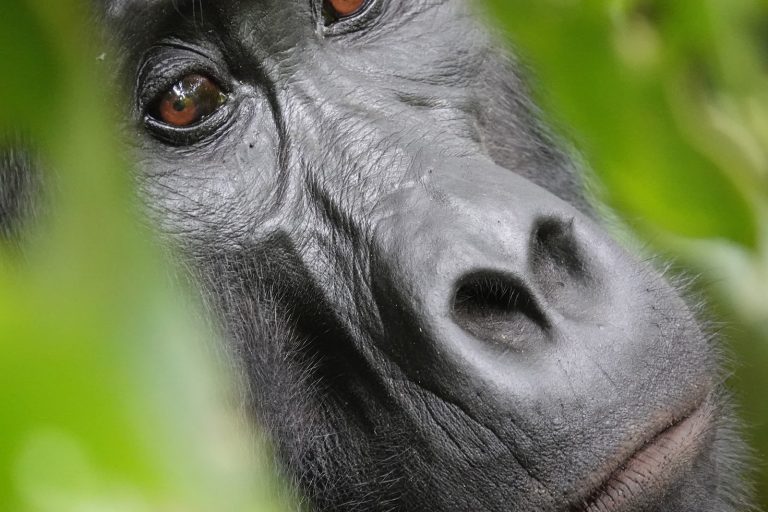

7 Days Uganda Safari, Gorillas, Wildlife & Chimps
by Insight Safari Holidays Verified operator
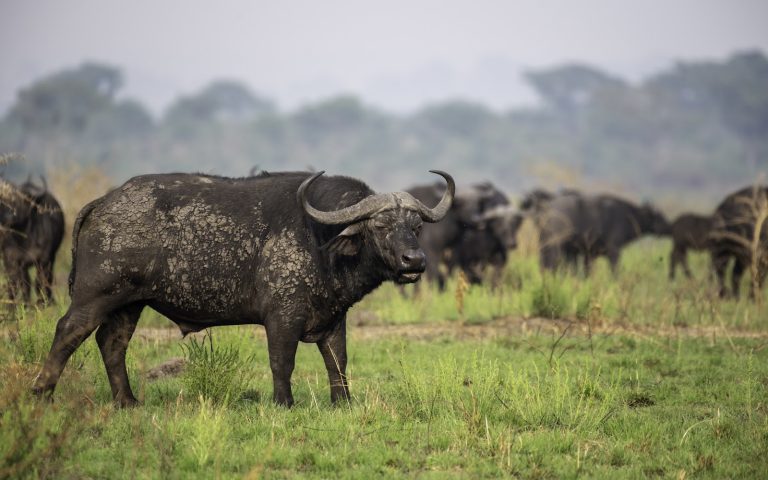
6 Days Uganda Safari, Gorillas, Wildlife & Chimps
by Insight Safari Holidays Verified operator
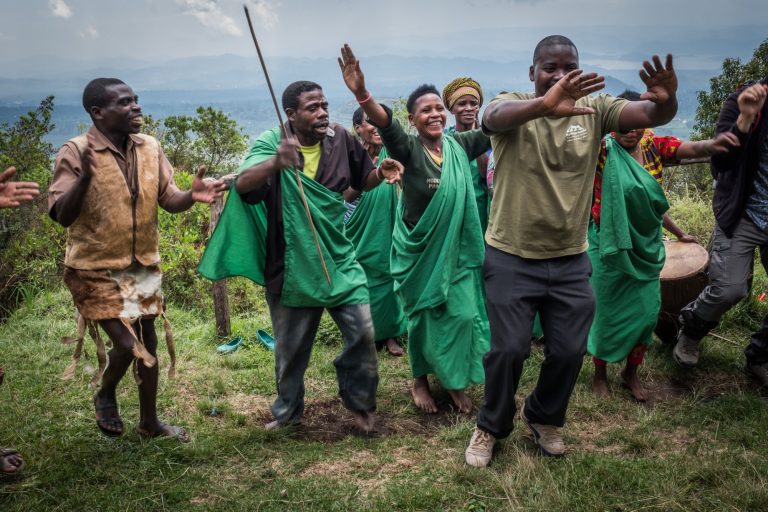
10 Days Uganda Cultural Tour
by Insight Safari Holidays Verified operator
See all 24 safaris that include boat cruise
A Guide to Boat Cruises in Uganda
What a Uganda Boat Cruise Safari Actually Buys You
A Uganda boat cruise safari is not one product. The same two words cover a launch along a hippo crowded channel in Queen Elizabeth, a run up the Victoria Nile to the foot of Murchison Falls, a paddle through papyrus after a shoebill, and an afternoon on a highland lake where the loudest thing is a kingfisher. One label, several different reasons to go.
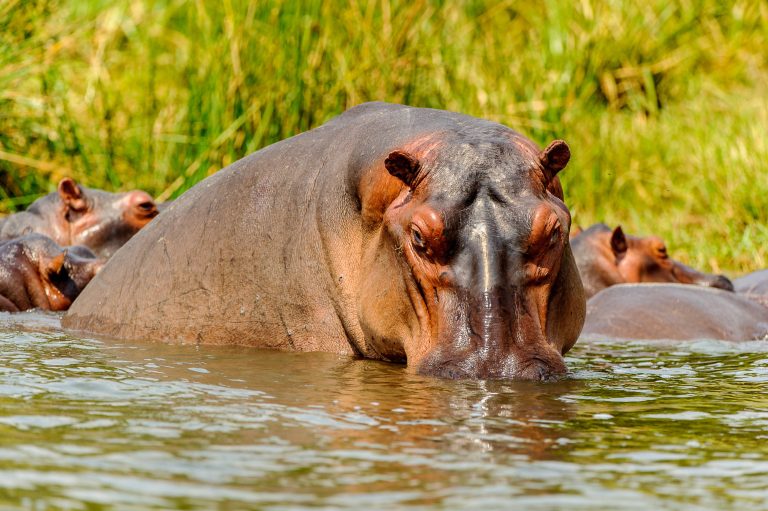
What they share is the viewing angle. On land you look through scrub at animals that heard the engine two minutes ago. From the water you drift in level with the bank, quiet, and nothing moves off. Buffalo keep drinking. A hippo pod that would be a distant grey lump from a track becomes forty animals at fifteen metres.
They also share a place in the itinerary. Boat time is slotted into an itinerary as an afternoon, rather than sold as a standalone day out. That is the normal shape of it here.
Kazinga Channel Launch Trips in Queen Elizabeth National Park
If you take one boat trip in Uganda, take this one. The Kazinga Channel launch trip runs along a natural channel some thirty two kilometres long joining Lake George to Lake Edward, shallow and warm enough that hippo gather in numbers hard to credit until you are alongside them. Estimates put the channel population near two thousand.
Boats leave from a jetty below the Mweya peninsula, and two operators work the same water. The wildlife authority runs large double deck boats taking around forty passengers on a fixed timetable; Mweya Safari Lodge runs smaller craft carrying ten or twelve. The authority boat is cheaper and busier, the lodge boat quieter and easier to photograph from.
Buffalo line the bank in herds. Elephant come down to drink late in the afternoon. Lion turn up occasionally and are never the reason to go. Birds are the quiet surprise: pelicans, skimmers, open bill storks, half a dozen kingfishers, and enough waders that a birder runs out of time before subjects.
One thing nobody tells you at the jetty. The upper deck fills first because it looks better, and the lower deck is where the photographs are, since you sit level with animals standing in water rather than shooting down at their backs. Take the lower deck. Our guide to Queen Elizabeth National Park covers Kasenyi and Ishasha.
Murchison Falls Launch Trips: the Falls Run and the Delta Run
Murchison is the one place in Uganda where two boat trips leave the same landing in opposite directions, and most visitors do not realise there is a choice until they are standing at Paraa.
Upstream is the famous one. Two hours against the current, past crocodile hauled out on sandbanks and elephant crossing between islands, finishing at the bottom of a rock amphitheatre where the Nile forces itself through a gap you could throw a stone across. Boats hold position in the spray for ten minutes or so. Plenty of visitors then climb the path to the top and meet their vehicle there, which turns the boat trip into a walk with a good reason for it.
Downstream is the other trip, and the better one for anyone carrying binoculars. The run toward the Lake Albert delta takes roughly twice as long and reaches somewhere flatter and wilder, where the river spreads into shallow braided channels and papyrus. It is the second reliable shoebill site in the country after Mabamba, and low water concentrates fish and birds together, making the early part of the calendar the stronger window. Fewer boats go that way, which is most of the appeal. Both run from Paraa, shared or chartered. The Murchison Falls destination guide sets out the park in full.
Lake Mburo Boat Safaris and the Small Water Difference
Lake Mburo is the park people drive past, and its boat safari is the least publicised good boat trip in Uganda. Small lake, small boat, two departures a day of about two hours each.
Scale changes what you see. On a big channel you watch animals as groups. Here a crocodile slides off a log four metres away, an otter family works the shoreline, and a pair of African finfoot skulk under overhanging branches in the one habitat where that bird is findable at all. Birders book this trip for the finfoot alone. Mburo sits between Kampala and the southwest, which makes it the natural first or last night on a gorilla itinerary: boat in the afternoon, walking safari in the morning. See the Lake Mburo guide for the zebra and impala side of the park.
Mabamba Canoe Trips and the Shoebill
The Mabamba canoe trip gets filed under boat cruises on every activity list in the country and belongs in a category of its own. No deck, no rail, no engine noise for most of it. You sit low in a wooden canoe while a local fisherman poles you along narrow cuts through papyrus taller than you are.
The target is the shoebill. Mabamba is a Ramsar listed wetland across the water from Entebbe holding a resident population in the low dozens, and it is the most reliable place on earth to find one. Reliable is not guaranteed. The bird stands motionless in shallow water waiting for lungfish, so it is findable at dawn and much harder once the day warms and it moves back into thick reed.
Getting there is part of the morning: a drive to Nakiwogo landing site, a short ferry crossing, then a dirt road through cultivation. Most people fold it into their first or last day, since it sits so close to the airport. The Mabamba destination guide has the detail, and our Uganda birding tours page places the wetland in a longer birding route.
Bunyonyi, Ssese and Lake Victoria Boat Tours
Bunyonyi is the exception. No hippo, no crocodile, twenty nine islands in cold, very deep water close to two thousand metres up, with hand terraced hillsides dropping straight into it. The classic trip is a dugout canoe, paddled by you if you want the arm ache or by someone competent if you do not, and motorboat tours run the same circuit faster. An hour or two, and the reason to do it is that you have come off a gorilla trek and your legs want to sit down. Bunyonyi also carries a reputation as the one Ugandan lake safe to swim in, which deserves a footnote rather than repetition; the water sports guide sets out what the research says and the Lake Bunyonyi guide covers the rest.
At Entebbe, boats are transport as much as sightseeing. Ngamba Island, a chimpanzee refuge, lies roughly an hour offshore by motorboat over open water that can be choppy, and feeding platform visits are timed, so departures are fixed. The Ssese Islands are further out, reached by a daily vehicle ferry from Nakiwogo that sails in the early afternoon and takes about three and a half hours to Lutoboka Bay on Bugala, returning next morning. A shorter crossing from Bukakata near Masaka takes around half an hour. Our Ssese Islands guide and the lake beach getaway guide cover what to do once you land.
When to Take a Boat Cruise Safari in Uganda
Boats run all year. Water levels and animal behaviour are what move.
The drier stretches, roughly December to February and June to August, pull game toward permanent water, which is exactly where you are. Channel banks get busier, tracks dry out, and the game drive either side of your boat improves at the same time. At Murchison, low water on the delta concentrates fish into shallow pools and lifts shoebill odds.
Wet months bring afternoon storms, and a launch will be held or turned back for weather, so an afternoon slot in April or October carries a real chance of loss. Book a morning boat then. In exchange the parks are emptier, the light after rain beats anything the dry season produces, and migrant birds are in. Our month by month guide to the best time to visit Uganda works through the rainfall properly, including the fact that the north and the southwest do not share a calendar.
Reading a Boat Trip Inside a Safari Itinerary
Itineraries are vague about boats in a way they never are about gorillas, and the vagueness hides three things worth asking about.
Direction first: a Murchison line reading only "boat cruise" almost always means the falls run, so if you want the delta, say so. Then shared or private, because a launch carrying forty people and a chartered boat for your group go under identical wording at very different prices. Last, whether the boat fee sits inside the tour price or is paid on the day, since boat fees and park entry are billed apart. Park entry is charged per person for every twenty four hours inside, on top of any boat. The Uganda safari cost guide explains how those layers stack.
Frequently Asked Questions About Uganda Boat Cruise Safaris
Which boat trip should I pick if I only have time for one? The Kazinga Channel launch in Queen Elizabeth. Most wildlife per hour of any boat trip in the country, several departures a day so it is easy to slot in, and it suits a photographer and a passenger who wants to sit down equally well.
What does a boat cruise in Uganda cost? It depends who runs the boat. The wildlife authority launch on the Kazinga Channel is widely quoted at around USD 30 per person for a foreign non resident, while lodge boats there are reported from USD 40 to USD 55, a spread wide enough to ask about. At Murchison the upstream launch is commonly quoted at USD 35 and the delta run at USD 55; Lake Mburo sits near USD 30. Park entry is charged on top and is banded: Murchison Falls sits in the higher category at USD 45 per person per twenty four hours, while Queen Elizabeth and Lake Mburo sit at USD 40. Charters are priced per boat.
Is the shoebill guaranteed at Mabamba or on the Murchison delta? No, and be wary of anyone who says otherwise. Both sites hold resident birds and both find them often, most reliably in the first hours of daylight. Neither is a certainty, and allowing a second morning is the only thing that meaningfully improves the odds on a short trip.
How rough does the water get? Channel and river trips are flat. Lake Victoria crossings to Ngamba and Ssese are open water and can be genuinely choppy in a wind, which is why the Ssese ferry is a large vessel. Anyone prone to seasickness should take the ferry over a small boat, and think twice about an afternoon speedboat transfer when the lake tends to get up.
Are the boats safe, and are there life jackets? Licensed operators carry them and the wildlife authority launches have them aboard. Put one on. The hazard here is not the boat, it is the wildlife: hippo are territorial, surface under small craft without warning, and kill more people in Africa than most of what you came to photograph. Stay seated, stay inboard, let the driver keep his distance.
Can I take a boat trip without booking a whole safari? At Queen Elizabeth, Murchison and Lake Mburo the launches are sold at the park and you can join one on the day if there is space, subject to park entry. Getting to the park is the hard part. Mabamba and the Ssese ferry work as day trips from Entebbe.
Will a boat trip work with young children or someone with limited mobility? Usually yes, and better than a game drive does. Shade, a toilet on the larger launches, no long walk. The weak point is the jetty, since access at some landings is a scramble down a bank rather than a pontoon. Say so when you enquire and the operator can pick the landing to suit.
Every safari on this marketplace is sold and operated by an independent Ugandan tour company. Send your dates and the stretch of water you want to the operator behind the trip that fits, and they will come back with a real itinerary and a real quote. We take no booking and charge you nothing.