
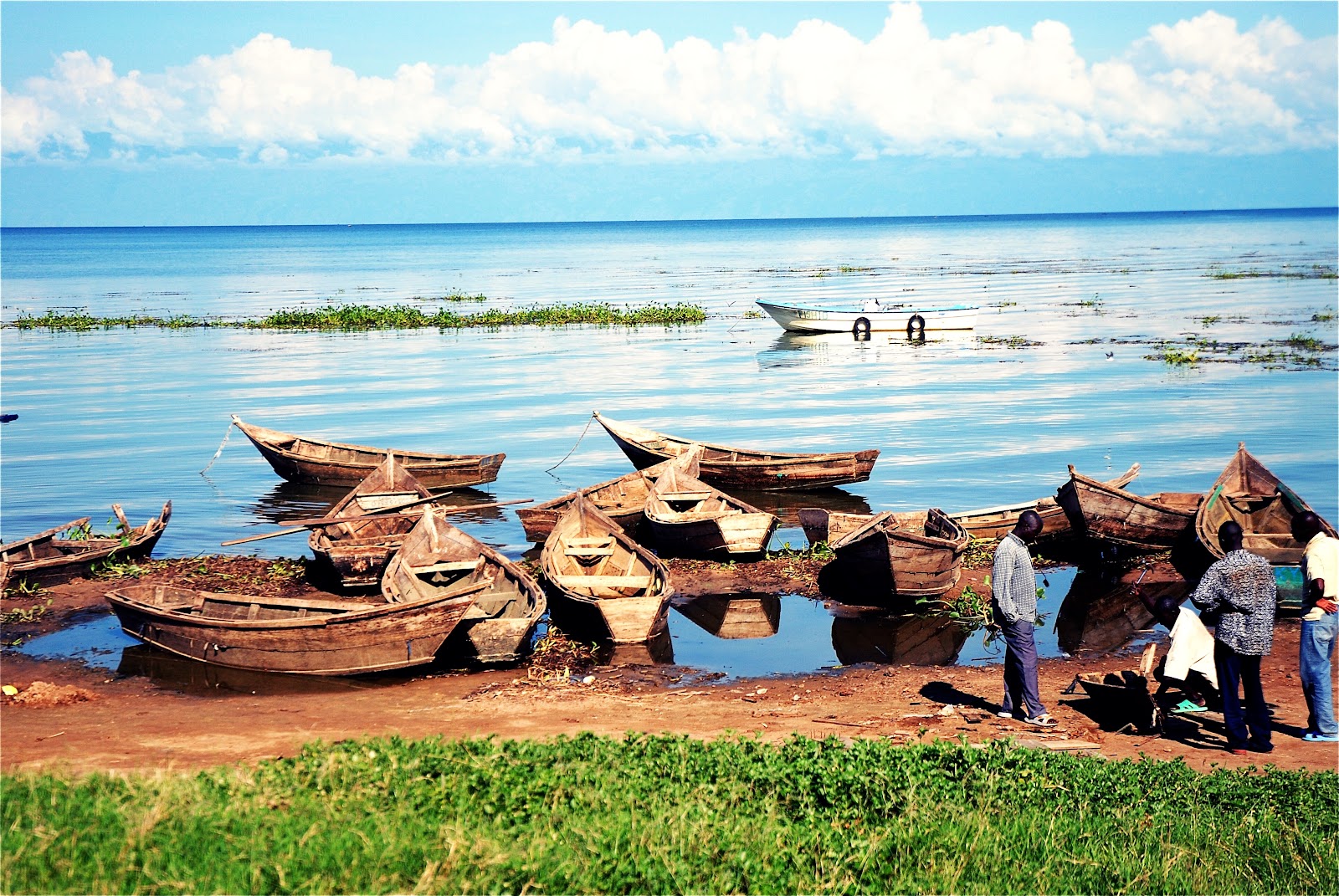
Lake Victoria is Africa’s largest lake and the source of the White Nile, and Uganda holds about 45 percent of it. Most visitors meet the lake at Entebbe, where cruises, island transfers and birding boats all leave from the same stretch of shore. The lake spreads 68,800 square kilometres across three countries, drains north at Jinja, and carries Uganda’s biggest inland fishery.
Lake Victoria on the Ugandan Side and What a Lake Tour Covers
Start with proportion, because the numbers get mangled everywhere. Lake Victoria covers 68,800 square kilometres, which makes it the second largest freshwater lake on earth by surface area and the largest tropical lake anywhere. Uganda holds 45 percent of that water, Tanzania holds 49 percent and Kenya the remaining 6. A good many pages about the Ugandan lake imply Uganda owns most of it. Uganda does not, and the country that does is to the south.
What Uganda does own is the outflow. The lake drains at one point only, at Jinja, and that single exit is why a Ugandan town rather than a Tanzanian one is where people stand and say they are at the source of the Nile.
For all its width the lake is shallow. Maximum depth is about 84 metres and the average is nearer 40, which for a body of water this size cuts the wrong way: it is a wide shallow dish, it warms quickly, it responds violently to wind, and it is unusually easy to damage.
A Lake Victoria tour in Uganda is not one thing. It splits into water you go out onto, shore you visit, and wetland you paddle through, and most visitors do a slice of each across two or three days at either end of a safari.
The Source of the White Nile at Jinja and Victoria Nile Trips
Jinja sits about eighty kilometres east of Kampala at the point where the lake spills north, and the boat out to the marker is the classic Victoria Nile trip. Small motorboats run from the western bank gardens to a stone plinth in midstream, and the whole thing takes perhaps forty minutes.
Now the part that confuses almost everybody who goes. What John Speke identified as the lake’s outlet was Ripon Falls, a set of rapids at the lip of the lake. Ripon Falls no longer exists. The Owen Falls dam, known locally as Nalubaale, flooded the site when it was built, widening the outlet and raising the water. Visitors arriving expecting a waterfall find flat water, a plaque and some springs bubbling up along the bank, and a fair number of them come away feeling short changed.
Go anyway, but go for the geography rather than the spectacle. From the boat you can see the current gather and turn north, which is genuinely striking once someone points it out: still lake on one side, moving river on the other, and four thousand miles of Nile ahead of it.
The other thing worth knowing is that the true furthest source is not here at all. The longest headstream feeding the lake is the Kagera, which rises in the highlands to the southwest. Jinja is where the Nile gets its name, not where its water starts.
Jinja itself has the whitewater, and rafting on the Victoria Nile below the dam is the busiest adventure business in Uganda. That belongs to the river rather than the lake, but for anyone planning a few days on this shoreline it sits an easy drive away.
Nile Perch Sport Fishing Trips on Lake Victoria
Nile perch sport fishing is the one activity on this lake that draws people who would not otherwise come to Uganda at all. The fish is the largest freshwater predator in Africa, reaching over two metres and beyond two hundred kilograms in exceptional specimens, and there is nowhere better set up for it than the Ugandan sector.
Charters run from Entebbe and from the lodges on the Ssese Islands. Half day and full day fishing trips are standard, multi day trips exist for people who are serious, and the productive water is offshore rather than along the beaches: rocky island margins, channel edges and the drop offs where deeper water comes close to structure.
Realistic expectations matter more here than in most activities. A fish in the twenty to eighty kilogram band is a good day and a very good one at the top of that range. The monsters that appear in photographs are not what an average charter produces. People who fish two or three days catch far more than people who fish one.
Tackle is heavy. Fifty to eighty pound class rods, braid in a similar breaking strain, and a wire trace, because a perch’s gill plates are edged like a blade and will part monofilament during a long fight. Deep jigging over rock structure reaches the bigger fish that sit down in daylight. Trolling works the margins. Most operators supply gear, though anyone who cares about their equipment brings their own.
Catch and release is the convention on anything above roughly thirty kilograms, partly because big perch are the breeding stock and partly because nobody needs that much fish. Smaller ones get cleaned and cooked on the boat or at the lodge, which is the best argument for keeping one.
Tilapia fishing is the quieter alternative, close in, lighter gear, more bites, and considerably more likely to give a child a good afternoon.
Boat Cruises and Sunset Tours from Entebbe and Munyonyo
The sunset cruise is the lake’s default activity and the one nearly every visitor ends up doing, usually on the last evening before a flight. Boats leave Nakiwogo and the Entebbe pier in the late afternoon, run out among the fishing craft for an hour or two, and turn for home as the light goes.
Two versions are on offer and they are very different products. Shared cruises on a larger boat are cheap, sociable and often have music and food on board. Private speedboat hire is priced per boat, which makes it steep for a couple and reasonable for a group of five or six, and it lets you decide where to go.
The equator crossing is the common add on: the line runs through the lake south of Entebbe and boats mark it with a GPS reading rather than anything you can see. Treat it as a novelty. The better use of the same two hours is running along the shoreline into the bays, where fish eagles work the trees and the cormorant roosts fill up at dusk.
Munyonyo, on the Kampala side, is the other launching point, and it suits anyone based in the city who does not want to drive to Entebbe. Boats from there reach Bulago Island in about three quarters of an hour.
One practical note that costs nothing. Late afternoon on this lake is when the wind gets up. A cruise that leaves at five in flat calm can come back at seven in a chop, so take a layer, and if you are prone to seasickness, go out in the morning instead.
Island Tours on the Ugandan Lake: Ssese, Buvuma, Bulago and Musambwa
The Ugandan sector holds most of the lake’s islands, and they are not interchangeable. Island tours here run from a fortnight of beach idleness to a two hour boat ride, depending which group you pick.
If you want beaches and a lodge, that means Ssese. If you want a day trip with a wildlife payoff, that means Ngamba. If you want birds nobody else has photographed, that means Musambwa and a long drive.
Ramsar Wetland Tours Along the Ugandan Shoreline
The Ugandan shore is fringed almost continuously with papyrus, and four of those wetland systems carry Ramsar listing as wetlands of international importance. They are the reason the lake matters to birders far more than its open water does.
| Wetland | District | Known for |
|---|---|---|
| Mabamba Bay | Wakiso | Shoebill |
| Lutembe Bay | Wakiso | Migrant terns |
| Lake Nabugabo | Masaka | Blue swallow |
| Musambwa Islands | Rakai | Gull colony |
Mabamba Bay is the best known, a papyrus swamp of about 2,424 hectares west of Entebbe holding over three hundred bird species and Uganda’s most dependable shoebill population. It is searched by canoe with community guides and is a morning trip from Entebbe.
Lutembe Bay sits much closer to the road, off the Kampala to Entebbe highway near Kajjansi, and is a different kind of site: a shallow bay at a river mouth where tens of thousands of migrant terns and waders gather. Over two hundred species have been recorded. It is the easiest wetland on this list to fit into a spare morning.
Lake Nabugabo, east of Masaka, is a satellite lake with its own Ramsar listing, protecting blue swallows and a shoebill population of its own, and it has a second distinction covered further down this page. Last of the four, Sango Bay in the far south toward the Tanzanian border, a swamp forest system where papyrus gonolek and other Lake Victoria basin specialities live, grouped with Musambwa in a single Ramsar listing.
Makanaga Bay, on the same wetland system as Mabamba, is the fallback shoebill site when Mabamba is busy or the water is wrong. Guides know it; almost no published guide mentions it.
Birdwatching Safaris on the Lake Victoria Shore
A birdwatching safari on this shoreline works because three habitats meet within a short drive of Entebbe: open water, papyrus swamp, and the last patches of forest. You can be looking at pelicans at dawn, shoebill by nine and forest species by lunch.
The shoebill is the draw and it is worth being clear about what it takes. It is a swamp bird, found by canoe in papyrus channels, and the search is the activity rather than an incidental sighting. Papyrus gonolek, white winged warbler and Carruthers’s cisticola are the other papyrus birds, all of them skulkers, and none of them findable without someone who can pick the calls out.
On the water itself, fish eagles are constant, along with pied and malachite kingfishers, long tailed cormorants, African openbills and pelicans working in lines. The Entebbe Botanical Gardens sit right on the water, carry a species list in the low hundreds across a few hectares, and cost almost nothing to walk around. For anyone with a delayed flight that is the most efficient birding hour in the country.
The Uganda Wildlife Education Centre, next door in Entebbe, is not birding but it is the honest way to see shoebill, chimpanzee, rhino and big cats up close if your itinerary will not stretch to the parks. It is a zoo with a conservation function rather than a wild site, and describing it as anything else would be misleading.
Beach Tours, Swimming and the Bilharzia Question on Lake Victoria
The Ugandan shore has plenty of beach and rather less good swimming, and the gap between those two facts is where most visitor disappointment lives.
Around Entebbe, Lido, Aero and Spennah are the established beaches, all within a few minutes of the airport. Aero has an aircraft graveyard and grilled tilapia and a strong local weekend crowd. Ggaba and Munyonyo serve Kampala, with the Munyonyo resort beach at the smarter end. All of them are pleasant places to sit with a plate of fish and a drink.
Swimming is another matter. Bilharzia is present in Lake Victoria, carried by freshwater snails that live in still, shallow, reed fringed water close to settlements, which describes most of the developed shoreline near Kampala and Entebbe rather well. Many lakeside hotels post signs against swimming and steer guests to the pool. That is a reasonable position near the cities.
Two things soften it. Risk drops on open, sandy, wave washed beaches away from population, which is why the Ssese beaches are a better bet than the Entebbe ones. And infection, if it happens, is treatable with a short course of praziquantel taken about six weeks after exposure. Long term residents swim and treat rather than abstain.
Then there is the exception. Lake Nabugabo, east of Masaka, is a satellite lake cut off from Lake Victoria by a sand bar several thousand years ago. Its water chemistry drifted: calcium levels there are too low for the host snails to build shells, so the snails are not present and neither is bilharzia. Three simple resorts sit on its sand beaches, the water is warm and shallow, and it is the one place on this shoreline where you can swim without doing arithmetic afterwards. It is roughly four hours from Kampala and it is not on any of the lists of things to do on Lake Victoria, which says more about the lists than about Nabugabo.
Hippos and crocodiles do live in the lake, mostly in quieter bays and river mouths rather than off the developed beaches. Ask locally rather than assuming, and never assume at dusk.
Fishing Village Tours at Kasenyi, Ggaba and the Landing Sites
The lake’s working life happens at the landing sites, and a morning at one tells you more about Uganda than a week of game drives. Village tours at Kasenyi, near Entebbe, and at Ggaba on the Kampala side are arranged easily and cost little.
The rhythm is nocturnal. Boats go out at night with lamps, come in around dawn, and the catch is sorted, weighed and sold on the sand within an hour. Nile perch goes into the export chain and heads for processing plants and Europe. Tilapia and the small silver mukene, dried in sheets on the ground, feed the domestic market. Watching that split happen in real time is the clearest picture anyone gets of what the lake actually is economically.
Go early or do not go. By nine the fish are gone and you are looking at an empty beach.
These are working places rather than attractions, so a local guide matters, both for permission and for context. Photographing people at work without asking goes down as badly here as anywhere.
What Happened to the Lake: Nile Perch, Cichlids and Water Hyacinth
Every page about this lake sells the perch fishing. Very few explain what the perch is doing there.
Lake Victoria once held one of the strangest assemblages of fish anywhere on earth: several hundred endemic cichlid species, most found nowhere else, evolved inside a lake that is geologically young. Then Nile perch were put in, unofficially in the fifties and officially the following decade, on the argument that a large predator would improve the fishery and give sport anglers something to chase.
It worked, commercially. It also removed roughly sixty percent of the cichlid species, with the total falling below two hundred. Predation did some of it. Fishing that targeted the larger cichlids did some. Nutrient loading from farms and towns clouded the water and did the rest, because cichlids choose mates by colour and murky water makes closely related species interbreed until the distinctions collapse.
Water hyacinth arrived later, matting the bays, choking landing sites and pulling oxygen out of the shallows. It has been beaten back with weevils and machinery rather than eliminated, and it still turns up in thick rafts after heavy rain.
None of this makes a fishing trip wrong. It does mean the fish you are catching sits on top of a rebuilt ecosystem rather than an old one, and that the tilapia and perch on your plate are part of an export industry with real pressure on it. A guide who tells you this unprompted is a good guide.
Lake Safety, Storms and Choosing a Boat for Lake Victoria Trips
This section exists because eight of the most visible pages about Lake Victoria sell boat trips and none of them mention what follows.
Lake Victoria generates some of the most frequent and violent thunderstorms on earth. Warm shallow water, a wide fetch and afternoon convection combine into squalls that arrive fast and build steep short waves. Up to fifteen hundred fishers drown on this lake in a typical year, most of them in bad weather, and roughly seven in ten of those who drown in storms are not wearing a life jacket.
Visitors are not fishermen and the risk profile is different, but the water is the same water. Boat accidents involving passengers happen on this lake with grim regularity, and the causes repeat: overloading, no jackets, night crossings, and setting out with a sky that anyone local would have read correctly.
What that means in practice, for any Lake Victoria trip on the water:
Count the life jackets before you board and put one on rather than sitting on it. Refuse an overloaded boat, and be willing to lose the fare. Ask whether the boat has a radio and a second engine, which the licensed operators out of Entebbe do and the informal ones do not. Avoid crossing at night. Take the ferry rather than a small boat if the wind is already up, and treat a local skipper’s reluctance to go out as information rather than as an obstacle.
None of this makes the lake dangerous to visit. It makes the difference between an operator worth paying and one who is not.
Best Time of Year for a Lake Victoria Trip
Temperature barely moves on the equator, sitting in the middle twenties by day all year. What changes is rain, wind and water clarity, and each of those hits a different activity.
Read that as: June to August for fishing and boats, September to March for birds, and the wetlands more or less whenever, because a canoe in a papyrus channel does not care much about the weather.
Getting to the Lake Victoria Shoreline for Your Trip
Entebbe International Airport sits on a peninsula in the lake, which makes this the rare destination you can reach in twenty minutes from an international arrivals hall. Most lakeside lodges in Entebbe are a short drive from the terminal, and boat departures from Nakiwogo and the pier are closer still.
Kampala is thirty five to forty kilometres north, an hour or two depending entirely on traffic, and the Munyonyo and Ggaba shorelines belong to the city rather than to Entebbe. Jinja is roughly eighty kilometres east of Kampala on a road that carries heavy freight, so allow two to three hours rather than the time a map suggests. Masaka, for Nabugabo and the Bukakata ferry, is about three hours southwest.
Most itineraries treat this shoreline as bookends: a night at the start while you shake off the flight, and a night at the end before you leave. That works, and it is the sensible way to fit a shoebill morning or a sunset cruise around a safari. Anyone who wants the lake itself rather than a convenient stopover needs three days minimum, and should spend at least one of them on the water. A wildlife and gorilla safari covering Murchison Falls and Bwindi takes the lake in as well.
Lake Victoria Uganda Travel Questions Answered
Can you swim in Lake Victoria in Uganda?
Physically yes, and the honest answer has conditions. Bilharzia is present, carried by snails in still shallow water near settlements, so the beaches around Entebbe and Kampala are the higher risk ones and most hotels there steer guests to the pool. Open sandy beaches away from population, such as those on the Ssese Islands, carry lower risk. Infection is treatable with a short course of praziquantel taken about six weeks after your last swim. If you want a clean answer, go to Lake Nabugabo near Masaka, which has no host snails and no bilharzia.
How much does a Lake Victoria boat cruise cost?
A shared sunset cruise from Entebbe starts around $25 per person for an hour or two on the water, sometimes including a drink. Private speedboat hire is charged per boat rather than per head, which works out at roughly $150 for one person, closer to $70 each for a group of four and around $50 each once there are five or more aboard. Longer excursions to the islands or a full day on the lake run considerably higher, and lodge run cruises usually cost more than boats booked directly at the landing.
Where is the source of the Nile and can you visit it?
At Jinja, where Lake Victoria drains north into the Victoria Nile. You visit it by boat from the gardens on the western bank, about forty minutes there and back to a marker in midstream. Set expectations: Ripon Falls, the rapids Speke identified as the outlet, was drowned when the Owen Falls dam was built, so there is no waterfall to see. What you get instead is the point where still lake becomes moving river, plus springs bubbling into the bank. The furthest headwater is actually the Kagera, which feeds the lake from the southwest.
What does a Nile perch fishing charter cost on Lake Victoria?
No operator publishes a fixed rate, so treat any figure you find online with suspicion. Price depends on the boat, whether tackle is supplied, how far offshore you fish and whether you are running from Entebbe or from a lodge on the Ssese Islands, and it is quoted per boat rather than per angler. Expect a half day to sit in the low hundreds of dollars for a small group and a full day with good gear to be roughly double that. Get a written quote that states fuel, tackle, guide and the number of hours, because those are the four things that move.
How many days do you need for Lake Victoria in Uganda?
One night is a stopover, not a visit, and it buys you a sunset cruise or a shoebill morning but not both. Two nights covers the wetland and the water. Three lets you add an island day or the drive to Jinja without rushing. Anyone coming to fish and nothing else should plan on at least two full days afloat, since one day is a coin toss. The lake works best as a settled few days at one end of a safari rather than as a series of half day dashes.
Are there hippos and crocodiles in Lake Victoria?
Yes, both, though not evenly. They favour quiet bays, papyrus edges and river mouths rather than the busy developed shoreline, which is why the beaches around Entebbe and the lodge beaches on Ssese are used without incident. Where they do occur, the risk is real and worst at dawn and dusk near the water’s edge. Ask locally before swimming anywhere unfamiliar, keep clear of reed beds in a small boat, and treat a guide who tells you not to get out as someone who knows the bay.
What should I expect to pay for lakeside accommodation?
Simple guesthouses and beach camps around Entebbe start around $30 to $50 a night. Comfortable mid range lodges with lake views run roughly $80 to $150. The large resort hotels at Munyonyo and on the Entebbe shoreline sit from about $180 upward, and island lodges vary enormously with how far out they are. Rates climb sharply over Christmas and New Year and soften through the long rains from March to May, when you can often negotiate directly.
Is a Lake Victoria boat trip safe?
With a licensed operator, yes. The lake produces sudden violent storms and drowning is a serious problem here, with up to fifteen hundred fishers lost in a typical year, most without life jackets. The precautions are simple and worth insisting on: a jacket worn rather than stowed, a boat that is not overloaded, a radio and a spare engine on anything going offshore, and no night crossings. Licensed Entebbe operators meet that standard as a matter of routine. Informal boats at the landing sites often do not, and the saving is not worth it.
What is the best month to visit Lake Victoria in Uganda?
July is the safest single choice, sitting in the middle of the drier, calmer stretch that runs June to August, when boat days are reliable and fishing is at its steadiest. January is the other strong option if you want heat and beach weather, though it is busy and lodges fill. For birds, September through February brings the migrants into Lutembe Bay. The months to plan carefully around are April and November, when storms disrupt open water crossings, though wetland trips continue regardless.
Uganda Safaris brings together Ugandan operators who run this lake properly, from the Entebbe boat crews carrying the right kit to the skippers who read the weather before they take a fare.
A one day Jinja private tour pairs the boat ride to the source of the Nile with a forest walk on the way out of Kampala.
A three day Ssese Islands trip is the settled version, ferry across and stay put. Read what each one includes, and message an operator directly if you would rather talk the options through with someone first.
1 Place to Visit in This Area
Individual sites within reach of here, each with its own guide. Some are written up because the name circulates and the place does not, which is worth knowing before you plan a drive around one.
Safaris That Visit Lake Victoria
3 of the 5 safaris listed here that visit Lake Victoria, from different operators where the listings allow it. Each is sold and run by an independent Ugandan tour company. This site lists them and passes on enquiries; it takes no booking and charges you nothing.


5 Day Birding in Uganda
by Tranquil Safaris Verified operator

Uganda Wildlife Safari & Gorillas
by Ancient Africa Safaris Verified operator
From $7,300 per person
View Safari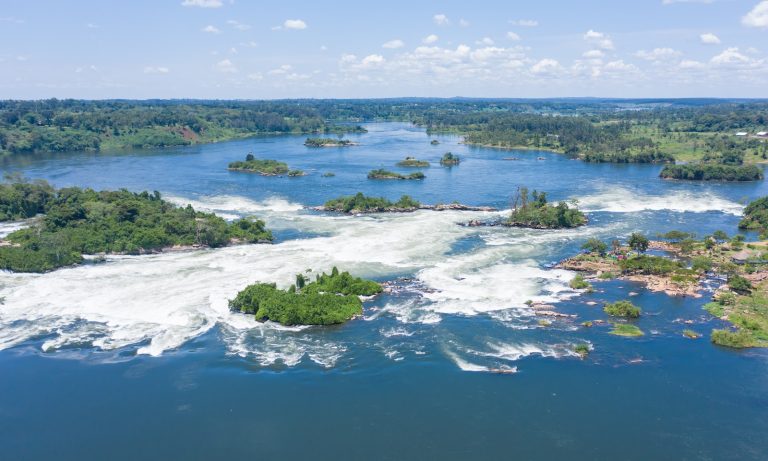

1 Day Jinja Private Tour Uganda
by Kori Safaris Verified operator
From $150 per person
View Safari