
Walking Safaris in Uganda: On Foot with an Armed Ranger
Wildlife viewing on foot with an armed ranger, available in Lake Mburo, Kidepo and parts of Murchison Falls.
A walking safari puts you on the ground inside a national park with an armed ranger, usually for about two hours at first light or in the late afternoon. Lake Mburo allows walking almost anywhere because no elephant live there, while Kidepo, Murchison Falls and Queen Elizabeth permit it on set routes. Tracks, dung, trees and birdsong replace the big sightings a vehicle gives you.
Safaris That Include Walking Safari
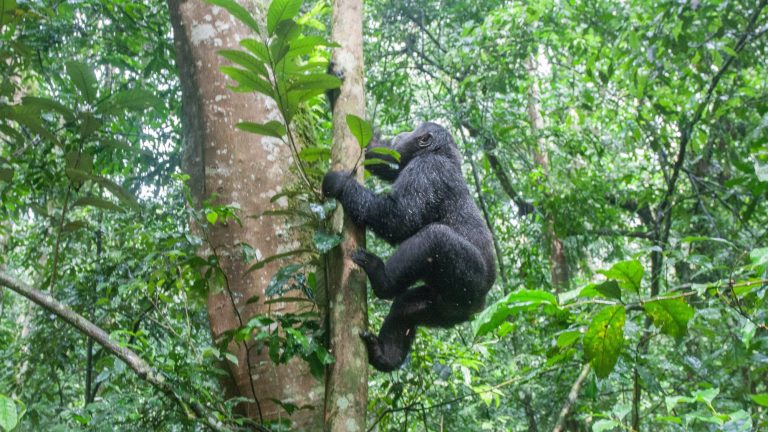

A Guide to Walking Safaris in Uganda
What a Walking Safari in Uganda Is, and What It Is Not
A walking safari is game viewing on foot inside a national park, escorted by an armed ranger from the park authority. It runs for about two hours, starts early in the morning or late in the afternoon, and covers a small area slowly. The point is not distance. The point is being on the ground with the animals rather than above them in a vehicle.
In Uganda a walking safari is nearly always sold as an activity within a wider itinerary, and any operator running a Lake Mburo or Kidepo trip can add it.
It is a different thing from a forest nature walk, and different again from a mountain trek. Those distinctions are covered further down.
Where Walking Safaris Are Permitted in Uganda
Walking inside a park is controlled, and the parks that allow it do so on quite different terms.
Bwindi, Kibale and Mgahinga are walked constantly, but that walking is forest trail work rather than a savanna walking safari, and it is covered on our nature walk page.
Lake Mburo: Uganda's Real Walking Safari Park
If you want one walking safari on a Uganda trip, do it here. The park is small, the terrain is gentle acacia woodland and open valley, and the plains game is used to people on foot in a way that game elsewhere is not.
Impala live nowhere else in Uganda. Zebra and eland occur here and in Kidepo and nowhere else. Topi, bushbuck, waterbuck, warthog and buffalo fill in around them, and buffalo are the animal your ranger will be watching most carefully. Walks usually work the salt lick and the lakeside woodland over about two hours.
The park's position helps. It sits on the main road between Kampala and the southwest, so a walking safari fits into a day that was going to be spent driving anyway. Our Lake Mburo guide covers the lodges and the rest of the park.
The Armed Ranger and How a Walking Safari Is Run
Every walk inside a Ugandan park goes with a ranger carrying a rifle. This is not decorative and it is not a formality.
Two people often go out with a group, one leading and one behind. On a good walk they will also be the ones telling you what you are looking at on the ground, which is most of the value.
What Walking Gives You That a Game Drive Tour Cannot
Scale changes completely. From a vehicle you notice large animals at a distance. On foot you notice everything within ten metres and almost nothing beyond a hundred.
What you lose is range and big sightings. Predators are seen less often on foot, for obvious reasons. A walking safari is a supplement to driving, not a replacement for it, and one walk inside a week of game drives is the shape that works.
Fitness, Footwear and Who a Walking Safari Suits
The fitness requirement is low. Two hours at a slow pace on gentle ground suits anyone who walks regularly. The Murchison falls trail is the exception, a steep and often slippery climb, and the Kidepo hill hikes are longer and hotter than they look.
Closed shoes with grip, long trousers against thorns and grass seeds, neutral colours, a hat and water. Skip the perfume and the bright jacket. Check for ticks afterwards.
Children are usually permitted on savanna walks at the ranger's discretion, which is a different rule from the minimum age of fifteen that applies to gorilla and chimpanzee permits. Ask in advance rather than assuming either way.
Walking Safaris, Nature Walks and Forest Treks Compared
Three activities, three pages, and itineraries that use the words interchangeably. A walking safari is savanna game viewing on foot with an armed ranger. A nature walk is a guided trail walk in forest, focused on birds, primates, plants and butterflies, and usually unarmed. A hike or trek is about reaching somewhere, a summit or a waterfall, with the wildlife incidental.
Tracking rhino on foot at Ziwa is a fourth thing again, closer to a walking safari than anything else and built around a single species. Our rhino tracking page covers it.
How to Arrange a Walking Safari
The practical route is to pick an itinerary that visits Lake Mburo, Kidepo, Murchison or Queen Elizabeth and ask the operator to add a ranger escorted walk on a named morning. It is cheap relative to everything else on a safari and rarely needs booking far ahead, though ranger availability gets tight in the busy months.
You can write directly to any company on our list of Ugandan tour operators, or start from the trips on our game drive page, most of which pass through at least one park where walking is allowed.
Frequently Asked Questions About Walking Safaris in Uganda
What does a walking safari cost? The published conservation tariff prices a guided walk in Murchison Falls, Queen Elizabeth, Lake Mburo, Kidepo and the wildlife reserves at USD 25 per person for a foreign non resident and USD 20 for a foreign resident. Forest parks including Bwindi, Kibale, Semuliki and the Rwenzori charge USD 40 and USD 30. Park entry is separate, at around USD 45 per person per twenty four hours at Murchison and USD 40 at most others. It is one of the cheapest activities in a Ugandan park.
Is walking in a park with wild animals safe? Within the system, yes. Armed rangers, small groups, fixed rules and a park chosen for the absence of elephant do most of the work. The honest risks are a lone buffalo and your own failure to follow an instruction. Both are managed by listening.
Which park is best for a first walking safari? Lake Mburo, without much competition. Gentle ground, plains game that tolerates people on foot, no elephant, and a location that fits into most southwestern routes without a detour.
How far will I walk? Usually three to five kilometres over about two hours, at a pace set by what you stop to look at. The hill hikes in Kidepo and the falls trail in Murchison are harder and longer.
Can I walk instead of taking game drives altogether? Not sensibly. Walking covers a fraction of the ground and misses most of the large mammals. One or two walks inside a week of driving is the combination that works.
Does my driver guide come along too? Usually, with the ranger leading. Two perspectives on one walk is a benefit rather than a duplication, and it costs nothing extra.
Write to any of the independent Ugandan tour operators on this site with your dates and the parks you are heading for, and ask them to build a ranger escorted walk into the itinerary. We take no booking and charge you nothing.