
Uganda Game Drive Safaris: Parks, Timing and What You See
Guided wildlife viewing from a 4×4 or pop-top safari vehicle, typically at dawn and again in the late afternoon.
Game drives in Uganda run in four savanna parks: Queen Elizabeth, Murchison Falls, Kidepo Valley and Lake Mburo. Drives go out at first light and again in the late afternoon, in a private four wheel drive with a pop up roof, keeping to marked tracks throughout. Each park is good at something different, and choosing between them decides more about a trip than choosing between operators.
Safaris That Include Game Drive

7 Days Uganda Safari Adventure
by Kori Safaris Verified operator
From $2,600 per person
View Safari
6 Days Uganda Gorilla Safari
by Kori Safaris Verified operator
From $2,200 per person
View Safari

15 Days Uganda Wildlife & Primate Safari
by Oree Safaris Verified operator

7 Days Uganda Safari, Gorillas, Wildlife & Chimps
by Insight Safari Holidays Verified operator

3 Days Murchison Falls Safari in Uganda
by Wild Whispers Africa Verified operator
4 Days Queen Wildlife Viewing, Kibale Chimps tracking
by Kori Safaris Verified operator
From $1,050 per person
View SafariSee all 21 safaris that include game drive
A Guide to Game Drives in Uganda
What a Uganda Game Drive Safari Covers
A game drive is wildlife viewing from a vehicle on marked tracks inside a park, almost always at first light or in the last hours of daylight. Uganda runs them in four savanna parks, and the gap between those four decides far more about your trip than the gap between one operator and the next.
Two things separate a Ugandan game drive from the version people picture from the Serengeti. Herds here are smaller and more scattered, so the viewing rewards patience rather than volume. And the tracks run through country that changes fast: savanna gives way to crater fields, to swamp, to riverine forest, sometimes inside a single circuit.
Most drives last two to four hours. A full day drive exists and works in Kidepo, where the distances are long, but in the other parks it is usually two separate outings with the middle of the day spent elsewhere.
The Four Parks Where Game Drive Safaris Run
Uganda has ten national parks. Only four of them have the open country, the track network and the herbivore density that a game drive safari needs, and each one is good at something different.
Bwindi, Kibale, Mgahinga, Semuliki, Rwenzori and Mount Elgon carry no game drive product at all. They are forest and mountain parks, walked rather than driven. A tour page listing a game drive in Bwindi has made a mistake.
Dawn, Dusk and the Dead Hours of a Game Drive Tour
Six in the morning, sometimes earlier. That is the real start time of a game drive tour, and the reason is not romance about sunrise. Nocturnal hunters are still finishing their night, diurnal grazers are moving to water, and the air has not yet built the heat haze that ruins long distance viewing across open ground.
By ten the animals have found shade and stopped moving. Between mid morning and mid afternoon most savanna species are lying down under something, invisible from a track, and a drive through that window produces very little. Which is why the afternoon outing waits until around four.
Ishasha breaks the rule, and it is worth knowing why. The tree climbing lions of that sector are most often up in the fig branches during the hottest part of the day, using the breeze and getting clear of the biting flies on the ground. Arriving at Ishasha at seven in the morning is a common planning error. Late morning to mid afternoon is the window.
Kasenyi and Ishasha: Queen Elizabeth Game Drive Safaris
The Kasenyi plains are the working heart of a Queen Elizabeth safari. Uganda kob gather here in numbers on traditional breeding grounds, and where the kob are, the lions follow. Morning drives work the tracks between the salt flats and Lake George, and the sightings tend to be of lion on or near a kill rather than lion walking somewhere.
Ishasha sits about a hundred kilometres south, at the end of a long drive, and it is a separate decision rather than an add on. The tree climbing behaviour is real and documented, though it is not a guarantee: the prides move, the fig trees are spread across a wide sector, and rangers at the gate will tell you honestly whether the lions have been seen that week. Ask at the gate rather than assuming.
The park's crater drive north of Mweya is a different sort of outing again, more about terrain than mammals. Our Queen Elizabeth National Park guide covers the sectors, the lodges and the boat trip in detail.
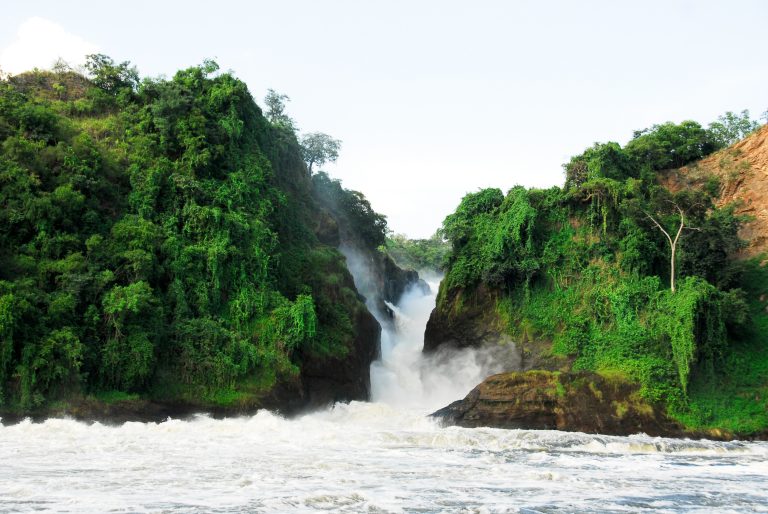
Buligi and the Delta on Murchison Falls Safaris
North of the Nile, the Buligi circuit runs through grassland between the Victoria Nile and the Albert Nile, and it is the single most productive morning of driving in the country. Rothschild's giraffe in real herds, elephant, buffalo, Jackson's hartebeest, oribi and the kob again. Lion are present and seen less often than in Kasenyi.
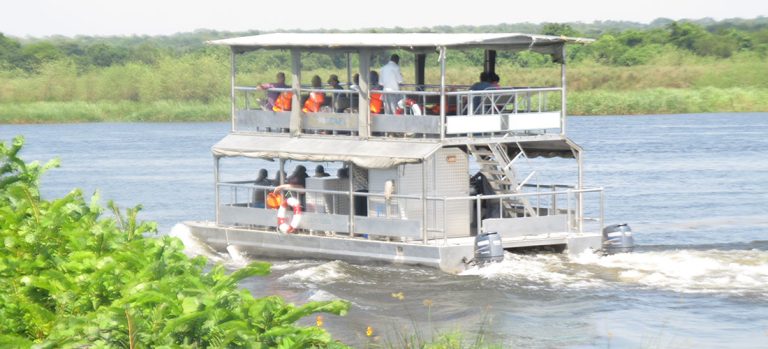
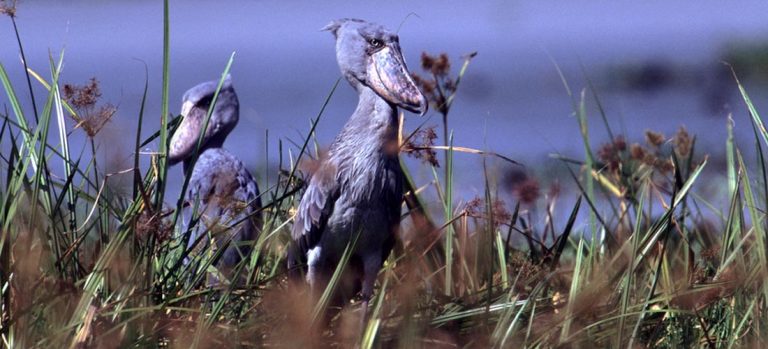
The delta track, where the Nile spreads into Lake Albert, is quieter and slower, and it is where the shoebill and the big crocodiles are. Vehicles cross to the north bank by ferry, and the ferry timetable is a real constraint on an early start, so check it the night before. A Murchison Falls safari that plans around the first crossing gets the better drive.
Narus Valley: What Kidepo Game Drive Tours Give You
Kidepo is the park people describe in superlatives and it earns most of them. In the dry months the Narus Valley holds the only permanent water for a long way, so the game concentrates there and a drive works a small area rather than covering ground. Buffalo herds numbering in the thousands are the signature sighting. Elephant numbers have climbed back from a few hundred to somewhere between 650 and 1,000 by the park authority's own count, and the giraffe population has recovered past fifty.
The cost of Kidepo is access. It is a long flight or a very long drive from Kampala, which is why it appears on longer itineraries, and why trips that include it tend to run ten days or more. Our guide to getting around Uganda works through the flight and road options honestly.
Lake Mburo Safaris and the Plains Game Nobody Else Has
Lake Mburo gets treated as a convenient overnight between Kampala and Bwindi, which undersells it. It is the only Ugandan park where impala are resident, and one of only two holding zebra and eland. Leopard are present in reasonable density, though seen mostly after dark.
What makes it unusual is the absence of elephant, which is why the park permits walking with a ranger and horse riding inside the boundary when the larger parks do not. If you want to get out of the vehicle, this is where a walking safari or a horseback safari becomes possible.
Shared Vehicle, Private Vehicle and Self Drive Tours
The vehicle question decides more about a drive than most people expect, and it is worth settling before you compare quotes.
Nearly all Ugandan safari vehicles are extended Land Cruisers or similar, with a pop up roof rather than open sides. The roof lifts on struts so everyone can stand and see out over the top. It is not the open sided vehicle of southern Africa, and that is a park rule rather than an operator choice.
Ask how many seats the operator will fill. A seven seat vehicle sold to four people gives everybody a window and a clear line to the roof. The same vehicle with seven passengers does not.
Park Rules That Change How Your Safari Drives
Driving off the tracks is prohibited in every Ugandan park and carries a fine per incident, payable by the driver on behalf of everyone in the vehicle. This is the rule that most affects your viewing, because it means a guide cannot swing across the grass for a better angle on a lion the way footage from private concessions elsewhere suggests. You work the track network or you miss the shot.
Sitting or standing on the roof itself is also a finable offence, as is sounding the horn inside a park. Speeding carries a penalty. None of this is arbitrary: the tracks and the speed limits are what keep vehicle pressure off the kob grounds and out of the drainage lines.
A ranger guide from the park authority can be hired at the gate on top of your own driver, and on a first visit to Kasenyi or Buligi that is usually money well spent. Rangers know where the pride slept. Night drives run under a stricter set of rules again, covered on our night game drive page.
Honest Odds on a Uganda Wildlife Safari
Elephant, buffalo, hippo, giraffe in the right parks, kob, waterbuck, warthog and baboon are close to certain across a few drives. Lion are likely in Kasenyi and Kidepo, less so elsewhere. Leopard are seen by a minority of visitors. Nothing is guaranteed, and an operator promising a species is telling you something about themselves.
The lion picture deserves plain speaking. Repeated carnivore surveys have recorded a substantial decline across Uganda's savanna parks over the past decade, with the largest fall in Murchison Falls and an increase only in Kidepo. Published totals differ between surveys, landing somewhere around three to four hundred animals nationally. Sightings in Kasenyi remain good, and the wider trend is the reason rangers ask you to keep to the tracks.
Birds fill every gap. A game drive in Murchison or Queen Elizabeth passes through several hundred species of habitat whether you are looking for them or not, which is worth knowing if you are travelling with someone who cares less about cats. Our bird watching page covers that side properly.
Frequently Asked Questions About Game Drive Safaris in Uganda
What does a game drive cost in Uganda? The drive itself is a small part of the bill. Park entry for a foreign non resident runs around USD 45 per person per twenty four hours at Murchison Falls and USD 40 at Queen Elizabeth, Kidepo and Lake Mburo, and the ticket is valid for a full day from the time you enter. A park ranger guide for a day drive is USD 25 per guide at most parks, not per person. Self driving without a guide is USD 10 per vehicle per day. Vehicle entry is charged separately and is far higher for a foreign registered vehicle than a Ugandan registered one. Each operator carries its own pricing, which bundles most of this.
How early do I really have to get up? Between half past five and six for the morning drive, which usually means breakfast packed rather than eaten. It is the single least popular part of a safari and the single most productive. If you genuinely cannot do early mornings, say so at the enquiry stage and ask for an itinerary weighted towards afternoon drives and boat trips.
Can I do a game drive in Bwindi or Kibale? No. Those are forest parks with no game drive tracks. Gorilla trekking and chimpanzee tracking are walking activities, and any itinerary combining them with savanna drives is moving you between parks on separate days.
Is a private vehicle worth it over a shared one? In Uganda the question rarely arises, because scheduled group departures are uncommon and most trips are private by default. Where you do have the choice, private buys you the ability to stay with a sighting, which is where the good photographs and the interesting behaviour come from.
Can I drive myself around the parks? Yes, and the park authority prices it to be affordable. What you lose is substantial: guides spot animals you will drive straight past, know which tracks have held what recently, and talk to other drivers by radio. Off track driving carries a fine of UGX 100,000 per incident, and sitting on top of a vehicle costs USD 150 per person, so read the rules at the gate before you set off.
How many days of game drives are enough? Two parks with two full days in each is a sound structure for a first trip, giving four mornings and four afternoons. Adding a third savanna park usually costs you a day of driving for diminishing returns unless it is Kidepo, which is a different sort of trip. Our guide to trip length works through the combinations.
What should I wear and bring in the vehicle? Something warm for the first hour, because an open roof at dawn is genuinely cold, and layers you can shed by eight. Binoculars matter more than a long lens for most people. Dust gets into everything on the Buligi tracks, so a bag that closes helps.
Every safari on this marketplace is sold and run by an independent Ugandan tour operator. Send your dates, your group size and which parks you want to the operator behind the trip that suits you, and they will come back with a real itinerary and a real quote. We take no booking and charge you nothing.