
Craft and Souvenir Shopping in Uganda: What to Buy, Where
Where to buy Ugandan crafts and what is genuinely made here, from the Kampala craft markets to community shops at the park gates.
Craft shopping in Uganda happens in three places: the craft markets of Kampala, the community shops at the park gates, and the roadside stalls between them. Baskets, bark cloth, carvings, batik and beadwork are the staples. Prices are never marked, bargaining is expected, and some of what sits on a stall was made in another country.
Safaris That Include Craft Shopping
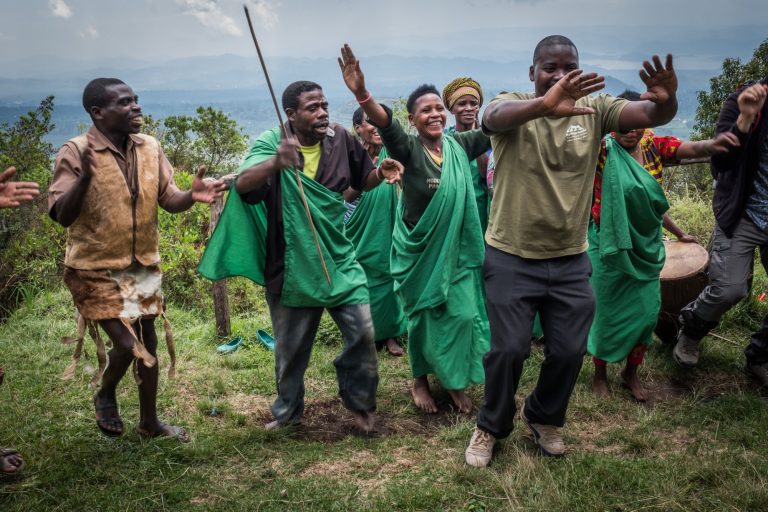

A Guide to Craft Shopping in Uganda
Craft shopping in Uganda happens in three places: the craft markets of Kampala, the community shops at the park gates, and the roadside stalls between them. Baskets, bark cloth, carvings, batik and beadwork are the staples. Prices are never marked, bargaining is expected, and a fair amount of what you see on a stall was made in another country.
What Is Worth Buying on a Uganda Safari
Start from what Uganda actually makes rather than what fills a stall. Woven baskets from sisal, raffia and banana fibre are the strongest buy: light, packable, and made in enormous numbers by women's groups in Kigezi, the east and the north. A good one is tight enough to hold water and will outlast most things in your house.
Bark cloth is the other distinctly Ugandan thing. It is made from the inner bark of the mutuba fig, beaten out with wooden mallets into a russet sheet, and the craft carries a UNESCO intangible heritage listing. It comes as bags, wall hangings, book covers and cushion covers, and nothing else you can buy here has a longer history behind it.
After that: Ankole cow horn worked into spoons, bangles and bowls, drums and the akogo thumb piano, adungu harps, batik and kitenge fabric, paper bead jewellery rolled from magazine offcuts, and ornaments made from flattened bottle tops.
Craft Market Shopping Tours in Kampala
The biggest concentration is on Buganda Road, where a long established craft market next to Daisy's Arcade runs dozens of stalls under one roof. It is the default stop for most visitors and the prices reflect that, but the selection is the widest in the country and a patient hour there covers most of a shopping list.
The craft village beside the National Theatre is the other central option, smaller and more manageable, with artists often working on site. Kisementi and the Lugogo mall hold fixed price shops at the higher end, where you pay more and skip the haggling entirely.
These are different from the produce markets. Owino and Nakasero are where the city shops for food and clothes, and our market tour guide covers walking them. A craft market is a purchase; a produce market is an experience.
Buying Crafts on the Safari Route
Some of the best buying happens nowhere near the capital. Community craft shops at Bwindi, particularly in Buhoma and Ruhija, are run by women's groups and sell work made in the villages a few hundred metres away. The same pattern repeats at Lake Bunyonyi, around Lake Mburo and at the Ziwa gate.
Karamoja is its own case: beadwork, stools, headrests and gourds that look nothing like the crafts of the south, and almost none of it reaches Kampala. The drum makers on the Masaka road are another, a whole trading centre of workshops where drums are carved and skinned in front of you.
Buying at source is the single most useful thing a visitor does here. The margin lands with the maker rather than with three intermediaries, and you can ask who made it and get a real answer. Our basket weaving guide covers watching the work rather than buying the output.
Bargaining Without Being a Nuisance on a Shopping Trip
Nothing carries a price tag and the first number is not the price. That is the whole system and everybody in it knows the rules. Ask, offer somewhere well below, settle in the middle, and do it in a friendly register rather than a combative one.
Two things worth keeping in perspective. The gap you are arguing over is usually trivial to you and not trivial to the seller, and grinding somebody down to the last note over a basket is a poor way to spend goodwill. Walking away is a legitimate move; walking away and then coming back is also completely normal.
Buy from several stalls rather than one. In a market where thirty traders sell similar stock, spreading your spending is the kindest form of bargaining there is.
What Not to Buy: Wildlife Products and the Law
This one is not a matter of taste. Ivory, pangolin scales, hippo teeth, big cat skins, tortoise and turtle shell, and anything else taken from a protected species are controlled under the international convention on trade in endangered species, to which Uganda is a party. Buying them funds the trade that empties the parks you came to see.
The consequences travel with you. Customs seizures happen at both ends, and penalties in the destination country can run to heavy fines and prison, permit or no permit. Carved bone is often sold as something else, so if a seller cannot tell you exactly what an item is made of, put it down.
Old artefacts sit in a grey area too. Genuinely antique cultural material can require export permission, and almost everything sold as antique in a craft market is not. Treat age claims as sales patter.
Fair Trade Shops and Where the Money Lands
Several shops in Kampala operate on fair trade lines and work with rural producers, women and people with disabilities, publishing what the maker gets. You will pay more than in a craft market and the trade off is that you know where the money went.
The honest caveat about the markets is that a lot of the stock on a Kampala stall came from Kenya, from the Congo or from a workshop producing at volume, and traders will tell you so if you ask directly rather than testing them. Ask where a piece was made and who made it. The answer, or the hesitation, tells you plenty.
Packing, Weight and Getting Crafts Home From a Safari
How Craft Shopping Fits Into a Uganda Trip
Shopping is not sold as a trip in Uganda; it is an hour built into a city day or a stop at a park gate, and every visitor here does it.
Frequently Asked Questions About Craft Shopping in Uganda
How much should I expect to pay for a craft? Small baskets, beadwork and bark cloth items usually land somewhere between USD 5 and 25, larger baskets and good carvings climb well past that, and a full sized drum is another order of magnitude. Opening prices in a craft market commonly start at two or three times what a piece settles at. Our cost guide covers the rest of a trip.
Is bargaining expected? In craft markets and at roadside stalls, yes, always. In fair trade shops, mall boutiques and hotel gift shops, no, and trying is slightly awkward. Community shops at park gates usually have fixed prices set by the group.
Are the crafts actually made in Uganda? Some of them. Kampala stalls carry stock from Kenya, the Congo and volume workshops alongside genuinely local work, so ask where a piece was made. Buying at a community shop near where you are travelling removes the question.
What must I never buy? Anything from a protected species: ivory, pangolin, skins, shell, teeth, claws. It is illegal to trade, it will be seized, and penalties at home are severe. If you cannot identify the material, do not buy it.
Can I take a drum on a plane? Usually, as checked baggage, subject to size and weight. Ask about the skin, keep the receipt and wrap it properly. Some travellers ship larger pieces instead, which is worth pricing before you commit.
What if I only have the airport? You will find crafts at Entebbe and you will pay the most for them. If your schedule is genuinely that tight, a Kampala roastery bag of coffee bought earlier beats anything on the departures concourse.