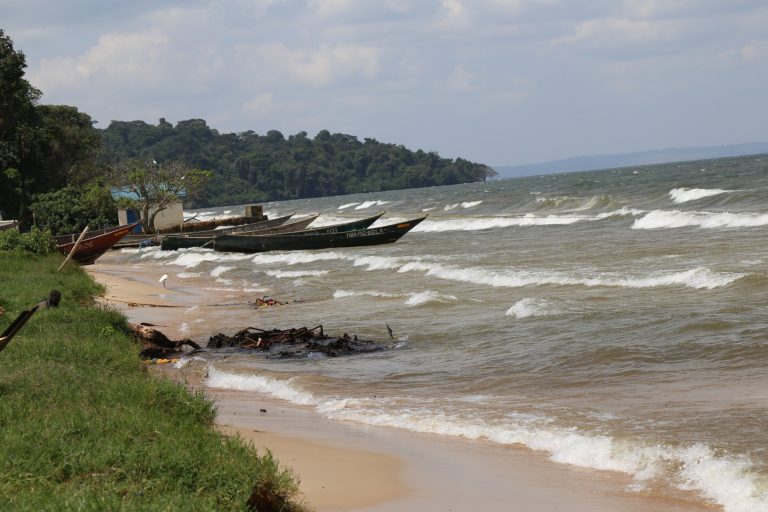

The Ssese Islands are an archipelago of 84 islands in northwestern Lake Victoria, and a Ssese Islands trip is the closest thing Uganda has to a beach holiday. Most visitors sail from Nakiwogo in Entebbe or cross from Bukakata near Masaka, then base themselves on Bugala. The islands make up Kalangala District, about 51 km southwest of Entebbe, and hold forest, plantation and sand.
What a Ssese Islands Trip Involves and How Long to Stay
Set expectations first, because this is where people go wrong. A Ssese Islands trip is not a safari. There is no big game, no national park, no ranger post. What there is instead: warm water, sand, forest paths, fishing boats, and long stretches of afternoon in which nothing at all is required of you.
That suits some travellers and bores others. Reviews split cleanly along that line. People who arrive after a hard fortnight of gorilla trekking and game drives tend to love it. People who arrive expecting wildlife tend to leave early.
Three nights is the figure that comes up again and again in trip reports, and it holds up. One night is swallowed whole by the ferry at each end. Two nights gives you a single full day. Three gives you a beach day, a forest walk and a boat, which is the shape of a good visit. Beyond four, unless you are fishing seriously or working through the outer islands, the days start to repeat.
One thing the brochures leave out. More than a third of Bugala is now oil palm plantation, and the palms lining many of the roads are a commercial crop rather than natural forest. The road surfacing, the electricity and the ferry service that make the island reachable were all built to serve that industry. Tourism arrived afterwards, in its slipstream. Knowing that changes how the drive from the ferry looks, and it explains why parts of the island feel more agricultural than tropical.
Ferry Trips to the Ssese Islands from Nakiwogo in Entebbe
The MV Kalangala is the passenger ferry most visitors use, and getting its timing right matters more than almost anything else in planning Ssese Islands trips. It sails from Nakiwogo landing site, sometimes signposted as Port Alice, a few kilometres south of Entebbe town.
Here is the part that trips people up. Several widely read guides state that the ferry leaves Entebbe at eight in the morning. It does not. Eight in the morning is the return sailing from Bugala. The outbound boat leaves Nakiwogo at two in the afternoon and docks at Lutoboka on Bugala at about half past five. Coming back, it pulls out of Lutoboka at eight and reaches Nakiwogo around midday. Anyone who plans a morning departure from Entebbe will spend the day on a dock.
Boarding opens roughly an hour before sailing. There are two classes, the difference being seating and shade rather than speed, and tickets are bought at the landing shortly before departure. No advance booking is needed for foot passengers.
Vehicles are different. Deck space is limited and demand around holidays is heavy, so a slot needs arranging a week ahead. Turning up on the day with a car and hoping is a bad plan in December.
| Route | Vessel | Crossing | Departures |
|---|---|---|---|
| Entebbe to Bugala | MV Kalangala | 3.5 hours | 2pm daily |
| Bugala to Entebbe | MV Kalangala | 3.5 hours | 8am daily |
| Bukakata to Luku | MV Ssese or Pearl | 30 minutes | Eight daily |
| Entebbe to Bugala | MV Vanessa | 75 minutes | Set days |
The crossing itself is pleasant enough in calm weather and grim in a squall. Lake Victoria generates violent afternoon storms, particularly in April and November, and a three and a half hour sailing gives one plenty of time to develop an opinion about them. Sit inside if the sky is stacking up. Bring water and something to eat, because the on board catering is thin.
The Bukakata Ferry Crossing and Road Trips from Masaka
The southern route is the one almost nobody outside Uganda knows about, and for self drive visitors it is usually the better option. From Masaka you drive east to Bukakata on the lake shore, then cross to Luku, also called Bugoma, on Bugala’s southwestern tip. From there a road runs the length of the island to Kalangala town.
Two roll on roll off ferries work this route, the MV Ssese and the MV Pearl, operated by Kalangala Infrastructure Services on the government’s behalf. The crossing takes about half an hour, sometimes forty five minutes in bad water. Eight crossings run Monday to Saturday with a reduced Sunday timetable, so waits are short.
And the crossing is free. Passengers and vehicles both. That fact is missing from most pages about the islands, several of which imply a fare, and it changes the sums entirely for anyone bringing a car. The trade is the drive: Masaka is roughly three hours from Kampala before you reach Bukakata at all, and the island road from Luku to Kalangala takes another hour or so.
For a traveller coming north from Lake Mburo or the southwest, this route is the obvious one. For someone flying into Entebbe with no vehicle, it is not.
The timetable is posted at the landing and at the operator’s office rather than published reliably online, and it does change. Ask your lodge to check it for the day you travel.
Speedboats, Charter Flights and Private Boat Tours to Bugala
If three and a half hours on a slow ferry sounds like a poor use of a short holiday, there are faster Ssese Islands tours and transfers, all of them costing more.
Nyanza Evergreen Waterways runs two fast passenger boats from Nakiwogo, the MV Vanessa and the MV Nathalie, which cover the same water in about an hour and a quarter. They are proper vessels with life jackets, rafts and radios rather than open fishing boats. Sailings run on set days rather than daily and the schedule has been revised more than once, so treat any timetable you find online as a starting point and confirm it directly before building a plan around it.
Private speedboat charter is the flexible option. Operators run out of Entebbe and Munyonyo, an hour or so to Bugala depending on the boat and the water, and the price is per boat rather than per head, so it makes sense for a group of four or more and very little sense for a couple.
Charter flights land on the airstrip near Kalangala and take around twenty minutes from Entebbe. This is a lodge arrangement rather than a scheduled service, and it is the preserve of guests heading to the more expensive properties.
Local lake taxis also exist, wooden boats running between landings for a few thousand shillings, used by residents rather than visitors. They are cheap and they are not equipped for a bad squall. Weigh that honestly before treating one as a shortcut.
Beach Days and Swimming on a Ssese Islands Trip
Beach time is the centre of most Ssese Islands trips. Lutoboka Bay, where the ferry docks, has the greatest concentration of lodges and the easiest swimming. Mutambala, a short drive around the coast, is quieter and popular with Ugandan visitors at weekends. Both are sand rather than shingle, both shelve gently, and both are warm enough year round that nobody hesitates going in.
Which brings up the question everyone asks, and which the internet answers badly.
Bilharzia is present in Lake Victoria, including at the Ssese Islands. Local transmission of the parasite has been documented here. Pages that tell you the island beaches are risk free are overstating it, and pages that tell you never to touch the water are being unhelpful in the other direction.
The honest version runs like this. Risk is concentrated in still, shallow, reed fringed water near settlements, where the host snails live and where people wash and fish. Open sandy beaches with wave action and deeper water are lower risk, not zero risk. Infection is not dramatic. Symptoms, if they come at all, usually show up six to eight weeks later and are vague: tiredness, a bit of fever, sometimes a cough. And the cure is a short course of praziquantel that costs very little and works.
The advice that resident doctors in the region actually give, rather than the advice on travel sites, is to swim if you want to swim, then take a treatment dose about six weeks after your last day in the lake, with a second dose some months later if you were in the water a lot. Test on your return if you would rather be certain. That is a manageable plan, and it is what long term residents do. Drying off briskly with a towel straight after swimming is a genuine, if small, help, since the parasite takes some minutes to get through skin.
Plenty of visitors skip the whole calculation and use the hotel pool. Several of the larger properties on Lutoboka have one, and on a hot afternoon nobody judges.
One reassurance that is real: the beaches used by lodges have no hippos and crocodiles are very rare on this part of the lake, which is not something you can say about most Ugandan water. The thing to actually worry about here is mosquitoes.
Forest Walks and Colobus Monkey Watching in Lutoboka Reserve
Behind the beach at Lutoboka the ground climbs into a central forest reserve, and a guided walk through it is the best of the free standing activities on Bugala. This is not a trek in the Ugandan sense. Paths are gentle, walks run one to three hours, and the guides are local men who grew up on the island rather than uniformed rangers.
Black and white colobus monkeys are the animal people come for, and they are usually straightforward to find in the canopy in the first hours after dawn. Vervets are everywhere and considerably bolder. Bushbuck slip away before you see them properly. Sitatunga, the swamp antelope, live in the papyrus at the island’s edges and are a matter of luck rather than planning.
Birding is where the forest earns its keep. Estimates of the island bird list vary between two hundred and three hundred species depending on who is counting and what they include, so treat any precise figure with suspicion, but the practical point is that a morning walk with a decent guide will produce a good deal in a small area. Great blue turacos crash about in the fruiting trees. Fish eagles work the shoreline. Palm nut vultures sit in the oil palms, which is one benefit of the plantations nobody planned.
Take a walk early. By ten the forest goes quiet and the heat sets in, and what was a good hour becomes a sweaty one.
Nile Perch Fishing Trips on the Ssese Shoreline
Fishing is the island’s oldest industry and one of its better organised Ssese Islands tours. Lake Victoria holds Nile perch that reach genuinely large sizes, along with tilapia in far greater numbers, and half day trips run from every beach where there are boats.
Two versions exist and they are not the same thing. The first is going out with local fishermen in a wooden boat, using their gear and their spots, which is cheap, sociable and unpredictable. The second is a proper sport fishing charter with rods, a guide who knows the drop offs and a boat with an engine you would trust, which costs a good deal more and catches a good deal more.
Bring your own tackle if you are serious. Quality gear is not hired out on the islands, and what is available locally is basic. Mornings fish better than afternoons. And the honest note is that a big perch is a real possibility rather than a likelihood on a single outing; people who catch them tend to be the ones who booked two days.
Most lodges will cook what you bring back, which is the best meal you will eat on the island.
Island Hopping Tours to Banda, Bukasa and Bubembe
Bugala is where the infrastructure is, but it is not the whole archipelago, and island hopping tours are how you see the rest. Boats are arranged through lodges or directly at the landings, priced per boat per hour, and the practical range from Lutoboka in a day is limited to the nearer islands.
A caution worth taking seriously. Accommodation on the outer islands opens, changes hands and closes without any of that reaching the websites that list it. Forum threads are full of people who arrived somewhere expecting a lodge that had shut. Phone ahead, and if nobody answers, take that as the answer.
Quad Biking, Cycling and Village Tours Across Bugala Island
For anyone who cannot sit still, the island’s road network makes a decent half day of Bugala Island tours on wheels. Quad bikes hire by the hour from the larger Lutoboka lodges. Mountain bikes cost far less and are more satisfying, though the hills between Lutoboka and Kalangala are steeper than they look from the beach.
The ride south through the plantations toward Mulabana and the ride to Mutambala both work well. Roads are murram and become slick after rain, so a wet morning is a bad morning for a quad bike.
Boda boda motorcycles are the local transport and the cheapest way to get anywhere on the island. Agree a price before you sit down, which is the rule everywhere in Uganda and doubly so where meters do not exist.
Kalangala town itself takes about twenty minutes to see. There is a market, a landing crowded with fishing boats at dawn, a couple of bars and the district offices. It is not a sight, but the fish landing early in the morning is worth the trip, and it tells you more about the islands than any beach does.
Sacred Shrines and Bassese Culture on a Ssese Islands Tour
The Baganda call Ssese the islands of the gods, and that is not a marketing line. In the old Buganda religion the archipelago held the principal shrines of several of the balubaale, the spirits who mediated between people and the world, and the kings of Buganda came here to pay tribute to them. The shrine of Mukasa, the spirit of the lake and the most benign of them, stood on Bubembe. Musisi, who moves the earth, and Wanema were honoured on Bukasa.
Some accounts hold that Kintu, the first man in Buganda’s founding story, came from these islands. The Bassese were the canoe builders whose craft carried Buganda’s armies across the lake, which gave a small archipelago disproportionate weight in a large kingdom.
Sites are still active. People travel to the Nanziri falls on Bukasa to bathe for healing, and shrines on several islands receive offerings. A Ssese Islands tour that includes any of them should go through a local guide who can ask permission and explain what is going on, rather than arriving with a camera and treating a working shrine as scenery.
On Bugala there are also the remains of a house associated with John Speke, and caves near the shore that local tradition connects to him. Both are modest, and the interest is historical rather than visual.
Where to Stay for a Ssese Islands Trip
Almost all tourist accommodation sits on or near Lutoboka Bay, within a short drive of the ferry. The island has grown a lot of rooms in a short time, more than forty properties by some counts, and quality varies enormously between them.
At the top end, Brovad Sands Lodge, Mirembe Resort and Victoria Forest Resort offer proper rooms, pools and reliable food, which on an island a long way from any supply chain is worth more than it sounds. In the middle sit Ssese Habitat, Panorama Cottages and a scattering of similar beach places. At the bottom there is camping, dormitory beds and simple bandas, both on Bugala and on Banda Island, usually including meals because there is nowhere else to eat.
Three practical warnings from people who have stayed.
Email is unreliable. Properties that never answer a message will answer a phone call or a WhatsApp within the hour. If you are booking anything outside the largest lodges, phone.
Older beach hotels have aged unevenly. Reviews of the same property in the same month describe both a good room and a broken one, which usually means the fittings vary block to block. Look at recent photographs rather than the ones on the website, and ask for a renovated room.
Bring what you need. There are no supermarkets, and the shops in Kalangala stock basics rather than brands. Medicine, sun cream, insect repellent, batteries and decent coffee all travel with you or do not exist. Visitors mention the coffee more often than anything else, which is a small thing until it is your fourth morning.
Best Months for a Ssese Islands Trip
The islands sit almost on the equator and the temperature barely moves across the year, hovering in the mid twenties by day. What changes is rain and lake conditions, and both affect a Ssese Islands trip more than heat does.
The practical reading of that chart: aim for June to August if you can choose, take December if you cannot and book early, and if you must travel in the long rains then plan the short southern crossing rather than three and a half hours on open water.
Ngamba Island Chimpanzee Trips and Other Lake Victoria Add Ons
Ngamba Island appears on almost every page about the Ssese Islands, and the relationship needs stating clearly. Ngamba lies in the Koome group at the archipelago’s northeastern end, much nearer Entebbe than Bugala. It is reached from the mainland on a day trip, not from Kalangala. If you are combining the two, do Ngamba on an Entebbe day and the Ssese Islands as a separate stay.
The island is a refuge for orphaned chimpanzees rescued from the illegal trade, run by a conservation trust, and it is one of the few places in Uganda where seeing chimpanzees does not involve a forest hike. Visitors watch the feeding platform from a raised walkway. Half day and full day options exist, the full day adding lunch and time with the caretakers.
This is not chimpanzee tracking in the sense that Kibale offers. The animals are rescued rather than wild and they are fed on a schedule. What it gives instead is close, reliable viewing and a straightforward conservation story, which suits families and anyone short on time.
Bulago Island, closer to Entebbe again, is the other common add on, a small private island with a single upmarket property reached by speedboat from Munyonyo in about three quarters of an hour.
Ssese Islands Travel Questions Answered
How much does the ferry to the Ssese Islands cost?
Very little. The MV Kalangala from Nakiwogo charges under $3 in economy and under $4 in first class per person, bought at the landing on the day. Taking a vehicle across runs from roughly $13 for a small car to about $40 for something large, and that slot needs booking about a week ahead. The Bukakata crossing on the southern route is free for both passengers and vehicles. Fast boats from Entebbe run between about $10 and $27 depending on the sailing, and a private speedboat charter is priced per boat, which works out around $30 per head for a full group and much more for a couple.
What does accommodation cost on the Ssese Islands?
Camping and dormitory beds start around $15 to $25 per person including meals, which matters because there is often nowhere else to eat. Simple beach cottages and mid range rooms run roughly $40 to $90 a night. The better known lodges on Lutoboka, including Brovad Sands and Victoria Forest, sit around $120 to $200 depending on room and season. Rates soften noticeably during the long rains and rise sharply over Christmas and New Year.
Is it safe to swim in Lake Victoria at the Ssese Islands?
Broadly yes, with one condition. Bilharzia is present in the lake and transmission at the islands is documented, so no beach is genuinely risk free, whatever some websites say. Risk is lowest on open sandy beaches with moving water and highest in still shallows near settlements. The workable plan is to swim, dry off briskly afterwards, and take a course of praziquantel about six weeks after your last day in the water, which clears any infection cheaply and reliably. Hippos and crocodiles are not a concern on the lodge beaches, which is unusual for Ugandan water.
How many nights should I spend on the Ssese Islands?
Three is the sweet spot. Two nights leaves you a single full day once the ferry has taken a chunk out of both ends. Three gives you a beach day, a forest walk and a boat trip without rushing. Four or more suits fishing, island hopping or anyone who genuinely wants to do nothing. Past that, most visitors report the days starting to blur, since the island offers depth of rest rather than breadth of activity.
Do I need malaria tablets for the Ssese Islands?
Yes, and this is the health risk that deserves more attention than bilharzia gets. Malaria transmission on the islands is high, the lakeside setting suits mosquitoes, and medical facilities are limited. Take prophylaxis, sleep under a net, use repellent from late afternoon onward and cover your ankles at dusk. Bring your own repellent and any medication you rely on, because pharmacy stock on the island is thin.
Can I take a vehicle across to the Ssese Islands?
Yes, on both ferry routes. The MV Kalangala carries a limited number of vehicles from Nakiwogo and slots need arranging roughly a week ahead, more around holidays. The Bukakata ferries take vehicles free of charge with far less fuss, which is why self drive visitors coming from Masaka or the southwest should use the southern crossing. Once on Bugala the main road is passable in an ordinary car in dry weather, though the side tracks toward the smaller beaches want clearance after rain.
What should I pack for a Ssese Islands trip?
Insect repellent and a mosquito net if your room lacks one, sun cream, a hat, swimming things and a towel, closed shoes for forest walks, a light waterproof for the afternoon storms, and a torch, since mains electricity on the smaller islands is limited and cuts are routine. Add any medicine you need, batteries, and your own coffee if you care about it, because there are no supermarkets and the shops carry basics. Cash matters too: card payment works at the larger lodges and almost nowhere else, and the island’s mobile money agents are the practical fallback.
How much does a Ngamba Island chimpanzee trip cost?
Expect roughly $150 to $200 per person for a half day from Entebbe including the boat transfer and viewing, and about double that for a full day with lunch. The figure swings widely with group size, because the boat is charged per vessel rather than per person, so a solo traveller can pay several times what someone in a group of eight pays. Children under five go free and those between five and fifteen pay half. Book through the trust or an Entebbe operator rather than turning up.
Are the Ssese Islands suitable for families with children?
They work well, with sensible planning. The beaches shelve gently, there is no dangerous wildlife along the developed shore, and the pace suits small children better than a safari circuit does. The ferry is the sticking point: three and a half hours on open water is a long time with a toddler, so the Bukakata crossing or a fast boat is worth the extra. Malaria precautions matter more for children than adults, and the swimming question is best handled by using a hotel pool if you would rather not manage treatment afterwards.
Uganda Safaris lists trips run by Ugandan operators who treat the Ssese Islands as a destination in their own right rather than a filler night, including the ones who will arrange the ferry slot, the fast boat or the southern crossing to suit how you are travelling.
A three day Ssese Islands trip is the standard shape, two nights on Bugala with a crossing at each end.
If the chimpanzees matter too, a three day Ngamba Island tour works from the Entebbe side instead. Compare what each operator includes, and ask an operator directly for help fitting the islands into the days you actually have.
Safaris That Visit Ssese Islands
Every safari listed here that visits Ssese Islands. Each is sold and run by an independent Ugandan tour company. This site lists them and passes on enquiries; it takes no booking and charges you nothing.
Open the full Ssese Islands listing