
White Water Rafting Tours in Jinja: the Nile After the Dams
Grade III–V rafting on the Victoria Nile below Jinja, with milder family floats available on the same stretch.
White water rafting in Uganda happens on one river, the Victoria Nile at Jinja, and the run is not the one older articles describe. Two hydroelectric dams flooded parts of it and took the famous wave trains with them. What remains is a full day of roughly nineteen kilometres with grade five rapids, a mandatory portage at Itanda Falls, and gentler grade three and family options on the same water.
Safaris That Include White Water Rafting

A Guide to White Water Rafting in Uganda
What a Jinja White Water Rafting Trip Covers Today
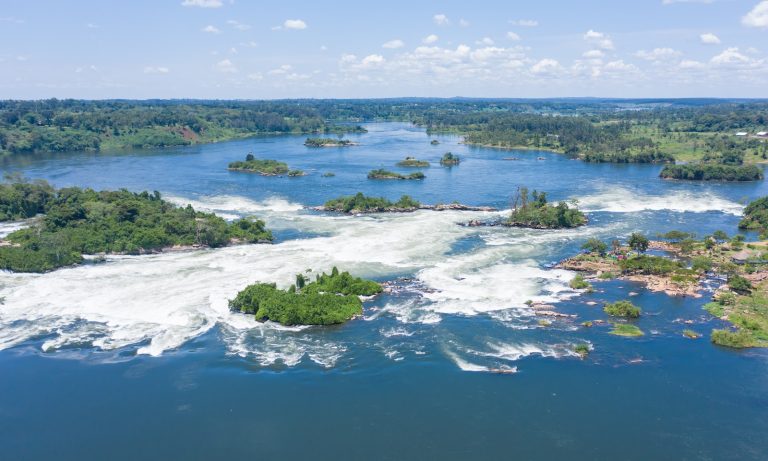
White water rafting in Uganda happens on one river in one town. The Victoria Nile at Jinja, where the lake spills north, is the only place in the country running commercial rafting, and the standard product is a full day on grade five water with a gentler grade three option beside it. What has changed, and what most published write ups still get wrong, is which river you are actually rafting.
Two hydroelectric dams have been built on this stretch within living memory, and each one drowned a section of rapids. If you are reading a rafting article that describes a day of back to back grade five from the lip of Bujagali Falls, you are reading about a river that no longer exists in that shape. The trip is still very good. It is not the same trip.
So the useful thing to know before booking is what the current run consists of, which rapids survive, and where the flat water now sits. That is what the rest of this page is for.
How the Dams Changed the Trip: Bujagali, Isimba and the Lost Rapids
The first dam went in at Bujagali. Its reservoir, now widely called Lake Bujagali, swallowed Bujagali Falls itself along with the rapids immediately above and below it. Published accounts put the number of features lost under that reservoir at around sixteen. Rafting carried on because the good water downstream was untouched.
Then came Isimba, further north. The pool behind it backed up over the lower part of the commercial run and took the wave train section with it. The three names that come up again and again in kayaking accounts of what went under are Nile Special, Kulu Shaker and Hair of the Dog. Nile Special mattered beyond Uganda: it was a standing wave that could be surfed all year in warm water, it drew the best freestyle kayakers in the world to a rural stretch of Africa for the better part of two decades, and a generation of Ugandan paddlers learned on it. It stopped being a wave within about a fortnight of the reservoir filling.
Operators had been clear in advance about which parts of their day would survive. One local company published, before the reservoir filled, that three or four rapids would go and that everything they ran in the morning, including both grade five rapids, would be unaffected. That is broadly how it turned out. Where accounts diverge is in the detail: some sources list Malalu and Vengeance among the losses, while at least one operator still names Vengeance in its current day trip sequence. The honest position is that the morning water is intact, the afternoon wave trains are gone, and you should read the rapid list the operator publishes now rather than the one in a travel article.
Rapid by Rapid on the Grade Five Day Trip
The grade five rafting trip is the headline product. One operator publishes the run as roughly nineteen kilometres of river with three to four hours of actual white water, and that is the most precise figure available from a company that runs it daily. Other published distances range from twenty one kilometres up to thirty one, which is a wide enough spread that it is worth asking your operator directly rather than trusting a number you read.
The day starts a couple of kilometres below the Bujagali dam. Safety briefing happens on flat water: how to sit, how to paddle, what to do in the raft and what to do out of it, and a deliberate flip so that being upside down under a boat stops being a surprise.
Between rapids there is flat water, and that is where lunch and the cold drinks live. Some of it is natural. Some of it is reservoir.
The Grade Three Family Float and Shorter Trips
Not everyone wants to be thrown out of a boat. Every Jinja operator runs a softer version, usually described as a family float, on grade two water lasting somewhere around an hour to an hour and a half, with a minimum age near six. It is a real stretch of the Nile taken gently rather than a pretend one.
There is also a middle option. A grade three full day covers similar ground to the grade five trip but takes easier lines through the same features, with minimum ages typically set at fourteen rather than sixteen. Mixed groups often split: the confident ones take the grade five boat, everyone else takes the grade three, and both meet at the same lunch stop on the same river.
Alongside the rafts, operators run tandem kayaking with an instructor in the back of a two person boat, and riverboarding, where you take the rapid face down on a float. Both go down with the raft trip rather than separately.
Safety and What the Rafting Adventure Actually Demands
You do not need to be able to swim well, and that surprises people. Buoyancy aids on this river are heavy flotation, a safety kayaker shadows every raft, and a safety boat picks up swimmers. What you do need is to be calm about going underwater briefly, because on a grade five day you will, and being unable to cope with that is the thing that ruins the day rather than any physical weakness.
Fitness is moderate. You paddle, you carry nothing, you portage once on foot around Itanda. The water is warm, which removes the cold shock element that makes northern hemisphere rafting harder than it looks.
The real risks worth naming are sunburn on open water at the equator, dehydration, and the fact that you will be immersed in the Nile. Bilharzia is present in the Ugandan lakes and in slow water, and while fast flowing river sections are considered low risk, a sensible traveller takes the standard precaution of a praziquantel course some weeks after a trip like this and mentions the swim to their doctor. Ask your operator what they say about it; the ones who answer straight are the ones worth booking.
When to Raft: Water Levels Through the Year
The Victoria Nile is dam released and lake fed, which makes it far steadier than a rain fed river. Rafting runs all year and the rapids do not disappear in a dry month.
What moves is the character. Higher flows make the features bigger and wash out some of the technical lines. Lower flows expose rock and make the lines tighter and more precise. Neither is better and operators will tell you which lines are running on the day. Rain matters less for the river than for the drive, since the road out to the put in turns greasy in a downpour.
Most people raft on the way in or out of the country rather than as a fixed date, because Jinja sits close to Kampala and Entebbe. Our best time to visit Uganda guide covers the national picture and our transport guide covers the road from the airport.
Getting to Jinja for a Rafting Tour
Jinja is around eighty kilometres east of Kampala on a road that carries heavy truck traffic to Kenya. Budget two to three hours from Kampala and closer to three and a half from Entebbe airport, more in the afternoon. Most rafting operators include return transport from a Jinja meeting point, so the question is how you reach Jinja rather than how you reach the river.
Pickups are early. One operator publishes Jinja collection between a quarter to eight and a quarter past, with everyone at base by half past. Plenty of visitors stay the night before at a river camp, which removes the pre dawn drive and is how the trip is usually sold as an overnight package. See the Jinja destination guide for where to stay and what else the town holds.
Combining Rafting with Other Jinja Adventure Trips
Jinja packs its adventure activities into a few kilometres of riverbank, which is why one night there usually turns into two.
The gentlest neighbour is river tubing, a float on an inflatable tube down a calm section with a safety kayaker alongside, and the obvious choice for anyone in the group who does not want a grade five day. Kayaking and stand up paddleboarding use the flat water above the rapids, including the Bujagali reservoir, and there are multi day beginner kayak courses for people who want to learn properly. Bungee jumping happens from a tower over the river. Quad biking and mountain biking run through the villages behind the bank.
One more thing worth knowing. The wildlife authority conservation tariff carries a line for white water rafting at Murchison Falls National Park, so the activity is licensed there, but we could not find an operator currently publishing a scheduled Murchison rafting trip and one company page advertising it returns an error. Treat Jinja as the place where Ugandan rafting actually happens, and ask specific questions of anyone selling you rafting anywhere else.
Frequently Asked Questions About Jinja Rafting Tours
Do I need rafting experience? No. The grade five day trip takes complete beginners, and the briefing covers everything the trip needs. Guides are trained to international river federation standards at the established Jinja companies, and it is a fair question to ask before booking.
What does white water rafting in Jinja cost? Published figures for a full day grade five trip sit roughly between USD 120 and USD 170 per person depending on the operator and what is bundled in, with around USD 140 the most commonly reported. That normally includes transport from Jinja, equipment, lunch and photographs, and sometimes a night's accommodation at the operator's river camp. Shorter family floats cost considerably less. Rates change and operators publish their own, so confirm before you commit.
Will the raft flip? On a grade five day, probably, and on some rapids the guide will aim for it. Flips are part of the product rather than a failure, which is why the briefing includes a practice one. If you would rather stay in the boat, book the grade three trip and say so, because guides will take gentler lines for a crew that asks.
How old do you have to be? One operator publishes fourteen for its grade three trip and sixteen for grade five, and the family float takes children from around six. Limits vary slightly, so check with the company rather than assuming.
Is it still worth doing after the dams? Yes, and the people best placed to judge say so. What was lost was the wave train section and, for freestyle kayakers, a world class surf wave. What remains is a long day on big warm water with genuine grade five rapids in it, run by companies with decades on that river. Go in knowing that, rather than expecting the river from an old video.
Can a non rafter come along for the day? Yes. The support boat carries people who want the river without the rapids, and the camps the trips run from are pleasant places to spend a day. Tubing and a paddleboard lesson fill the time well for anyone sitting the rafting out.
Rafting trips here are sold and operated by independent Ugandan companies. Send your dates, your group and how hard you want the day to be to the operator behind the trip that appeals, or use the enquiry route on this site to reach the companies running this river. We take no booking and charge you nothing.