
Chimpanzee Habituation Tours: A Full Day in Kibale Forest
A full day with researchers following chimpanzees from their night nests to nesting again, offered in Kibale during the low seasons.
The chimpanzee habituation experience is Kibale's full day alternative to the standard one hour walk. You join the rangers and researchers settling a community to human company, leaving before first light to reach the nests and staying while the group feeds, rests and moves. Permits are few, the day is long, and the animals are less predictable than a settled group.
Safaris That Include Chimpanzee Habituation Experience


5 Days Chimps & Gorilla Safari
by Oree Safaris Verified operator


3 Days Chimpanzee Double Tracking Safari
by Ancient Africa Safaris Verified operator
Chimpanzee Tracking Adventure
by Ancient Africa Safaris Verified operator
From $2,900 per person
View SafariChimpanzee Habituation Guide in Uganda
What the Chimpanzee Habituation Experience Actually Is
The chimpanzee habituation experience is not a longer chimpanzee trek. It is a different activity that happens to involve the same species. On a standard walk you visit a community that settled into accepting human company years ago. On habituation you join the rangers and researchers doing the settling, following a group that is still deciding what to make of people.
That distinction runs through everything else. The work is slow and repetitive by design: the team needs the chimpanzees to grow used to being watched without reacting, which means staying with them through ordinary hours rather than arriving for a highlight.
In Uganda the activity runs at Kibale National Park and nowhere else. Kibale holds over 1,500 chimpanzees across at least twelve communities, so there is always a group somewhere in the middle of the process, and the visitor centre at Kanyanchu is where the day starts.
One thing to hold in mind from the outset. A community under habituation is, by definition, not yet comfortable with you. Some days that produces hours of close, unbothered watching. Others produce a lot of walking and a lot of canopy.
How the Habituation Experience Day Runs, Nest to Nest
The shape of the day is what people buy. Chimpanzees sleep in nests they build fresh each evening, and the team wants to be underneath those nests before the animals wake.
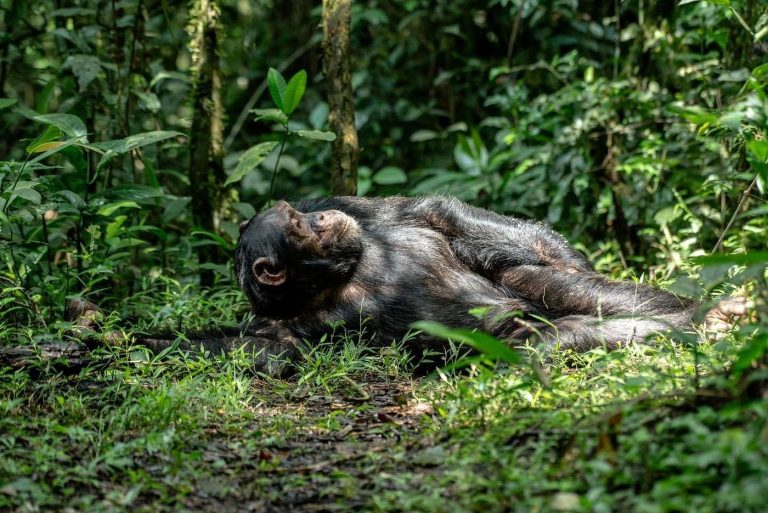
You leave the visitor centre in the dark, usually reporting around half past six or earlier depending on how far the group nested. From there the day follows the community rather than a trail: down to feed, a noisy period of movement and calling, a long midday rest when almost nothing happens, then feeding again and a slow drift towards wherever they will build that night.
You carry your own lunch and water. There is nowhere to buy either once you are in the forest, and a day that starts before six and ends in the late afternoon is longer than most people plan for.
Habituation Against Standard Chimpanzee Tracking
The honest comparison matters more than the marketing, because the two products suit different people and the cheaper one is the better choice for most visitors.
If you are choosing between them and this is your first time in a tropical forest, take the standard walk. Our chimpanzee tracking guide covers the six sites in Uganda where that runs and what separates them.
Permits and Places on a Habituation Experience Trip
Permits are the binding constraint here, far more than on an ordinary primate trip. A daily allocation in the low single figures across one park means the activity sells out in a way that tracking rarely does.
Book it as the fixed point of your trip and build the rest around it, rather than the other way round. Travellers who leave it until the itinerary is otherwise settled routinely find the date gone and take the standard walk instead, which is a reasonable outcome but not the one they paid to plan.
The same minimum age of sixteen that governs chimpanzee tracking applies, and the wildlife authority enforces it at the briefing rather than at the point of sale. The fee includes the ranger guide and park entrance for the day, so you are not charged the usual Kibale entrance on top.
Few trips are built around the habituation day, which reflects how few permits exist rather than a lack of interest. The enquiry route works the same way: write to an operator with your dates and let them check availability before you commit to anything else.
When to Book a Chimpanzee Habituation Safari
The activity runs all year, and the months that get recommended most often are April, May and November, which are also the wettest and quietest stretches. That is not a coincidence: fewer visitors means permits are easier to get, and the wildlife authority's discounted low season rates fall in those same months.
The trade is mud and rain. A full day in a wet Kibale is genuinely wet, forest trails turn heavy, and the midday rest happens whether or not you are sheltered. People who want the experience at its most comfortable go in the drier stretches, roughly June to September and December to February, and book months earlier to get a place.
Whether chimpanzees are easier to find in one season than another is less settled than tour pages suggest, with published sources arguing both directions depending on how fruiting affects ranging. Our month by month guide to the best time to visit Uganda sets out the rainfall pattern the decision really rests on.
Who the Full Day Chimpanzee Experience Suits
Photographers get the clearest return. One hour in flat forest light with a group that is moving is hard work; a day gives you the midday rest, the feeding bouts and the chance to be in position rather than catching up.
Repeat visitors are the second group. People who have already done the standard hour and found it over too quickly are exactly who the full day was built for.
Anyone travelling with a strong interest in behaviour rather than sightings will also get more from it. Grooming hierarchies, food sharing, the politics of a rest period: none of that shows itself in sixty minutes.
It suits far fewer people than the operators selling it imply. If you dislike long days, struggle on uneven wet ground, need a predictable schedule, or would be disappointed by four hours of watching a sleeping group, the standard walk is the better buy and considerably cheaper.
Fitting Habituation into a Wider Uganda Primate Tour
The habituation day eats a whole day, plus a night either side near the forest. That is three days of the itinerary before you have driven anywhere.
Kibale sits close to Fort Portal in the west, four to five hours from Kampala, so the usual pattern is a drive out, the forest day, then onward to Queen Elizabeth National Park to the south rather than back the way you came. From there the road continues towards Bwindi, which is how habituation ends up on the same trip as gorilla trekking.
Be realistic about stacking hard days. A full habituation day followed by a gorilla trek two days later is a lot of forest in one week, and people underestimate how tired the first one leaves them. Our guide to how many days you need in Uganda works through what fits comfortably into a week or a fortnight.
What to Ask Before Booking a Habituation Experience
Three questions matter more than the rest. Is the permit already held for your date, or is the operator quoting on the assumption that one will be free? How early does the day start, and how far is the lodge from Kanyanchu in driving minutes? And what happens if the allocation falls through, since a downgrade to standard tracking changes the price of the day substantially.
Ask too whether lunch and water are provided or carried. It sounds trivial until you are eight hours into a forest.
Frequently Asked Questions About the Chimpanzee Habituation Experience
What does the habituation permit cost? The wildlife authority charges a foreign non resident USD 300 for the chimpanzee habituation experience at Kibale, with a published revision taking it to USD 400 from the first of January. That compares with USD 250 for standard chimpanzee tracking at the same park. Park entrance and the ranger guide are inside the fee, so the roughly USD 40 Kibale entrance is not charged again. Everything else on a trip, the vehicle, the driver guide and the nights either side, is quoted by the operator, and only an enquiry against your dates gives you a real total.
How long am I really with the chimpanzees? Sources disagree and the gap is worth knowing before you book. Tour pages describe a full day from de nesting to nesting, while the wildlife authority's own tariff states four hours with the chimpanzees. Both can be true at once: you are in the forest all day and in contact with the group for part of it. Treat the day as long and the contact time as variable.
Is it worth the extra over standard tracking? For photographers and returning visitors, usually. For a first primate day in Uganda, usually not. The community is less settled around people, so the best habituation days beat any tracking hour and the worst ones do not.
How fit do I need to be? Fitter than for a standard walk, mostly because of duration rather than terrain. Kibale is largely flat, though the ground is wet and uneven and you may be following a moving group for hours with little warning. Boots with grip, a rain layer and the ability to be on your feet all day are the real requirements.
How far ahead should I book? Months rather than weeks, and more for the drier season. With a daily allocation in the low single figures, dates in July, August and December go early. Booking in the wetter months is easier and the trade is the weather.
Can I do the habituation day and a standard trek on the same trip? Yes, and some people deliberately do, using the standard hour at a second forest such as Kyambura or Budongo while keeping the full day for Kibale. It needs an extra day and a second permit.
Habituation trips on this marketplace are sold and run by independent Ugandan tour companies. Send the operator your dates, your group size and a note that you want the full day rather than standard tracking, and they will check permit availability and come back with a real quote. We take no booking and charge you nothing.