
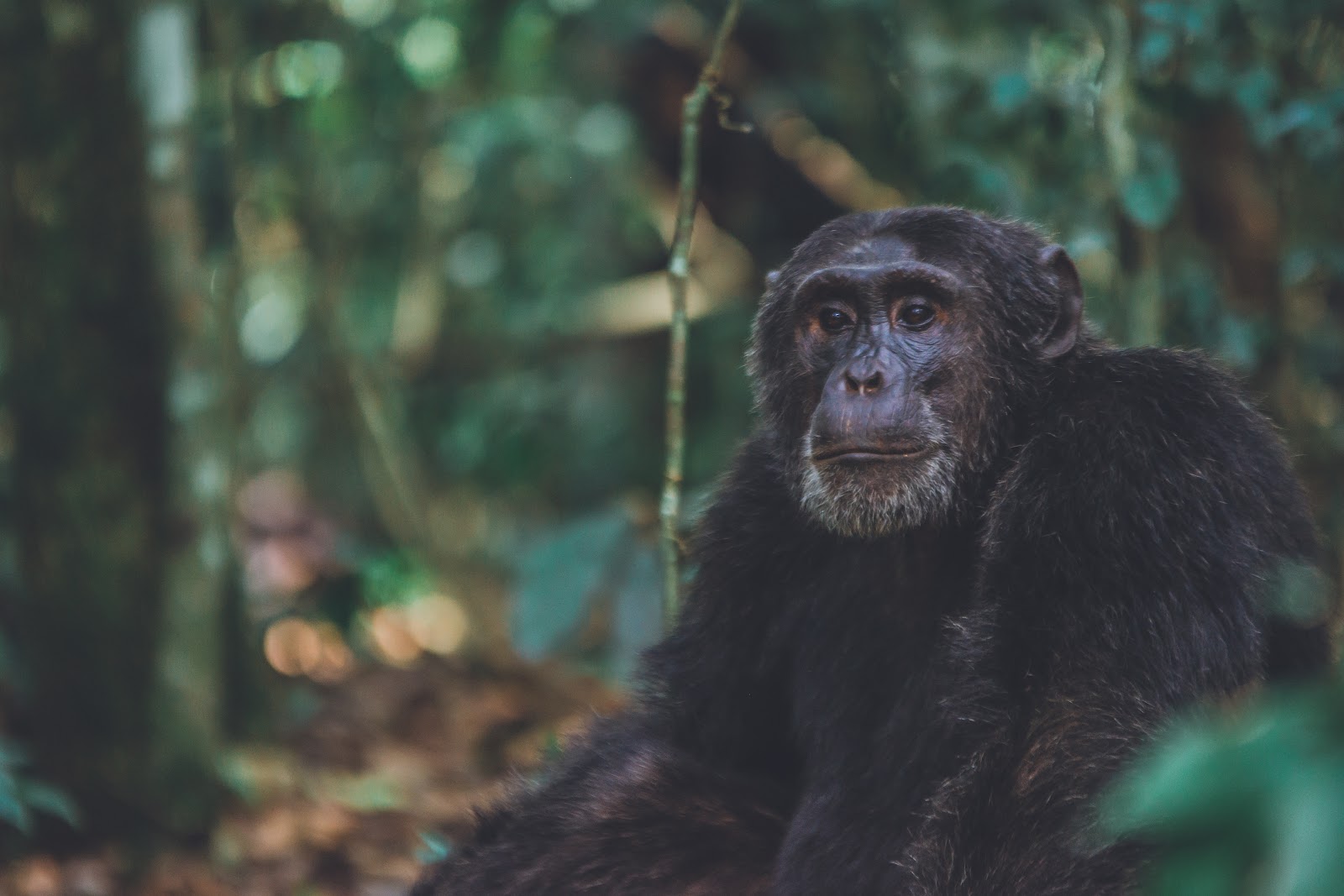
Kibale National Park is the strongest place in Africa to track wild chimpanzees, with roughly 1,500 of them living in a forest that holds twelve other primate species alongside. Permits for chimpanzee trekking and for the longer habituation experience are sold by the Uganda Wildlife Authority and go early in peak months. The park sits in western Uganda outside Fort Portal, about five hours by road from Kampala.
Chimpanzee Trekking Safaris in Kibale Forest
Chimpanzee trekking is the reason almost everyone books a Kibale safari, and the forest earns that reputation. Groups gather at the Kanyanchu Visitor Centre, the main trailhead near the centre of the park, for a briefing on the rules before walking in. The Uganda Wildlife Authority runs departures at 8am and 2pm, with a mid morning slot at 11am added when demand is high, and caps each group at six people with one ranger guide.
What happens next is not scripted. Rangers go out before dawn to find where a community nested overnight, so the walk to them can be fifteen minutes on a cut path or three hours pushing through wet undergrowth well off any trail. Once you are with the chimps the clock starts, and the rule is one hour, ten metres back, no flash.
Here is the part the brochures skip. Chimpanzees spend a lot of the day feeding in the canopy, and on a wet morning they may not come down at all. Plenty of visitors have walked out of Kibale having spent their hour squinting upward at dark shapes fifty feet above them, with a stiff neck and a memory card full of branches. Others get a community on the forest floor, males drumming on buttress roots and screaming through the trees, and describe it as the wildest thing they have seen in Africa. The odds of finding chimps at all sit above ninety percent. The odds of a good ground level sitting are a coin toss weighted by weather.
Rangers on these walks carry rifles, which surprises people. It is not for the chimps. Kibale holds forest elephants, smaller and considerably more short tempered than the savannah kind, and the guns are for walking into one in thick cover.
One practical detail worth knowing before you pay for anything extra: the Kibale chimpanzee tracking fee is the only primate permit in Uganda that already carries park entrance inside it, and it covers a guided nature walk on the same day. Most people never use that second half. It is included whether you do or not.
The Chimpanzee Habituation Experience Tour
The Chimpanzee Habituation Experience is a separate product with a separate permit, and it is a genuinely different day rather than a longer version of the same one. You meet at Kanyanchu at around 6am, before first light, and walk in to reach a community while they are still in their night nests. Then you stay with them: through the morning move, the feeding, the grooming, the squabbles, until they build fresh nests in the late afternoon. The permit allows four hours of contact, and in practice people report five and six hour days in the forest when the chimps cooperate.
The group is smaller too, often three or four visitors rather than six, because habituation runs on communities that are still getting used to people and the rangers keep numbers down.
Which one should you book? The honest answer is that it depends on how you handle uncertainty, and the ranking guides almost never say so.
Habituation runs on communities being brought into tourism, which is why it exists at all. That work is decades old here. The Makerere University Biological Field Station has run research sites inside Kibale since the 1970s, and the Ngogo community in the middle of the park, studied continuously for that long, is the largest chimpanzee group ever recorded anywhere. Ngogo itself is a research site rather than a tourist trailhead, so you cannot simply book it, but the science coming out of it is why guides here talk about individual chimps by name and know their politics.
Primate Tracking Safaris Beyond the Chimpanzees
Kibale carries thirteen primate species, and a primate tracking safari here will usually turn up five or six of them in a single morning without any special effort. That density is the actual reason the park is called Uganda’s primate capital, rather than the chimps alone.
The one to look for is the red colobus, an endangered monkey that survives in real numbers in very few places and moves through the canopy in loose noisy parties. Black and white colobus are easier, with their long white mantles hanging as they leap. Grey cheeked mangabeys announce themselves before you see them. L’Hoest’s monkeys prefer the ground and the forest edge, so they often show up on the walk out rather than deep in. Red tailed and blue monkeys mix into the same feeding trees, which makes telling them apart a good use of the guide.
Olive baboons work the roadside and the lodge grounds, and they are the one primate that will steal from you. Bushbabies and pottos are nocturnal and belong to the night walk rather than the day.
Ask your guide about the chimps you did not see, too. The forest holds several communities of different sizes with different histories, and the difference between a small tourism community and Ngogo is the difference between a village and a town.
Birding Safaris in Kibale Forest
Birding safaris in Kibale pull a different crowd from the chimpanzee groups, and often the same people on a second visit. The park’s list runs north of 300 species, including Albertine Rift specialities and a ground thrush found nowhere else, which is why Kibale is a fixture on five day Uganda birding itineraries.
The bird everybody wants is the green breasted pitta, one of the hardest species to see in Africa. Finding one means being on a forest trail before dawn during its display season, standing still in the dark, and listening for a short call followed by a bird bouncing vertically off a low perch. Guides who specialise in it will tell you plainly that it can take three mornings. The northern Sebitoli end of the park has a good record for it.
Beyond the pitta, expect grey parrots overhead, several barbets and greenbuls that only a local ear will separate, and hornbills crossing the canopy gaps. Bring binoculars that work in low light. Forest interiors are darker than people expect and a cheap pair will show you silhouettes.
Butterflies are worth a mention while you are looking down at the trail. The park holds a couple of hundred species, and on a hot morning after rain they gather on damp ground in numbers that stop conversation.
Bigodi Wetland Walking Tours Beside the Park
A few kilometres from Kanyanchu, the Bigodi wetland is a community run swamp walk and the standard second activity for anyone spending a night at Kibale. It is not managed by the Uganda Wildlife Authority. It belongs to the Kibale Association for Rural and Environmental Development, a local group set up in 1992, and it is booked and paid for separately at the village.
The walk takes about three hours over four or five kilometres of boardwalk, village path and forest edge, and it is flat. Around 200 bird species have been recorded on it, and the primates that come out to the swamp margins are often easier to watch here than under closed canopy because the light is better and the trees are shorter. Great blue turacos are close to guaranteed.
What makes Bigodi worth the morning is the second half of the guiding. Your guide is from the village, the money funds local schools rather than a national budget, and the walk includes as much village as swamp if you want it. Several travellers who found their chimpanzee hour a blur of branches say Bigodi was the part of the day they actually remember.
Night Walk Tours and Guided Forest Trails
The night walk tour leaves Kanyanchu after dark with torches, and it is a completely different forest. Bushbabies bounce between trunks and give themselves away by eyeshine. Pottos move so slowly you can look at one properly. Tree hyraxes make a noise that people who have not been warned find genuinely alarming.
Daytime guided forest walks cover trails around Kanyanchu on a fixed loop and are the thing to do with the free nature walk your chimpanzee permit already includes. They are also the sensible option for anyone travelling with a child under the trekking age, since there is no age floor on a general forest walk.
Forest elephants use these trails. You will more likely see the evidence than the animal: fresh dung, broken saplings, and a ranger who suddenly stops talking and listens.
Sebitoli Sector Tours in the Northern Forest
Most Kibale safaris never leave Kanyanchu, which is why the Sebitoli sector in the north is worth knowing about. It sits directly on the Fort Portal to Kampala road, so you can reach it without the drive south, and it runs its own chimpanzee tracking on a community habituated separately from the Kanyanchu ones. A four day Bwindi and Kibale safari out of Kampala is among the listings that use Kanyanchu.
Sebitoli is quieter, greener at the edges because the road cuts through it, and the birding around the camp is strong. The green breasted pitta records cluster here. The trade off is that the chimpanzee community is smaller and the trails are less developed, so the walking can be harder for a less predictable sighting.
If Kibale is a single night on a longer route and you are driving in from Kampala anyway, Sebitoli can save you hours. If chimpanzees are the whole point of the trip, book Kanyanchu. A four day gorilla and chimpanzee safari pairs this forest with Bwindi.
Golden Cat Tracking, Kibale’s Newest Safari
The Uganda Wildlife Authority has added an African golden cat tracking product at Kibale, and no other guide to this park mentions it yet. It runs from the Kanyanchu area along the Ngogo road as a five day experiential tracking permit, priced for the first time on the tariff that takes effect on 1 January 2027, working with camera trap data and ranger intelligence, with armed rangers throughout.
Be clear about what this is. The African golden cat is one of the least seen carnivores on the continent, mostly nocturnal, and five days of tracking buys you the search rather than the animal. It is aimed squarely at people who would rather spend a week reading sign in a rainforest than tick a species, and at wildlife photographers with patience and no deadline.
Bookings are being handled by hand on the ground rather than through the online reservation portal for now, and have to be arranged a day or two ahead. If this appeals, talk to an operator early rather than turning up.
Crater Lakes and Cultural Tours Around Fort Portal
The Ndali Kasenda crater field between Kibale and Fort Portal is a cluster of old explosion craters, most now holding deep green lakes, and half the good lodges in the area sit on their rims. A morning crater lakes tour on foot or by bicycle links several of them through farmland and small villages, and the walk up to the viewpoint over Lake Nyinambuga is short.
The Amabere Ga Nyina Mwiru caves outside Fort Portal make a good hour. Behind the waterfall are limestone formations tied to a Batooro origin story about a king’s daughter, and a local guide tells it far better than a sign would.
Fort Portal itself is the seat of the Toro Kingdom, and cultural tours can include the palace on the hill above town. The town is a pleasant base with real coffee and a couple of good places to eat, which after four nights of lodge dinners matters more than it sounds. A chimpanzee tracking trip routed through Fort Portal is listed on the site.
Best Time to Visit Kibale for a Primate Safari
Chimpanzee trekking runs all year, so the question is not whether you can go but how hard the walking will be. Kibale is rainforest. It rains in every month, and the difference between a dry month and a wet one is the difference between a firm trail and calf deep mud on a slope.
Two dry windows carry most of the traffic: December through February, and June into early September. The wettest stretch is September through November, with March to May close behind.
| Month | Rain | Trails | Verdict |
|---|---|---|---|
| January | 42mm | Firm | Prime |
| February | 59mm | Firm | Prime |
| March | 125mm | Softening | Fair |
| April | 171mm | Muddy | Wet |
| May | 124mm | Muddy | Wet |
| June | 79mm | Drying | Good |
| July | 70mm | Firm | Prime |
| August | 114mm | Mixed | Good |
| September | 156mm | Muddy | Wet |
| October | 184mm | Muddy | Wet |
| November | 258mm | Very wet | Hardest |
| December | 63mm | Firm | Prime |
Daytime highs sit between 24C and 27C all year and nights drop to around 14C to 16C at lodge altitude, so the numbers above matter far more than temperature does. Read the wet months as a packing instruction rather than a warning. April, May, September, October and November mean waterproof boots, gaiters, a rain shell you can walk in, and a dry bag for the camera. They also mean fruiting trees, active chimps and, in the two shoulder rains, migrant birds that are not there in January.
There is one more reason to look hard at April, May and November. The Uganda Wildlife Authority has introduced discounted low season permits for exactly those three months, which is the largest saving available on a Kibale trip and is covered in the questions below.
Where to Stay on a Kibale Forest Safari
Only one property sits inside the park at the trailhead itself. Primate Lodge stands beside the Kanyanchu Visitor Centre, so you walk to your briefing rather than driving to it, which is worth real money on a 6am habituation start.
The rest cluster on the crater rims and along the Fort Portal road. Kyaninga Lodge above its own crater lake and Ndali Lodge on another are the two best known at the top end, both handsome old properties with long views. Crater Safari Lodge sits on Nyinabulitwa. In the middle, Isunga Lodge, Turaco Treetops, Kibale Forest Camp and Chimpanzee Forest Guest House all put you within a reasonable morning drive. At the bottom, CVK Lakeside Resort, Rweteera Safari Park and the community campsite at Lake Nkuruba are dependable and cheap.
The trade off is simple. Crater rim lodges have the setting and the sunsets and cost you thirty to sixty minutes of driving in the dark before a trek. Forest edge places have the sleep. If you have booked habituation, sleep close.
Combining Kibale with a Queen Elizabeth Safari
Kibale and Queen Elizabeth National Park are the standard pairing on a Uganda safari, and geography is the reason. The two are joined by a wildlife corridor running roughly 180 kilometres, and the drive between them takes three to four hours, so a forest morning and an afternoon game drive on the same day is possible without rushing.
Queen Elizabeth has its own chimpanzees, in the Kyambura Gorge, a narrow slot of riverine forest dropping out of the savannah. Tracking there costs a fraction of a Kibale permit and the gorge itself is a striking place to walk. The sighting rate is much lower, because the resident community is small and isolated. Treat Kyambura as a good half day with a chance of chimps rather than as a cheaper substitute for Kibale, and nobody comes away disappointed.
The usual routing runs Kampala to Kibale, two nights, then south to Queen Elizabeth for two, then on to Bwindi for gorillas, which is the shape of the standard seven day gorillas, wildlife and chimpanzees circuit. Reversing it works equally well and gets the long Kampala drive done on a fresher morning.
Getting to Kibale National Park and the Forest Behind It
By road from Kampala it is roughly 300 kilometres to Fort Portal on tarmac through Mubende, which takes about five hours with a stop, then a further 35 kilometres south to Kanyanchu on a mixed surface, thirty to forty five minutes. A four wheel drive is sensible in the rains rather than mandatory in the dry.
Flying cuts that to about an hour. Aerolink runs scheduled services from Entebbe and from Kajjansi airfield near Kampala to Kasese, which is roughly two hours by road from the park, and to the Semliki airstrip on the far side of Fort Portal. Book the road transfer at the same time, because taxis do not wait at these airstrips.
The forest you walk into is older as a protected area than most people assume. It was gazetted as a forest reserve in 1932 and only became a national park in 1993, and for most of the intervening decades it was worked for hardwood timber, with softwood plantations put in on the cleared blocks. Some of those pine and cypress stands are still there, obvious once you know to look. There was also a wild coffee project here around the turn of the century, backed with international funding, which tried to sell the forest’s native robusta as a premium product and failed on the simple fact that buyers wanted arabica.
The park runs to just under 800 square kilometres across an altitude range of about 1,100 to 1,600 metres, which is why the vegetation changes from lowland to montane as you drive south through it. That range is also why the chimpanzees here have a broader diet than most, and part of why researchers have never left.
Kibale National Park Safari FAQs
How much does chimpanzee trekking in Kibale cost, and what does the permit cover?
The standard chimpanzee tracking permit is USD 250 for foreign non residents, USD 200 for foreign residents and UGX 180,000 for East African citizens. Kibale is the one park where that fee already includes park entrance, and it also covers a guided nature walk on the same day. The Chimpanzee Habituation Experience is USD 300, USD 250 and UGX 250,000 respectively, again with entrance included, and buys four hours of contact instead of one. Three things are changing and are worth planning around. Discounted low season permits now apply in April, May and November, bringing standard tracking down to USD 200 for foreign non residents and USD 150 for foreign residents. A rise to USD 300 for standard tracking and USD 400 for habituation takes effect on 1 January 2027, so treks before that date are still priced at USD 250 and USD 300. And the seven day unpaid hold on permits was suspended on 1 March 2026, so a booking is only confirmed once it is paid in full. If you are not tracking chimps, plain park entrance is USD 40, USD 30 and UGX 20,000. Chimpanzee tracking at Kyambura Gorge in Queen Elizabeth is USD 100 at present and rises to USD 200 on 1 January 2027. The five day golden cat tracking permit is priced at USD 350 on the tariff that takes effect on that date. Every figure here is taken from the published conservation tariff and the wildlife authority’s 2026 to 2027 tariff change letter, so the thing to confirm with your operator is which side of 1 January 2027 your dates fall on.
What should I budget for lodging near Kibale?
Roughly, the top crater rim and forest lodges run USD 300 to USD 600 per person per night on a full board basis, midrange properties sit around USD 100 to USD 200, and budget guesthouses and campsites come in under USD 50. The Bigodi wetland walk is paid separately to the community association, and the figures in circulation disagree with each other, so our Bigodi Wetland Sanctuary page sets out what each source says rather than picking one. Confirm the current figure with your lodge, who will book it for you.
How fit do I need to be, and is there a minimum age?
Fitter than for a game drive, less fit than for gorillas. The ground is mostly flat to gently rolling and the difficulty comes from mud, roots and the occasional hour of pushing through undergrowth rather than from climbing. Two to five hours on your feet is the honest range. The official tariff sets the minimum age for chimpanzee tracking at 12, though 15 and 16 appear on plenty of operator sites, so confirm before booking a family trip.
What should I pack for a chimpanzee trek?
Waterproof boots with ankle support, long trousers and a long sleeved shirt against stinging nettles and biting ants, and gaiters or long socks pulled over the trouser leg, which regular visitors mention more than any other item. Add a rain shell, insect repellent, water, and a dry bag. Bring a walking pole if you use one. Leave the flash at home, since it is banned at the sighting, and accept that forest light is poor and a fast lens earns its place.
Am I guaranteed to see chimpanzees?
No, and be wary of anyone who says otherwise. Finding them runs above ninety percent, so a total blank is rare. Seeing them well is the real variable. Rain pushes chimps into the canopy to feed, and an hour spent looking straight up at moving shapes is a genuine outcome that some visitors find flat. Two mornings doubles your chances of a ground level sitting more than any other single decision.
Is the habituation experience better than the standard trek?
It is longer, quieter and less certain. Habituation puts you with a community that is still adjusting to people, which can mean six hours of behaviour you would never get on a standard trek or a long walk with brief glimpses. Standard trekking uses fully habituated groups and delivers a reliable hour. First timers with one shot usually do better on the standard trek. Photographers and repeat visitors usually prefer habituation.
Can I do Kibale and Queen Elizabeth on the same trip?
Easily, and four day trips pairing Kibale chimpanzee tracking with Queen Elizabeth game viewing are the shortest honest way to do it. They are three to four hours apart and joined by a forest corridor, and the standard Uganda route strings Kibale, Queen Elizabeth and Bwindi together. Two nights at Kibale gives you a chimpanzee morning, the Bigodi walk and a crater lakes afternoon without a rushed schedule.
Is Kibale suitable for older travellers or families with young children?
Older travellers manage the standard trek regularly, since the terrain is not steep, and rangers will match a slower group to a nearer community where they can. Children below the age floor cannot track chimpanzees, but there is no age restriction on the guided forest walks, the night walk or the Bigodi wetland walk, so a family can split the morning and still have a full day.
Uganda Safaris works with licensed Ugandan operators who hold permits for Kibale and handle the Uganda Wildlife Authority booking, the transfers and the lodges as one arrangement. The shortest of them are three day chimpanzee tracking trips out of Kampala, which do the drive, the trek and the return without adding a second park.
If you know roughly when you want to travel and whether you are after the standard trek or the habituation day, send those two details to the operators whose itineraries fit and you will get honest options back, including the ones that suggest a different month. Our notes on enquiring about a safari set out what to send.
2 Places to Visit in This Area
Individual sites within reach of here, each with its own guide. Some are written up because the name circulates and the place does not, which is worth knowing before you plan a drive around one.
Safaris That Visit Kibale National Park
3 of the 17 safaris listed here that visit Kibale National Park, from different operators where the listings allow it. Each is sold and run by an independent Ugandan tour company. This site lists them and passes on enquiries; it takes no booking and charges you nothing.


3 Days Chimpanzee Double Tracking Safari
by Ancient Africa Safaris Verified operator
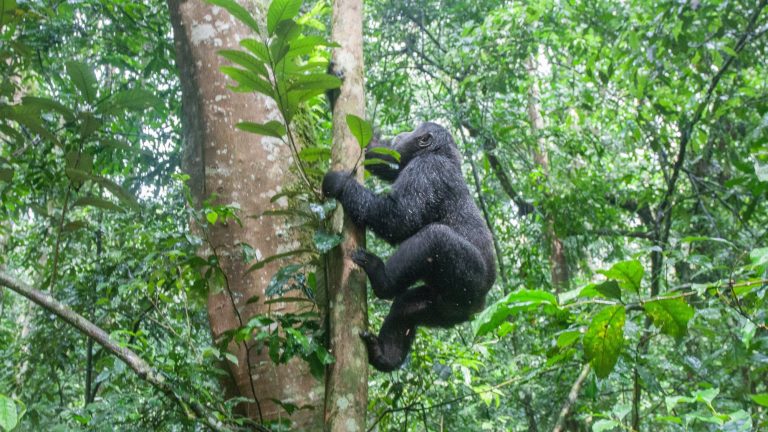

11 Days Uganda Primates Safari
by Tranquil Safaris Verified operator


5 Days Chimps & Gorilla Safari
by Oree Safaris Verified operator