
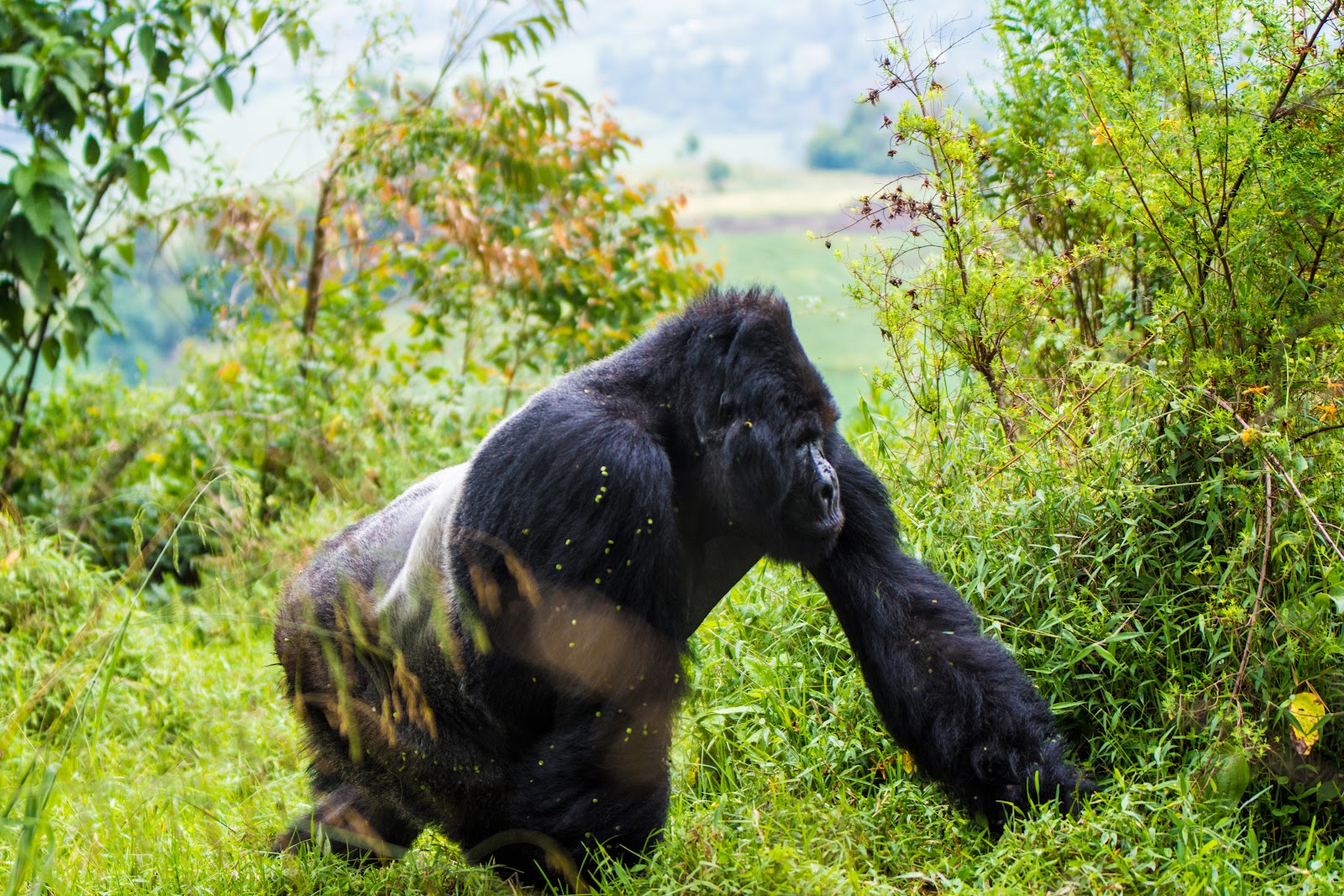
Gorilla Trekking in Uganda: What to Know Before You Go
Gorilla trekking in Uganda means one permitted hour with a habituated mountain gorilla family, reached on foot through steep rainforest that can take twenty minutes or most of a day. Permits are sold by date and entry point, and visitors from outside East Africa must buy them through a licensed Ugandan tour operator. The trekking happens in two parks in the far southwest, Bwindi Impenetrable and Mgahinga Gorilla.
Gorilla Trekking Safaris in Uganda: How the Trekking Day Runs
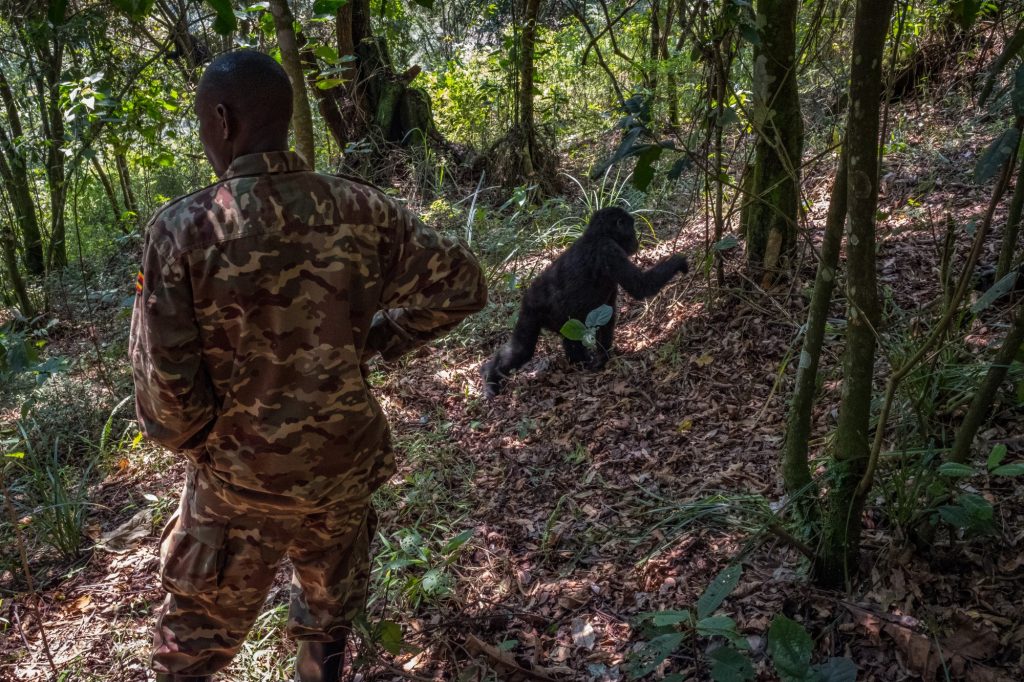
A gorilla trekking safari starts earlier and ends later than most people picture. Uganda Wildlife Authority sets gorilla tracking to begin at 8:00 am, and that is the briefing, not the walking. You report to the reception at your designated entry point first, where your permit is validated against the booking system and your passport is checked. Only then do you get the briefing from the guides who will walk with you.
While that is happening, trackers have already been out since first light. They know where the family built its night nests, and they follow the trail on from there until they find the group, then radio the position back. That is the part that makes the whole thing work, and it is also the reason nobody can tell you in advance how long you will walk.
The walk itself runs from about twenty minutes to the better part of eight hours. Both extremes happen regularly. Gorillas move several hundred metres a day while feeding, so a family that fed downhill yesterday can be a long way from where it was found the morning before.
Then the clock starts. UWA defines viewing time as beginning the moment you reach the gorillas, capped at one hour for standard tracking. Everyone says the same thing about that hour afterwards, which is that it goes faster than seems reasonable. You walk back the way you came, hand in your kit, and collect a certificate at the debriefing.
Where Gorilla Trekking Happens: Bwindi and Mgahinga
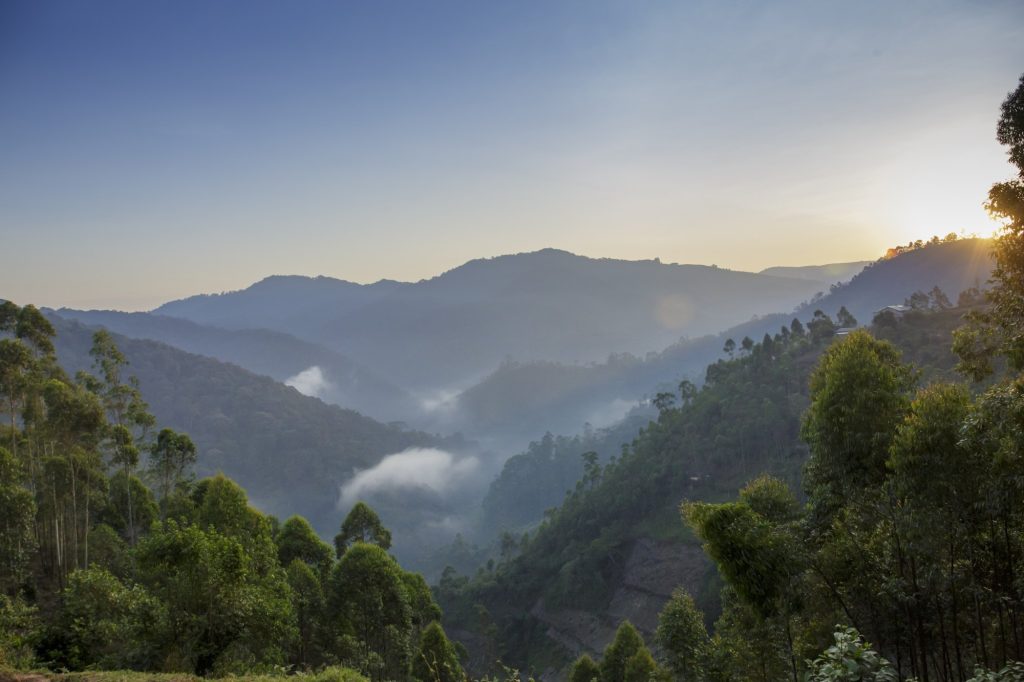
Mountain gorilla trekking in Uganda is confined to two parks, both in the southwest corner near the Rwandan and Congolese borders. Bwindi Impenetrable National Park is the larger by a long way, covering 321 square kilometres of rainforest that climbs from 1,160 metres to 2,607 metres. UWA puts the Bwindi gorilla population at roughly 459, close to half of every mountain gorilla left alive.
Mgahinga Gorilla National Park is tiny beside it, 33.7 square kilometres on the Virunga volcanoes, and it sits much higher, between 2,227 metres and 4,127 metres. It has one habituated family and it also has golden monkeys, which is why a lot of people go there rather than for the gorillas alone.
UWA runs tracking from five designated entry points, and this matters because it is the unit your permit is sold in. Four are in Bwindi, at Buhoma, Ruhija, Nkuringo and Rushaga. The fifth is Ntebeko at Mgahinga. Both park guides go into far more detail on wildlife, lodges and the wider forest than belongs on this page.
Choosing a Bwindi Trekking Sector for Your Fitness
The sector you ask for is the one decision that most changes how hard your gorilla trek feels, and it is usually made for you by whichever permit was available. Ask anyway, because the difference is real.
| Sector | Ground | Typical trek | Best for |
|---|---|---|---|
| Buhoma | Gentler | 1 to 4 hours | Lower fitness |
| Ruhija | High, cool | 2 to 6 hours | Steady walkers |
| Rushaga | Mixed | 1 to 6 hours | Most visitors |
| Nkuringo | Steep | 2 to 7 hours | Strong walkers |
Buhoma is the softest introduction and the oldest tourism base in the park, with the widest choice of places to stay and the easiest extra walks. Ruhija sits high and cold on the eastern side, which suits birders, because the Albertine Rift species are up there.
Nkuringo earns its reputation. The headquarters sits on a ridge and the families tend to range in the valleys below it, so you walk steeply down in the morning and climb steeply back out at the end of the day, which is the wrong order when your legs are already finished. Rushaga is the busiest southern sector and the one where the habituation groups run.
None of that is a promise. The animals move, and a Buhoma trek can turn into a five hour day while a Nkuringo group sits forty minutes from the trailhead. The sector moves the odds. It does not set the outcome.
Booking a Gorilla Trekking Permit in Uganda
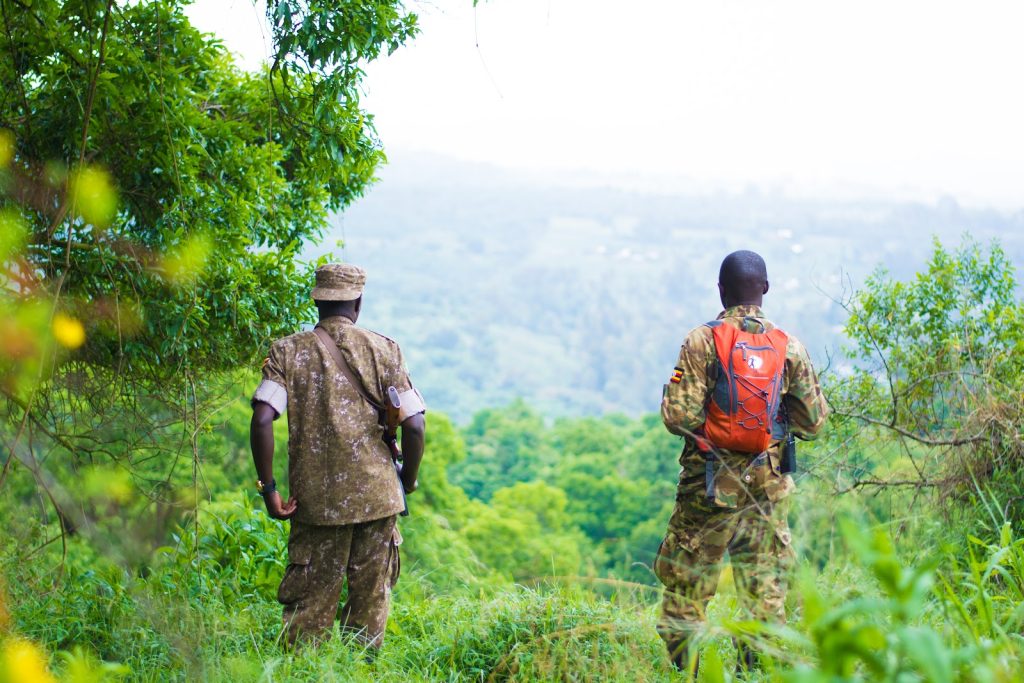
This is where most guides go wrong, so it is worth being exact. Gorilla trekking permits are not sold to the public the way a museum ticket is. UWA sells gorilla and chimpanzee permits only to tour and travel operators licensed by the Uganda Tourism Board, and it states plainly that every permit for a visitor from outside East Africa has to be bought through one of those operators.
That single rule reframes the planning problem. You are not shopping for a permit. You are choosing the company that will hold it, and then living with that choice for the rest of the trip, so it is worth comparing several before you commit. The operators listed here are independent Uganda based companies, and their safaris show what each one actually runs.
Two more details change how you plan. First, permits are booked against a date and an entry point, not a named gorilla family. Plenty of pages tell readers to pick a particular family by name. UWA allocates visitors to a family on the morning of the trek, at the sector, under its tracking procedures. Second, payment is now due in full at the time of booking. The seven day unpaid reservation window that older guides still describe has been withdrawn, so a permit is not held while you think about it. Reservations can be made for dates up to a year ahead.
How Fit You Need to Be for a Gorilla Trek
A gorilla trekking tour asks less of your lungs than people fear and more of your ankles than they expect. Bwindi tops out at 2,607 metres, high enough to notice if you have come from sea level but nowhere near the altitude where thin air becomes the problem. Mgahinga is the one to think harder about, since it starts at 2,227 metres and climbs from there.
The difficulty is underfoot. For much of the walk there is no formed path at all. Guides cut a line through the vegetation as you go, which means stepping over cut stems, onto ground you cannot see, on a slope, often in mud. Travellers who have trekked in both Uganda and Rwanda tend to say the Rwandan terrain was the more predictable of the two.
Useful preparation is dull and it works. Hill walking with a loaded daypack, over weeks rather than days, so a long descent does not wreck your knees. Steady breathing practice helps more than people expect, because the pace is slow but continuous. What you cannot train for is the variable that decides everything, which is where the family happened to sleep.
What to Wear and Carry on a Gorilla Trekking Safari
The packing advice on most gorilla trekking pages is generic. The things experienced trekkers actually mention are far more specific, and several of them are cheap.
Hiring a Porter for Your Gorilla Trek
Porters wait at the briefing point and are hired there, on the morning, in cash. The rate is set locally and the guides will tell you what it is, so confirm it at the briefing rather than trusting a figure from a blog, because it moves.
What a porter carries is your daypack, and that is the smaller half of the job. The larger half is the hand on the steep sections, the push at the small of your back on a climb, and the person who knows which root will hold. Regular trekkers are close to unanimous that you should hire one whether or not you think you need one, partly because you cannot know in advance whether the gorillas will be somewhere easy.
There is a second reason, and it is the honest argument for the whole model. Porters come from the villages bordering the forest, and some are former poachers. Money reaching those households is what makes a living gorilla worth more than a dead one to the people who live closest to it. Hiring a porter is the most direct transfer a visitor makes all trip.
The Rules That Govern Every Gorilla Tracking Hour
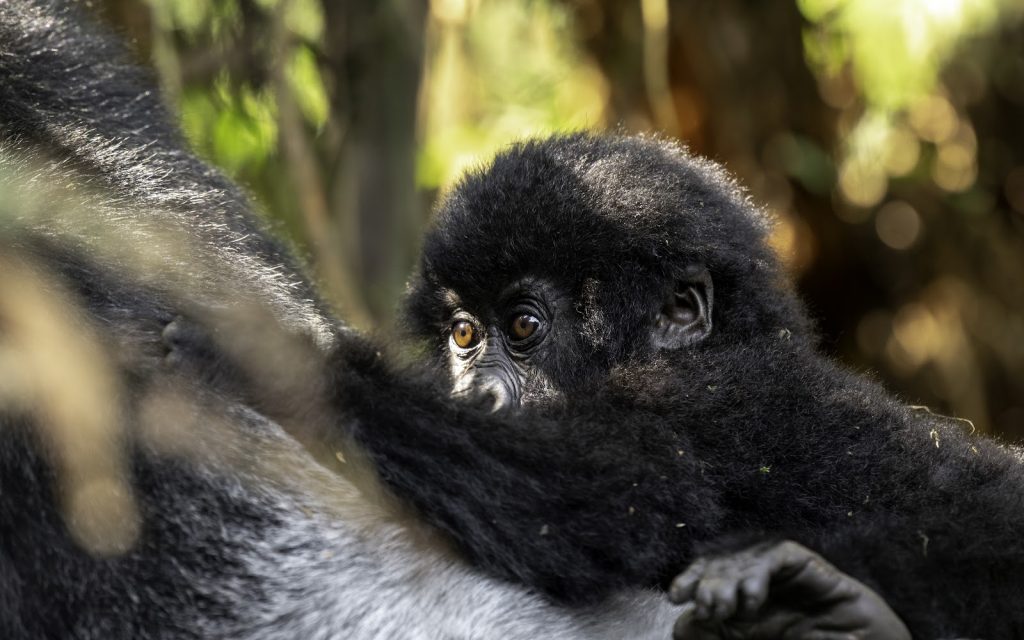
Uganda’s gorilla tracking rules are set by UWA and enforced by the guides, and a few of them catch people out.
The minimum age is 15 years for gorillas, and 12 for chimpanzees. This is firm, it is checked against your passport at validation, and a fifteenth birthday falling just after the trek date is not negotiated at the gate. Viewing is capped at one hour, and the four hour figure you may have read belongs to the habituation experience rather than to standard tracking.
Masks are worn near the animals, and the guides set the viewing distance and hold the group to it, because mountain gorillas catch human respiratory infections easily. Flash photography is out. You go in as a small group, allocated to a family at the sector that morning.
One rule is worth reading twice. UWA states that anyone found tracking at undesignated entry points, without UWA guides, and without authentic permits and proof of payment will be arrested and prosecuted. Booking under the wrong visitor category, such as claiming a residency you do not hold, is treated as attempted fraud, and both the visitor and the operator are held liable. This is not a soft system.
If You Fall Ill, or the Gorillas Cannot Be Found
Two things go wrong often enough that you should know the rules before you need them.
If you show signs of illness before tracking, you are not going. UWA requires such a visitor to be referred to the nearest health facility, with the illness confirmed by a medical report, and the cost of that diagnosis and treatment falls to you. A partial refund of the permit may then be authorised. The policy covers visitors already at the park who develop symptoms, which is why arriving the day before matters, and why a heavy cold in the week beforehand is worth taking seriously rather than hiding.
If a group tracks for a whole day and fails to find the gorillas, UWA may authorise tracking again the following day at no extra charge. Where no slot is left, or your itinerary will not stretch to another night, a partial refund may be authorised instead, once the warden in charge certifies that the animals could not be reached. Building a spare day into the southwest is cheap insurance against exactly this.
Gorilla Habituation: The Four Hour Alternative Experience
The gorilla habituation experience is a different product, not a longer version of the same one. UWA describes it as accompanying researchers and habituators into the forest to take part in the work of getting a family used to human presence. It starts at 6:30 am rather than 8:00 am, and viewing runs up to four hours instead of one. In Uganda it operates from the Rushaga side of Bwindi.
The appeal is obvious. The catch is in the definition, and it is worth saying plainly because the pages selling it rarely do. The family is by definition not yet comfortable around people. Trip reports include days where a group spent four hours largely watching vegetation move, because the gorillas wanted nothing to do with them. A standard trek to a fully habituated family is the more reliable hour. Habituation is the better day when it works and the worse one when it does not.
Planning the Rest of Your Uganda Safari Around the Trek
The permit date is the one fixed point in a Uganda itinerary, so build outward from it rather than trying to slot it in later. Most people who come this far south add the chimpanzee tracking at Kibale and the savannah at Queen Elizabeth National Park, reached from Bwindi through the Ishasha sector where the lions climb trees.
Closer at hand, Lake Bunyonyi is where most people go to do nothing at all for a day after the trek, and it is the right instinct. Echuya Forest sits between Kisoro and Kabale with bamboo and Albertine Rift birds, and Mgahinga adds golden monkey tracking if you are already in that corner. If you are still working out how many days a Uganda trip needs, the honest answer depends on how many of these you want.
Getting to Bwindi and Mgahinga for Your Trekking Safari
The southwest is a long way from Entebbe, and the roads are why most itineraries run longer than people expect. UWA’s own route notes put Kampala to Kabale at about 414 kilometres of tarmac, roughly six hours, after which the surface turns to winding murram. From Kabale it is about 120 kilometres and five more hours to Buhoma through Kanungu, or about 95 kilometres and four hours on the Ruhija road, or about 105 kilometres and four hours to Nkuringo. Kampala to Kisoro, for Mgahinga, runs to about nine hours. A vehicle with four wheel drive is recommended on all of them.
Coming across from Queen Elizabeth is much shorter, about 160 kilometres from Mweya or about 64 kilometres from Ishasha, mostly on dirt.
Flying removes a driving day in each direction. Scheduled flights run daily from Entebbe to Kihihi for the Buhoma side, and to Kisoro for Nkuringo, Rushaga and Mgahinga, with the Kisoro leg taking a little over an hour in the air. You still need a vehicle at the other end. Whichever way you come, arrive the day before. Nobody should be finishing a nine hour drive the night before an 8:00 am briefing.
Gorilla Trekking Safari Questions Travellers Ask
What does a gorilla permit cost in Uganda? The standard gorilla tracking permit is USD 800 for foreign non residents, USD 700 for foreign residents, USD 500 for citizens of other African countries, and UGX 300,000 for East African citizens. There is also a low season rate of USD 600 for foreign non residents and USD 500 for foreign residents, available in April, May and November only, and those permits cannot be rescheduled. Park entry at Bwindi and Mgahinga is charged separately, at USD 40 for foreign non residents and USD 30 for foreign residents. Worth knowing: the standard gorilla permit is not going up at the next tariff change, whatever you may have read elsewhere.
Can I buy the permit myself and save money? No. UWA sells gorilla permits only to tour operators licensed by the Uganda Tourism Board, and permits for visitors from outside East Africa must be bought through one. UWA has no agents anywhere and takes payment directly into its own accounts. The permit price is the same whoever holds it, so what you are really comparing between companies is the rest of the trip.
What happens to the money if I cancel or fall ill? UWA operates a graded scale rather than a flat rule. Cancelling 61 days or more before the tracking date returns 75 percent of what was paid, 46 to 60 days returns 50 percent, and 15 to 45 days returns 25 percent, each less bank charges and taxes already incurred. Inside 14 days nothing is refunded. A visitor already at the park who is declared unfit to track because of illness may be refunded 50 percent, and a group that tracks all day without finding the gorillas may be offered the next day instead, or a 60 percent refund. Your operator files these requests with UWA, not you.
Is the habituation experience worth the difference? Habituation is USD 1,500 for foreign non residents against USD 800 for a standard trek, and it rises to USD 1,800 on 1 January 2027. You get four hours rather than one, with a family still being habituated. If you want the longest possible time and you accept that the animals may keep their distance, it is worth it. If this is your one chance at seeing gorillas well, the standard trek is the safer hour.
How fit do I actually need to be? Fit enough to walk on steep, muddy, uneven ground for several hours with no guarantee of when it ends. Regular hill walkers manage comfortably. People who walk on flat ground occasionally find it hard but doable, especially with a porter. Altitude is a minor factor in Bwindi and a larger one at Mgahinga.
What is the minimum age? Fifteen for gorilla tracking, twelve for chimpanzees. It is checked against the passport and it is not flexible.
How long is the trek? Anywhere from about twenty minutes to eight hours of walking, plus the hour with the gorillas and the walk back out. Plan the whole day, carry lunch and water, and schedule nothing else for that afternoon.
Will I definitely see them? Almost always, because trackers locate the family before you set off, but it is not a guarantee, and UWA has a documented policy for the days it fails. Nobody honest promises a sighting.
Can I choose which gorilla family I track? Not when you book. You book a date and an entry point, and the family is allocated at the sector on the morning of the trek. If someone offers to sell you a named family months ahead, treat that as a reason to look elsewhere.
Do I need a porter if I am fit? You do not need one, and you should hire one anyway. The hands on the steep sections are useful even for strong walkers, and the money is the most direct benefit the neighbouring villages get from the forest staying where it is.
Where This Gorilla Trekking Guide Goes Next
Uganda Safaris is a marketplace, not a tour company. The gorilla trekking safaris listed here are run by independent, Uganda based operators, and an enquiry goes straight to the company that would run your trek, so you can ask about sectors, permit dates and pacing before you decide anything. Compare the gorilla trekking safaris on the site, or read through the operators behind them first. Nothing is booked here, and nothing is charged to you for asking.