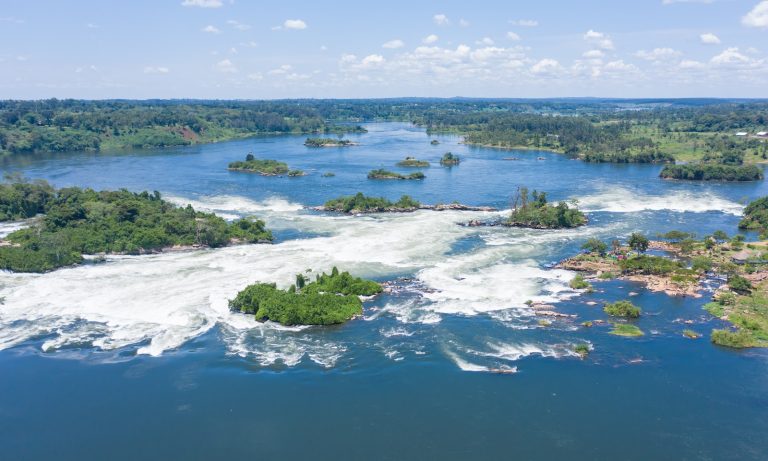
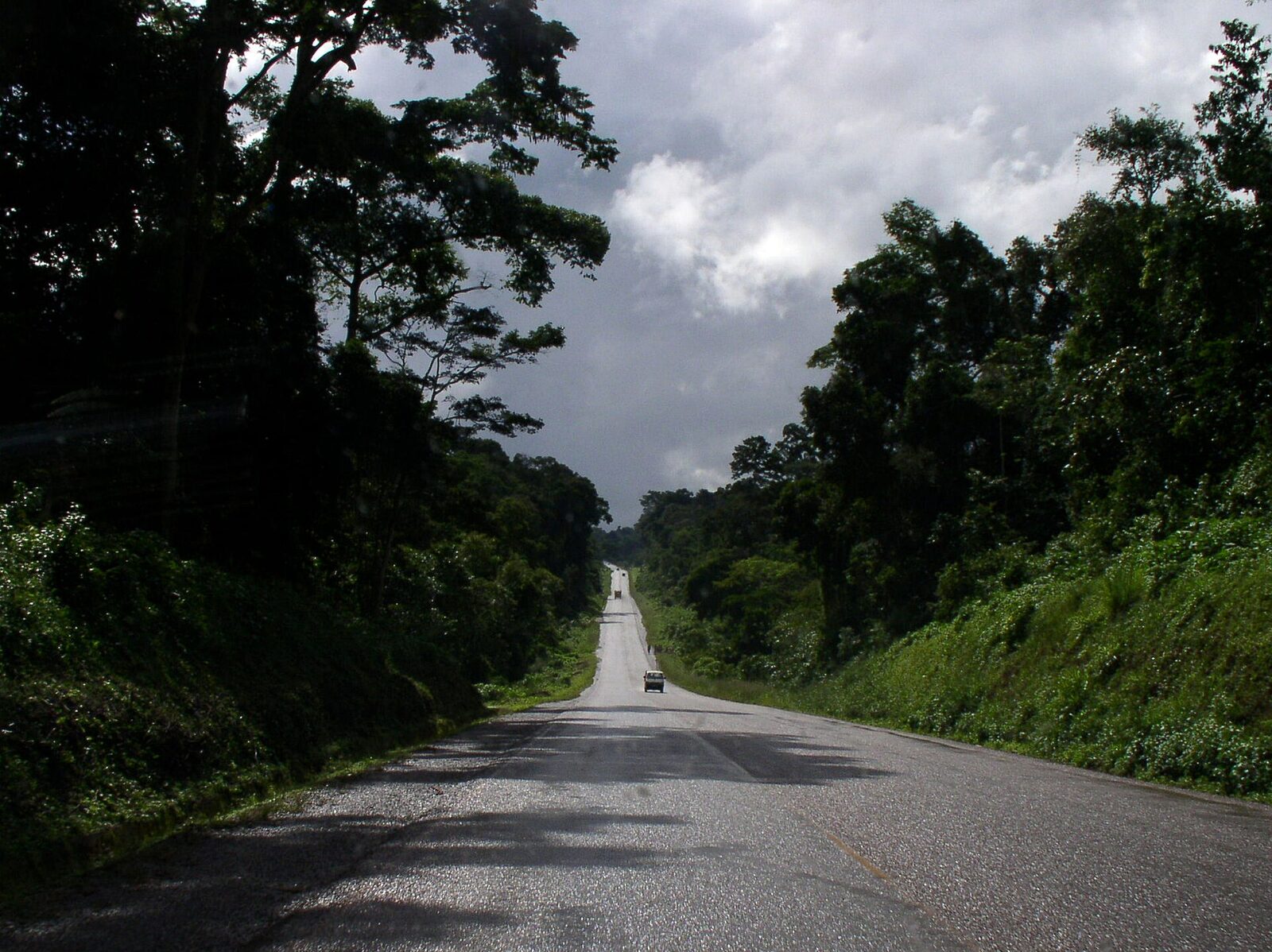
Mabira Forest is the closest rainforest to Kampala, roughly ninety minutes east on the Jinja road, and the only place in Uganda where you can ride a zipline through a forest canopy. Most visitors treat it as a day out: zipline in the morning, walk a trail after lunch, drive on to Jinja by evening. The reserve covers about 300 square kilometres of central Uganda under the National Forestry Authority.
Why Mabira Forest Works as a Day Trip From Kampala
Everything about a Mabira Forest trip comes down to proximity. The reserve straddles the main highway east, between Lugazi and Jinja, and the turn off at Najjembe is barely half a kilometre from the tarmac. You can leave Kampala after breakfast and be under closed canopy before ten.
Protected since 1932, Mabira sits between 1,070 and 1,340 metres and holds around 312 tree species. It is a genuine medium altitude rainforest, and it is also a working reserve carrying real pressure. Something like twenty seven settled enclaves lie inside or against the boundary, charcoal cutting continues at the edges, and the outer blocks are visibly younger and thinner than the core. Arrive expecting untouched wilderness and you will be let down. Arrive expecting a large, patchy, hard used forest with excellent birds and a canopy zipline in the middle of it, and Mabira delivers.
The practical thing nobody tells you is that Mabira has three separate ways in, serving different activities, and choosing the wrong one costs you an hour of driving.
Canopy Zipline Adventures at Griffin Falls
The Mabira canopy zipline, run under the name Super Skyway, is the activity that put this forest on the map for anyone who is not a birder. It is genuinely the only forest canopy zipline of its kind in Uganda, and it is still running.
The setup is five lines strung between six tree platforms, covering roughly 250 metres over the River Musamya, and finishing with a 78 metre diagonal run. You are belayed up the first tree rather than climbing a staircase, worked through the system by guides who go by the titles Sky Captain and Sky Guide, then lowered on a rope at the end. Equipment is imported climbing gear rather than anything improvised.
Allow the best part of half a day. Two to four hours covers the briefing, the walk out to the first platform, the lines themselves and the walk back, which passes Griffin Falls on the way. Sessions run morning and afternoon.
Its origins are worth knowing because they explain the pricing and the atmosphere. The system was put up with Peace Corps volunteers, who trained a local team to maintain it, and the whole camp is owned by the Mabira Forest Integrated Community Organisation, a community body rather than a commercial operator. Money spent here stays local. It also means the operation is smaller and less slick than a commercial canopy tour elsewhere, which most visitors count as a point in its favour.
Guided Nature Walks and Trail Hiking in Mabira Forest
Guided forest walks are the cheapest and, for many people, the best thing Mabira offers. The forestry authority centre at Najjembe maintains a proper named trail network, which almost no published guide bothers to list, and the choice matters more than the length.
| Trail | Time | Best for |
|---|---|---|
| Picnic Trail | 20 minutes | Children |
| Market Loop | 1 hour | Short visit |
| Radio Hill Loop | 45 minutes | Viewpoint |
| Macaranga Loop | 90 minutes | Regrowth |
| Butterfly Trail | 2 hours | Butterflies |
| Mabugwe Loop | 2 hours | Riverine birds |
| Fig Junction | 3 hours | Big timber |
| Grassland Trail | 3 hours | Edge species |
| Gangu Ridge | 4 hours | Serious walkers |
Guides are compulsory and included in the walk fee, which is the arrangement that makes the shorter trails such good value. Ask for a guide who knows plants: the medicinal walk is a real thing here, and Warburgia ugandensis, the tree Ugandan herbalists call the pepper bark, grows along several of the loops. Milicia excelsa, the mvule, and East African mahogany are the big timber trees that made this forest worth fighting over.
Going underfoot is flat and easy on the short loops and muddier than you expect on the long ones. Gangu Ridge after rain is a different proposition from Gangu Ridge in January.
Uganda Mangabey Tracking Tours in Mabira Forest
Uganda Mangabey tracking is a guided walk with a target rather than a permit driven activity, and it runs from Griffin Falls Camp. The animal itself is the reason to bother.
The Uganda Mangabey, Lophocebus ugandae, was elevated to full species status by the primatologist Colin Groves in 2007, and Mabira is the forest it was first described from. Whether it really is a separate species from the grey cheeked mangabey is still argued over by taxonomists, but if the split holds it makes this Uganda’s only endemic primate, and Mabira the most reliable place on earth to see one. That is a strange claim for a forest sitting beside a trunk road.
Tracking usually takes two to three hours. Troops move noisily and the guides know the ranges, so the odds are decent, though nothing is promised. Red tailed monkeys and black and white colobus turn up on the same walk, and vervets work the forest edges near the enclaves. Bush babies are heard at night from the campsite more often than they are seen.
Birding Safaris in Mabira Forest
A Mabira birding safari is what brings specialists here, and the numbers explain why. Around 315 species have been recorded in the reserve, close to half the forest bird species known from Uganda, including some 74 of the Guinea Congo forest biome birds. That density this close to the capital has no equal in the country.
Nahan’s Francolin is the headline, a globally threatened forest floor bird that Mabira holds in numbers. Alongside it, regular targets include the African Grey Parrot, Black billed Turaco, Great Blue Turaco, Cassin’s Hawk Eagle, Afep Pigeon, African Dwarf Kingfisher, Green tailed Bristlebill, Brown chested Alethe, Forest Robin, Red headed Bluebill, Purple throated Cuckooshrike, Weyn’s Weaver, African Pied Hornbill and the tiny Tit Hylia. Green breasted Pitta is possible and rarely easy.
Book a specialist guide rather than a general one. The forestry authority centre keeps a list of local bird guides and the difference between a bird guide and a nature guide here is the difference between forty species and a hundred. Half day and full day guided birding both run; the full day is what gets you into the quieter interior blocks where the francolin lives.
Start at first light. Mabira is close enough to Kampala that people arrive mid morning and then wonder why the forest has gone quiet.
Mountain Biking Tours Through Mabira Forest
Mountain biking tours in Mabira use an eight kilometre forest road as the spine, with loops off it, and a longer circular route of around twenty five kilometres that leaves the reserve and runs through the sugar and tea country and the villages on the boundary.
The longer loop is the interesting one. It puts you through the enclaves and plantations that surround the forest, which is where you actually see what pressure on Mabira looks like, and it passes through communities that see almost no tourism. Bikes can be hired at Griffin Falls Camp or brought over from the operators in Jinja.
Surfaces are murram and dirt, which is fine when dry and unrideable in places after heavy rain. Anyone unused to riding in the tropics should start early and carry twice the water they think they need.
Butterfly Walks and Forest Bathing Trips in Mabira
Mabira holds around 218 butterfly species and 97 moths, and there is a dedicated butterfly trail at Najjembe for anyone who wants to make that the point of the visit. Late morning on a sunny day after rain is when the puddles along the tracks fill with them.
The other slow option is what the local guides have started calling forest bathing, which here means a two hour walk at deliberately reduced pace with long stops, no species checklist and no destination. It sounds like a marketing invention and mostly it is, but the underlying idea holds: Mabira is a forest that rewards standing still. A group moving quietly on the Macaranga Loop will hear more in ten minutes than a group walking briskly hears in an hour.
Griffin Falls Camping Adventures in Mabira Forest
Griffin Falls sits about thirty minutes on foot from the camp of the same name, through decent closed forest. It is a modest set of cascades on the Musamya rather than a waterfall in the Sipi or Sezibwa sense, and visitors who arrive expecting a spectacle come away underwhelmed. Treat the walk as the point and the falls as the turning point and it works much better. Namusa Hill is roughly another hour beyond, for anyone wanting a longer hike.
The camp takes campers with their own tents, rents tents to people without, and has bandas and self contained twins. Facilities are basic and honest about it: cold showers as standard, hot water on request, a simple restaurant, and archery of all things, which turns out to be the thing groups end up doing longest. Insect repellent is not optional here. Bring more than you think.
Sezibwa Falls and Najjembe Market on a Mabira Forest Tour
Two roadside stops sit close enough to fold into the same day, and both are worth the detour.
Najjembe trading centre, right at the forest entrance, is the roadside market every Kampala to Jinja traveller knows: roast chicken on sticks, roasted gonja, cassava and maize sold through the car window. It has been feeding people on this road for decades and it is a better lunch than anything the lodges do.
Sezibwa Falls lies about thirty five kilometres from Kampala on the same road, where the Sezibwa river drops fifteen to twenty metres through a rock cleft. The site matters to Buganda as a cultural and spiritual place, with a shrine and traditional custodians on the ground, and the visit is as much about that as the water. Guided walks, abseiling and camping all run there.
Best Time for a Mabira Forest Trip
Central Uganda runs two wet seasons, and Mabira never fully dries out. The heavier rains fall from March to May, with a second wet spell from September to November. December to February and June to August are the drier windows.
None of this rules out a visit. Rain here comes in short heavy bursts, usually afternoon, rather than settling in for the day, and the canopy takes the worst of it. What the rain changes is the going underfoot, the state of the ten kilometre track to Griffin Falls, and whether the biking loops are rideable.
The Campaign That Saved Mabira Forest
Mabira is standing because people stopped it being cleared, and that story is visible in the forest itself.
The reserve has been commercially worked before. Early in the colonial period it was tapped for rubber, first by the East Africa and Uganda Exploration Company and then by a company named for the forest, and the tree species left behind still reflect that.
The moment that matters came in 2007, when the Sugar Corporation of Uganda Limited, jointly owned by government and the Mehta Group, proposed clearing roughly 70 square kilometres, about a third of the reserve, to grow more cane. The cabinet’s case was 3,500 jobs and a tax windfall. What followed was one of the largest environmental protests in Uganda’s history. The Kabaka of Buganda opposed it and offered alternative land, as did the Anglican church in Mukono. A march of around a thousand people in Kampala in April turned violent, at least three people were killed, two of them shot by police, and the protest spilled into riots targeting Asian owned businesses, which is the part of the story campaigners are least comfortable with. Sugar from Lugazi was boycotted. By May the environment minister announced the clearance was suspended.
The proposal came back in 2011 and was fought off again. Government has been quiet on it since, and nobody involved treats the matter as settled.
What this means on the ground is that the forest you walk through is a contested one. The enclaves, the charcoal, the thin regenerating edges and the community run tourism at Griffin Falls are all part of the same argument about whether Mabira pays its way standing up. Visiting is a small vote in that.
Getting to Mabira Forest and Where to Stay
From Kampala take the Jinja road east through Mukono and Lugazi. Najjembe is around 54 kilometres out and the drive takes an hour to ninety minutes depending on how badly the city releases you. From Jinja it is about 26 kilometres west, roughly half an hour. Any vehicle manages the Najjembe entrance and the Rainforest Lodge turn; the ten kilometre track to Griffin Falls is a different matter and wants clearance after rain.
One practical warning from hikers who use the forest regularly: satellite navigation routes you off the highway too early and through residential streets. The reliable instruction is to stay on the Jinja road into Lugazi and take the left turn in town, just before the Minnah restaurant. Public transport works too. Any Jinja bound minibus taxi will drop you at Najjembe, though you then need to arrange the last leg to Griffin Falls.
For sleeping, Rainforest Lodge is the comfortable option, a set of cottages in the trees a couple of kilometres off the highway with its own trail network and the only proper restaurant in the forest. Griffin Falls Camp is the budget end, with camping, rented tents, bandas and self contained twins, plus the advantage of being where the zipline starts. The forestry authority centre at Najjembe keeps three traditional bandas and a campsite that takes about a dozen tents. Jinja is close enough that plenty of people base themselves there and come out for the day.
Mabira Forest Trip Questions Answered
How much does ziplining in Mabira Forest cost? The Super Skyway at Griffin Falls Camp is USD 50 per person for foreign visitors and international students, with Ugandans paying a shilling rate worth roughly USD 16. Two packages bundle the zipline with coffee, a nature walk, lunch and transport: about USD 100 per person including a shuttle to and from Jinja, or USD 120 including a shuttle from Kampala, both with a minimum of three people. Groups over ten get ten percent off the zipline, nature walks and mangabey tracking. Reserve entry to the forest is charged separately and is small, around USD 5 for foreign visitors, USD 3 for residents and a little over USD 1 for Ugandans.
What do the other Mabira activities cost? Guided nature walks are about USD 8 for foreign visitors and roughly USD 4 for international students, with Ugandans paying nearer USD 1.50. Mangabey tracking is around USD 26 for foreign visitors and about USD 13 for Ugandans. Guided birding runs at roughly USD 26 for a half day and USD 40 for a full day. Archery is about USD 35. Bike hire sits near USD 11 a day. Rates are collected at the camp or the visitor centre rather than through any national booking system, so carry cash and confirm before you start, since some visitors report being quoted well above the published walk rate.
What does it cost to stay in Mabira? At Griffin Falls Camp, pitching your own tent is around USD 11 for foreign visitors and roughly USD 3 for Ugandans, a rented camp tent about USD 16, and bandas and self contained twins between about USD 11 and USD 40 a night depending on the room. Rainforest Lodge sits well above that as the only mid range property in the forest and prices seasonally, so ask directly. Meals at the camp are ordered from a menu rather than charged as a set rate.
Is the Mabira zipline still running, and who operates it? Yes. It is run by Griffin Falls Camp, which is owned by the Mabira Forest Integrated Community Organisation, a local community body rather than a commercial adventure company. This causes confusion because older articles credit the zipline to the forestry authority, to Peace Corps volunteers who helped build it, or to a Jinja rafting operator. Book through the camp directly or through an operator who will name it.
Is there a minimum age or weight for the zipline? Yes, though published figures vary and this is worth confirming when you book. Sources put the minimum age between four and seven with a height floor around 105 centimetres for children, and a working weight range of roughly 40 to 120 kilograms. Children ride accompanied. If anyone in your group sits near either end of that range, phone ahead rather than turning up and finding out.
Will my car make it to Griffin Falls? In the dry months, most saloon cars manage the ten kilometre track slowly. After heavy rain it becomes a job for something with clearance, and the last stretch is the worst of it. If you are in a hire car without four wheel drive during March to May or September to November, ask the camp about current conditions when you call to book, and consider basing at Najjembe or Rainforest Lodge instead.
Can I do Mabira as a day trip from Kampala or Jinja? Comfortably from either. From Kampala, leaving by seven gets you to the zipline for a morning slot with time for a walk afterwards. From Jinja it is half an hour, which makes Mabira the obvious rest day between rafting and the drive west. Trying to fit the zipline, mangabey tracking and a long trail into one day is a stretch. Two of the three is a good day.
Is Mabira worth it if I have already been to Kibale or Bwindi? For primates alone, no. Mabira cannot compete with the western forests on that. For birds it absolutely holds its own, and Nahan’s Francolin and the Guinea Congo species here are not straightforward anywhere else in the country. The zipline exists nowhere else in Uganda. And for anyone with one spare day either side of a Kampala or Jinja stay, nothing else gets you into real forest that quickly.
What should I wear and carry? Closed shoes with grip, long trousers and long sleeves, and a light rain layer whatever the month. Repellent matters more than most visitors expect, particularly at the camp in the evening and along the river trails. Bring cash in small denominations, since card payment is not available at either the camp or the visitor centre. Binoculars transform the walk even if you are not birding, and a torch is useful if you camp.
Mabira is the easiest real rainforest in Uganda to reach and, because of that, one of the most underrated.
A one day Jinja private tour already pairs a guided walk in this forest with the source of the Nile, which is the shape most visitors end up wanting.
If you want a day built properly around the zipline, the trails and a bird guide who knows where the francolin is, look at what else is on the things to do in Uganda list, book with the community camp directly and confirm every fee before you travel.
2 Places to Visit in This Area
Individual sites within reach of here, each with its own guide. Some are written up because the name circulates and the place does not, which is worth knowing before you plan a drive around one.
Safaris That Visit Mabira Forest
Every safari listed here that visits Mabira Forest. Each is sold and run by an independent Ugandan tour company. This site lists them and passes on enquiries; it takes no booking and charges you nothing.
Open the full Mabira Forest listing