
Photography Safaris in Uganda: Light, Position and Kit
Itineraries built around light and hides, with extended park time, low-angle vehicles and private guiding.
A photography safari in Uganda trades coverage for time: fewer parks, more nights in each, a private vehicle you control, and a driver guide briefed to position for light rather than for the nearest view. Daylight barely moves on the equator, so the good windows are short and fixed. Forest work with gorillas is dark and flash is prohibited, which decides most of what you pack.
Safaris That Include Photography Safari
A Guide to Photography Safaris in Uganda
What a Photography Safari in Uganda Changes About the Trip
A photography safari is an ordinary Uganda safari rebuilt around light and position instead of coverage. Fewer parks, more nights in each, a private vehicle you control, and a driver guide who understands why you want to sit in one place for forty minutes. A photography trip is structured that way; most standard itineraries are not.
The difference shows up in small decisions that compound. A sightseeing itinerary gets you to five parks in ten days and has you on the road most afternoons. A photographic one gets you to three, positions you before sunrise each morning, and accepts that some drives will produce nothing usable. That trade is the whole point.
Nobody needs a specialist trip to come home with good pictures. What a photographic itinerary buys is the ability to wait, and waiting is where the pictures are.
Light, Timing and the Photographer's Safari Day
Uganda straddles the equator, so daylight barely moves through the year. The sun comes up around a quarter to seven and goes down around a quarter to seven, every month. That sounds convenient and it is actually the hardest constraint on the trip, because it means the good light arrives and leaves fast, and the overhead hours are long and merciless.
Being in position before the sun clears the horizon is the single habit that separates a photographic trip from a normal one. Not leaving camp at sunrise. Being at the place you want to shoot, engine off, by then.
One practical consequence: the middle of the day is not dead time on a photographic trip, it is editing, backup and sleep. Plan for it rather than filling it with transfers.
Why a Private Vehicle Decides Your Photography Tour
Almost every Ugandan safari runs in a private vehicle by default, which works in a photographer's favour. Scheduled group departures are uncommon here, so you are usually not fighting six other people for a window.
What still needs asking for is control. Tell the operator before booking that you want the vehicle sold to fewer people than it seats, that you want to choose when to stop and how long to stay, and that breakfast will sometimes be skipped. A driver guide who knows this on day one behaves completely differently from one who finds out on day three.
Working from a Pop Up Roof on a Uganda Photo Safari
Ugandan safari vehicles are extended four wheel drives with a roof that lifts on struts, not the open sided vehicles used in some southern African reserves. You stand on the floor with your upper body clear of the roofline, and the roof itself becomes your rest.
A beanbag on the roof edge is worth more than any tripod on this trip. Tripods are useless in a vehicle and awkward on a forest trail; a beanbag steadies a long lens on the roof lip or a window frame instantly. Fill it with rice or beans bought in Kampala rather than flying with the weight.
Shooting from the window rather than the roof gets you a lower, better angle on animals at close range, so take both positions on the same sighting. Ask the driver to switch off the engine every time. Idling vibration ruins more frames on safari than camera shake does.
Lenses and Kit for a Uganda Photography Safari
Uganda is a two body country if you can manage it, because switching lenses in a vehicle on the Buligi tracks means dust on a sensor within a day.
Rain is the other constraint. Two wet seasons and afternoon storms in the west mean a cover for the camera and a bag that seals. Humidity in Bwindi will fog a cold lens brought straight out of an air conditioned room, so let kit acclimatise.
Forest Photography on Gorilla and Chimpanzee Treks
The gorilla hour is the hardest photography on the trip and the one people care most about. You are in closed canopy forest at altitude, often in rain, with an hour that cannot be extended and a minimum viewing distance to hold.
Flash is prohibited with gorillas and chimpanzees. That rule is absolute and rangers enforce it, so settle your exposure around it: high ISO, the widest aperture you own, and a shutter speed you can accept. Many people get better frames at 24 to 70 than with a long lens, because the animals are close and the surrounding forest is part of the picture.
Chimpanzees are harder again. They move fast, sit high in the canopy and are backlit against bright sky most of the time. Expect a low keeper rate and enjoy the tracking. Our gorilla trekking guide covers the permit, the walk and the rules in full.
Boats as a Shooting Platform on Safari
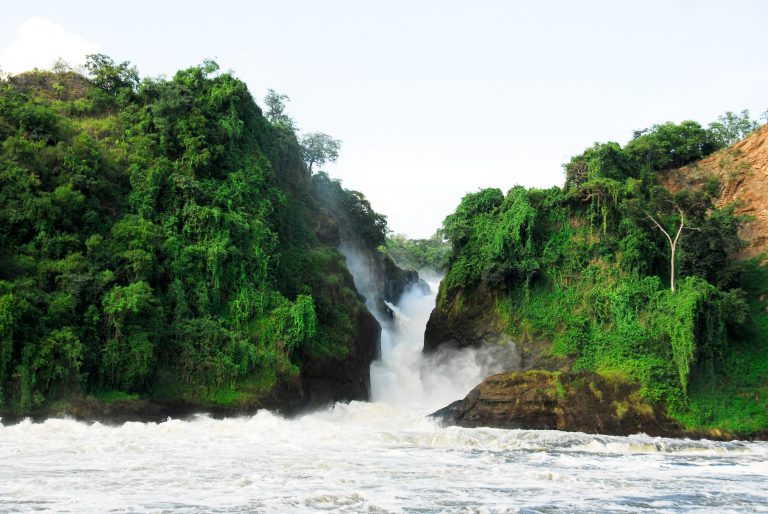
The best photographic position in Uganda is not a vehicle. Boat trips on the Kazinga Channel in Queen Elizabeth and on the Nile below Murchison Falls put you at water level, eye to eye with elephant, buffalo, hippo and a dense line of waterbirds along the bank.
Water level is the angle a vehicle can never give you, and the animals are habituated to boats, so they carry on doing what they were doing. Late afternoon on the Kazinga puts the light behind you on the northern bank.
The catch is company. Scheduled launches carry up to forty or forty five passengers and everyone stands up at once. Chartering a small boat for your group is the single best spend on a photographic trip to Queen Elizabeth or Murchison, and it is how you get the low angle and the pause. Our Queen Elizabeth guide and Murchison Falls guide cover the launches.
Drones, Filming Permits and the Rules on a Photography Tour
Anything beyond ordinary personal photography needs clearing in advance. The park authority charges commercial filming as a surcharge on top of activity and entry fees, with a higher rate again where a drone is used, and prior booking is required rather than optional.
Drones are not something to bring casually. Beyond the park rules, Ugandan civil aviation regulates import and operation, and drones have been seized at Entebbe from people who assumed otherwise. If you plan to fly one, start the paperwork months out through your operator and treat a refusal as likely.
Photographing people is the other thing worth thinking about before you arrive. Ask first, in villages and markets especially, and accept no as an answer. A driver guide who speaks the local language turns that from an awkward transaction into a conversation.
How a Photography Safari Itinerary Is Built Differently
Three principles do most of the work. Cut the number of parks. Add nights in each. Put the driving on days you are not shooting.
A strong ten day photographic route might run Murchison Falls for four nights, Kibale for two, and Queen Elizabeth including Ishasha for three, flying one leg to save a full day on the road. A standard ten day itinerary would fit five parks into the same time and leave you shooting from a moving vehicle.
Repeat visits to the same sighting are the other habit worth building in. Going back to the same pride or the same river bend on three consecutive mornings produces one good picture more reliably than three different parks produce three. Our guide to trip length covers the road times you are trading against.
Frequently Asked Questions About Photography Safaris in Uganda
What does a photography safari cost compared with a normal one? The park fees are identical: around USD 45 per person per twenty four hours at Murchison Falls and USD 40 at Queen Elizabeth, Kidepo and Lake Mburo, with a gorilla permit at USD 800. The difference sits in the vehicle and the pace. Filling fewer seats raises the per person cost, more nights in fewer places changes the lodging bill, and chartering a small boat rather than joining a scheduled launch starts from a minimum charge of around USD 120 for a group. Commercial filming is charged at 40 percent on top of activity and entry fees, rising to 50 percent of the activity where a drone is used. Each operator carries its own pricing.
Do I need a specialist photographic guide? Not necessarily, but you do need a driver guide briefed on what you want. The useful questions at enquiry are whether the guide has worked with photographers, whether they will position the vehicle for light rather than for the nearest view, and whether they are comfortable staying with one sighting for a long time.
Can I use a drone? Not without permission from both the park authority and the aviation regulator, arranged in advance. Assume months, not weeks, and assume it may not be granted.
Is flash allowed with the gorillas? No. It is prohibited with gorillas and chimpanzees and rangers enforce it. Plan for high ISO instead and test your body's limits before you travel.
What is the single most useful piece of kit? A beanbag, closely followed by a second body. Neither is glamorous and both change more frames than another hundred millimetres of reach.
Which park is best for photography? Murchison Falls for volume and for the river, Queen Elizabeth for the boat and for Ishasha, Kidepo for open country and clean backgrounds, Bwindi for the forest work. If you can only take one savanna park, Murchison gives the most varied material.
How do I protect gear from dust and rain? Seal the bag, change lenses as little as possible, carry a blower and a couple of dry bags, and keep a cover on the body during drives. The Buligi tracks in the dry months are the worst of it.
Photography trips here are sold and run by independent Ugandan tour operators. Tell the operator behind the trip you like what you shoot, how you like to work and when you can travel, and they will build the itinerary around it and quote properly. We take no booking and charge you nothing.